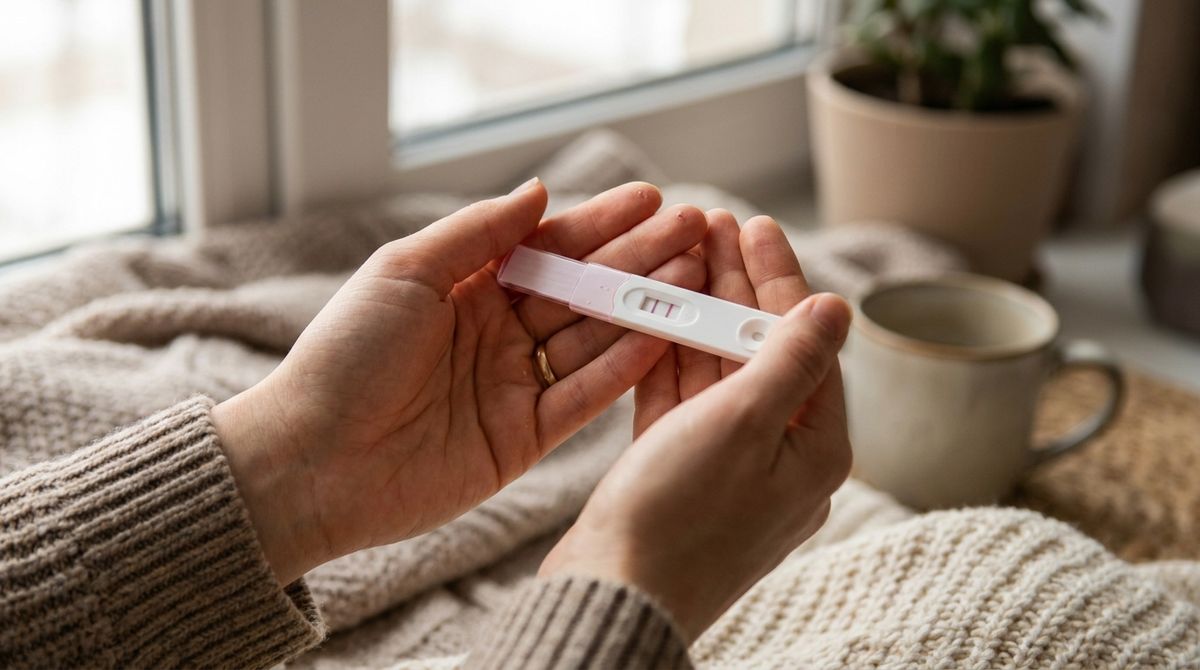
Early Pregnancy Symptoms Before a Missed Period
The earliest signs of pregnancy before a missed period, how implantation bleeding differs from your period, and when to take a pregnancy test.

Mama Ai Team

"Am I pregnant?" Whether you're trying to conceive or just paying close attention to your body, waiting for an answer can feel nerve-wracking. Many people want to know as early as possible — even before a missed period. In this article, we'll calmly walk through the first signs of pregnancy, explain which early pregnancy symptoms can really show up before a missed period, how to tell implantation bleeding apart from your period, and when to take a pregnancy test for a reliable result.
One important caveat up front: no single symptom proves you're pregnant, and plenty of people feel nothing at all. Only a test and a doctor can confirm a pregnancy. Still, understanding what's happening in your body is helpful — it eases anxiety and keeps you from getting ahead of yourself.
What are the earliest signs of pregnancy?
After conception, your hormone levels shift sharply. Progesterone and estrogen rise, and once the fertilized egg implants, your body starts producing hCG (human chorionic gonadotropin) — the very hormone that pregnancy tests detect. These hormones are what trigger the earliest symptoms. Here are the ones people notice most often.
Fatigue and sleepiness
The sudden surge in progesterone has a calming effect and often brings on heavy drowsiness and low energy. Many people describe feeling "wiped out for no reason" in the very first weeks. Fatigue is one of the most common early signs, but also one of the least specific — it's easy to mistake for ordinary tiredness.
Tender breasts and darkening areolas
Under the influence of hormones, your breasts may become more sensitive, heavy, full, or sore. Sometimes the areolas (the skin around your nipples) darken and the small bumps on them become more noticeable. These sensations often appear a week or two before your expected period.
Nausea and a heightened sense of smell
The famous "morning sickness" can actually strike at any time of day, but for most people it begins later — closer to week 6. What may show up sooner is a heightened sensitivity to smells: your usual coffee, perfume, or food suddenly seems off-putting and can bring on nausea.
Frequent urination
Even in the first weeks your kidneys work harder, and rising hCG increases blood flow in the pelvic area. As a result, you may need the bathroom more often than usual, including at night.
Bloating and cramps
Progesterone slows down your digestive tract, so bloating and a feeling of heaviness are possible — much like premenstrual symptoms. Mild pulling cramps low in the abdomen also occur and are often linked to implantation.
Light spotting
A little pinkish or brownish spotting may be implantation bleeding — more on that below.
A higher basal body temperature
If you chart your basal body temperature (your resting body temperature, taken right after you wake up), an indirect early sign can be that your temperature stays elevated longer than usual after ovulation — more than 14–16 days in a row, without dropping as your period approaches. This isn't a diagnosis, but it's a good reason to take a test.
Other possible early sensations include mild dizziness, mood swings, changing taste preferences, a stuffy nose, and an increased appetite — or, on the contrary, no appetite at all.
Can you feel pregnant before a missed period, and how early?
In short — yes, sometimes you can, but it's highly individual. To understand the timing, let's look at the chain of events:
- Conception (fertilization) happens around the time of ovulation, near the middle of your cycle.
- Implantation — when the fertilized egg attaches to the wall of the uterus — usually occurs 6–12 days after conception.
- Rising hCG. Only after implantation does your body start producing hCG, and in the first days the level is still very low, though it doubles quickly.
So the earliest pregnancy symptoms before a missed period are possible roughly 1–2 weeks after conception — that is, shortly before the day you expect your period. But for some people they're strong, for others nonexistent, and for others still the first weeks feel exactly like any ordinary cycle. Having no symptoms is completely normal and doesn't mean anything is wrong.
The main difficulty with reading the signs this early is that progesterone is high both in the second half of a normal cycle and during pregnancy. That's why the sensations before a missed period are often indistinguishable from premenstrual ones.
Implantation bleeding or your period — how to tell them apart?
Implantation bleeding is light spotting that sometimes appears as the fertilized egg attaches to the uterus. By some estimates, about one in four women experiences it, so it's far from universal. Here are some guidelines that help distinguish it from menstruation.
- Color. More often pinkish or brownish, rather than the bright red of an early period.
- Amount. It's truly spotting — a few drops or light traces on your underwear, not full bleeding that requires a pad.
- Duration. It usually lasts from a few hours to 1–2 days, whereas a period continues for several days and builds up.
- Timing. It appears roughly 1–2 weeks after conception — that is, a little earlier than or around the time you expect your period.
Important: you can't reliably tell implantation bleeding from an early period just by looking. If the bleeding is heavy, has clots, or comes with severe pain, it isn't implantation bleeding and you should see a doctor.
PMS or pregnancy: how to avoid confusion?
This is probably the most common question. And the honest answer is: the symptoms of PMS (premenstrual syndrome) and early pregnancy overlap heavily. Tender breasts, fatigue, mood swings, bloating, food cravings, a pulling sensation in the abdomen — all of these can happen both before your period and at the start of pregnancy, because the same progesterone is behind both states.
There isn't a single individual sign that lets you say with confidence "this is definitely pregnancy." Some indirect hints in favor of pregnancy are darkening areolas, a strong reaction to smells, or unusually intense fatigue, but none of them prove anything. The only reliable "switch" is a missed period plus a positive test. So don't torment yourself by analyzing your sensations every day — they won't give you a diagnosis. It's better to wait for the right moment to test.
When to take a pregnancy test?
Home tests detect hCG in your urine. Because the hormone level rises gradually after implantation, testing too early can give a false negative — there's still too little hormone, even though you're already pregnant.
- The most reliable time is from the first day of your missed period. By then, hCG is high enough in most people for a confident result.
- Test in the morning. Your first morning urine is the most concentrated, with higher hCG — this matters especially in early pregnancy.
- Sensitive tests. Some tests promise a result a few days before your missed period, but those days carry a higher risk of error in both directions.
- Negative test but no period? Wait a few days and repeat. If your period still doesn't come and tests stay negative, see a doctor.
Remember: a positive test is almost always reliable, but a negative one early on is not. If you're unsure, your doctor can order a blood test for hCG, which is more sensitive than a home test.
When to see a doctor
If your test is positive — congratulations, this is a great reason to book an appointment with your OB-GYN to begin prenatal care (date the pregnancy, discuss folic acid, lifestyle, and first checkups). Early care helps you move calmly through the first trimester.
You should seek medical help without delay if, alongside a positive test or a missed period, you develop warning symptoms:
- severe or sharp pain low in the abdomen, especially on one side;
- heavy bleeding or passing clots;
- pronounced dizziness, fainting, or extreme weakness;
- a high fever or generally feeling unwell.
These signs may need urgent evaluation by a doctor, so don't put off getting help.
Key takeaways
- The earliest pregnancy symptoms — fatigue, tender breasts, nausea and a heightened sense of smell, frequent urination, bloating, light spotting, and a steadily elevated basal body temperature — are driven by progesterone, estrogen, and hCG.
- You can sometimes feel pregnant before a missed period — roughly 1–2 weeks after conception — but symptoms are highly individual, and many people have none at all.
- Implantation bleeding is light pinkish or brownish spotting lasting 1–2 days, occurring in about one in four women; heavy bright-red bleeding is not implantation bleeding.
- PMS and early pregnancy look very similar; you can't make a diagnosis from sensations alone.
- The most reliable approach is to test from the first day of your missed period, in the morning; if the result is negative and your period hasn't come, repeat in a few days.
- A positive test is a reason to see a doctor; severe pain or heavy bleeding needs urgent care.
This article is for general information only and is not a substitute for personalized advice from a professional. For questions about your health and pregnancy, talk to your own doctor.
Sources
Created with AI and reviewed by the Mama Ai team. Educational information — not a substitute for professional medical advice.
We’re with you every week of the way
Download on the App Store