First Trimester of Pregnancy: Week-by-Week Guide
A complete guide to the first trimester: your baby's development week by week, symptoms and morning sickness, the first screening and ultrasound, and warning signs.

Mama Ai Team

Two lines on a test — and a whole new chapter begins. The first trimester of pregnancy (weeks 1 through 13) is when a tiny cell grows into your future baby and your body rapidly reshapes itself. This is also when the most questions and worries tend to show up: what's happening week by week, which symptoms are normal, when to see a doctor, and what you can eat. In this guide we'll calmly walk through how the trimesters of pregnancy work — and cover the first one in detail, week by week, from how you'll feel to the important tests and the warning signs to watch for.
What is the first trimester of pregnancy
Pregnancy is usually divided into three trimesters — roughly three months each. The first trimester covers weeks 1 through 13 (you'll sometimes hear "through week 12"). It's the most eventful stretch of all: your baby's organs begin to form while your own hormones shift into high gear — which is where most early symptoms come from.
How your due date is counted
Doctors don't count from conception but from the first day of your last menstrual period — this is the so-called gestational (or obstetric) age. That's why during the first two "weeks" of pregnancy you're not technically pregnant yet: ovulation and conception happen around the end of week 2. This approach helps everyone — you and your provider — speak the same language about weeks and your estimated due date. If you'd like to understand how weeks and trimesters fit together, read our piece on how many weeks a pregnancy lasts.
If a test hasn't confirmed your pregnancy yet but you're already noticing changes, it helps to know the early pregnancy symptoms before a missed period — they often show up before those two lines do.
First trimester of pregnancy week by week
Development moves fast. Here's how your baby changes week by week and month by month through the first trimester. Remember: these are guideposts, not a strict schedule — every pregnancy is a little different.
Month 1 (weeks 1–4)
After conception, the fertilized cell travels down to the uterus and attaches to its wall (implantation). The embryo forms along with the membranes that will become the placenta. You may not notice anything outwardly yet, but a tiny heart begins to beat right around now — by the end of the month.
Month 2 (weeks 5–8)
By week 6 of pregnancy an ultrasound can already pick up the embryo's heartbeat. By week 8 the arms and legs, eyes, and internal organs are taking shape. Your baby is about the size of a berry. Month 2 is also when many people first feel morning sickness and heavy fatigue.
Month 3 (weeks 9–13)
From week 10 the embryo is officially called a fetus. By week 12 of pregnancy the main organs have formed, your baby can move their arms and legs (though you won't feel it yet), and tiny nails appear. By the end of the first trimester your baby-to-be is about the size of a plum. The good news: after weeks 12–13 the risk of complications drops noticeably, and many people start to feel better.

How your body changes and which symptoms are common
Hormones — chiefly progesterone and hCG — rise very quickly, and your body responds. Most first-trimester symptoms are perfectly normal, though everyone experiences them differently.
- Nausea and morning sickness. The famous "morning sickness" can actually strike at any time of day. It usually peaks around weeks 9–10 and eases off by weeks 12–14. There's more in our article on when morning sickness starts and how to ease it.
- Deep fatigue and sleepiness. Your body is pouring enormous resources into building the placenta — wanting to nap during the day is completely normal.
- Tender, swollen breasts. Your breasts may grow larger, and your nipples may darken and become more sensitive.
- Frequent trips to the bathroom. A growing uterus and increased blood flow make your kidneys work harder.
- Changes in discharge. A small increase in clear or milky discharge with no odor or itching is usually normal. We cover what should raise a flag in our guide to discharge in early pregnancy.
- Mood swings, food cravings or aversions, and a heightened sense of smell. All of this is your hormones at work, too.
Many of these feelings show up before your first prenatal visit — and that's no cause for alarm. But if the nausea is so severe that you can't keep fluids or food down and you're losing weight, be sure to tell your doctor.
What matters most in the first trimester
The first trimester is a time for practical steps that set the stage for a calmer pregnancy.
Book a doctor and start prenatal care
Your first visit with an OB-GYN is usually scheduled for weeks 6–10. Your provider will confirm the pregnancy, estimate your due date, order tests (blood, urine, infections, blood type, and Rh factor), and start your prenatal records. Beginning prenatal care before week 12 is ideal.

First-trimester screening (weeks 11–13)
First-trimester prenatal screening is done in a window from week 11 through week 13 plus 6 days. It combines an ultrasound measuring nuchal translucency (NT) with a blood test for two markers — PAPP-A and free β-hCG. This isn't a diagnosis but an estimate of the likelihood of chromosomal conditions (such as Down syndrome). Your provider will explain what the results mean and whether any follow-up tests are needed.
Your first ultrasound
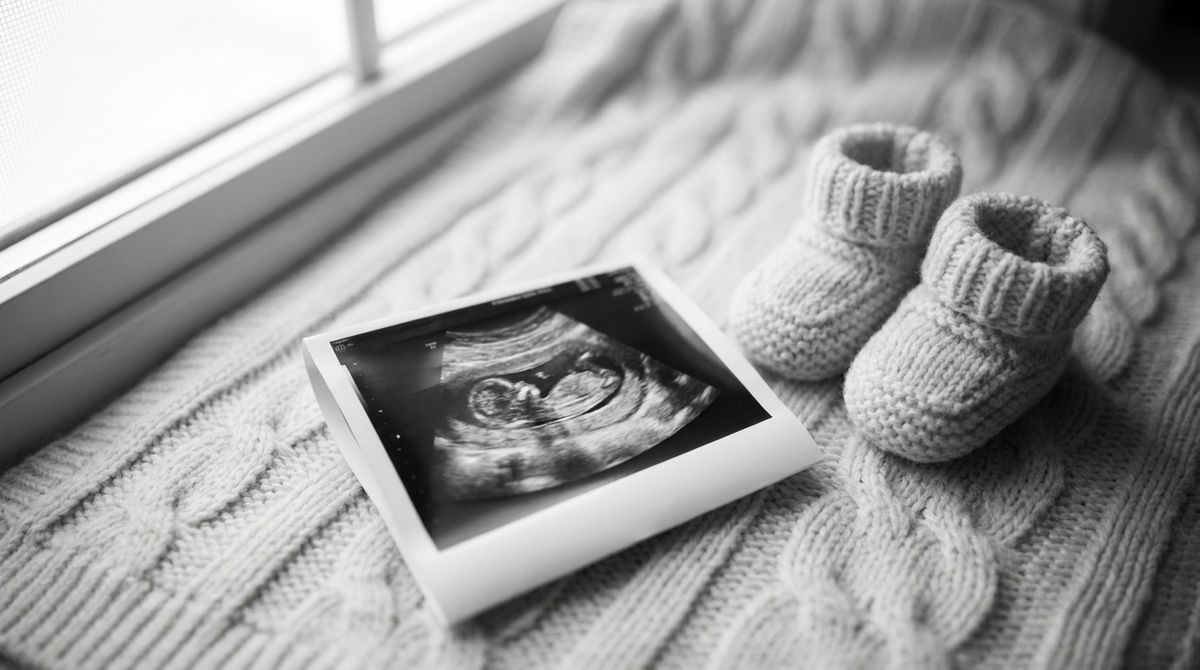
The first ultrasound confirms that the pregnancy is in the uterus, shows the heartbeat, and helps pin down your due date. For when it's done and exactly what it shows, read our article on the first pregnancy ultrasound.
Folic acid and prenatal vitamins
Folic acid supports the healthy formation of your baby's neural tube in the very earliest weeks. It's usually recommended starting before conception and continuing through the first trimester; your provider will choose the right dose and set of vitamins. There's more in our piece on folic acid in pregnancy.
Nutrition and lifestyle in the first trimester
You don't need to "eat for two" — in the first trimester your calorie needs barely rise. Quality matters more: a varied diet with protein, vegetables, fruit, whole grains, and plenty of fluids. If nausea makes full meals hard to face, that's okay — eat small amounts of whatever you can tolerate. What to enjoy and what to limit is gathered in our guide to foods to avoid during pregnancy.
What's best to avoid
- Alcohol. There's no known safe amount during pregnancy — it's best to skip it entirely.
- Too much caffeine. The usual advice is to stay under about 200 mg a day (roughly one to two cups of coffee), counting tea, cocoa, and cola as well.
- Raw and undercooked foods. Raw fish and meat, unpasteurized dairy and cheeses, and raw eggs can carry a risk of infection.
- Medications without checking first. Don't start or stop any medicine on your own — ask your provider what's safe in your specific case first.
- Smoking and nicotine in any form.
What's fine — and even good for you
Moderate physical activity (walking, swimming, prenatal yoga) is usually allowed and beneficial when your pregnancy is uncomplicated. Sex is generally safe too, unless your provider has advised otherwise. For any doubts, a quick question to your doctor will put your mind at ease.
Warning signs: when to seek care right away
Most first-trimester pregnancies progress just fine. But there are signs that mean you should contact your provider or seek urgent care without waiting for your next appointment:
- Bleeding — especially heavy, with clots, or with the passage of tissue.
- Severe or cramping pain in the lower abdomen, especially on one side.
- Sharp pain on one side radiating to the shoulder, dizziness, or fainting — possible signs of an ectopic pregnancy, which needs emergency care.
- A high fever, chills, or pain or burning when you urinate.
- Relentless vomiting, being unable to drink, or signs of dehydration.
Light spotting can happen in a normal pregnancy too, but your provider should be the one to assess it. Don't hesitate to call and ask — that's a normal part of caring for yourself and your baby.
Key takeaways
- The first trimester runs from week 1 through week 13; your due date is counted from the first day of your last period.
- During these weeks all of your baby's organs begin to form, and by week 12 of pregnancy they're about the size of a plum.
- Nausea, fatigue, tender breasts, frequent urination, and changes in discharge are common symptoms of your body's hormonal shift.
- Key steps: start prenatal care before week 12, have your first-trimester screening at weeks 11–13 (NT + PAPP-A + β-hCG), get your first ultrasound, and take folic acid.
- Skip alcohol and smoking, limit caffeine, and don't take any medication without checking with your doctor.
- Bleeding, severe abdominal pain, or sharp one-sided pain with dizziness are reasons to seek help immediately.
- A calmer stretch is ahead — for the home stretch, read our guide to the third trimester of pregnancy.
This article is for general information only and is not a substitute for personalized medical advice. For any concerns about your health or your pregnancy, reach out to your own OB-GYN.
Sources
Created with AI and reviewed by the Mama Ai team. Educational information — not a substitute for professional medical advice.
We’re with you every week of the way
Download on the App Store