
Can You Dye Your Hair While Pregnant? What's Safe
Can you dye your hair while pregnant? Usually yes — coloring is considered low-risk. Here's what the science says and how to color more safely.

Mama Ai Team
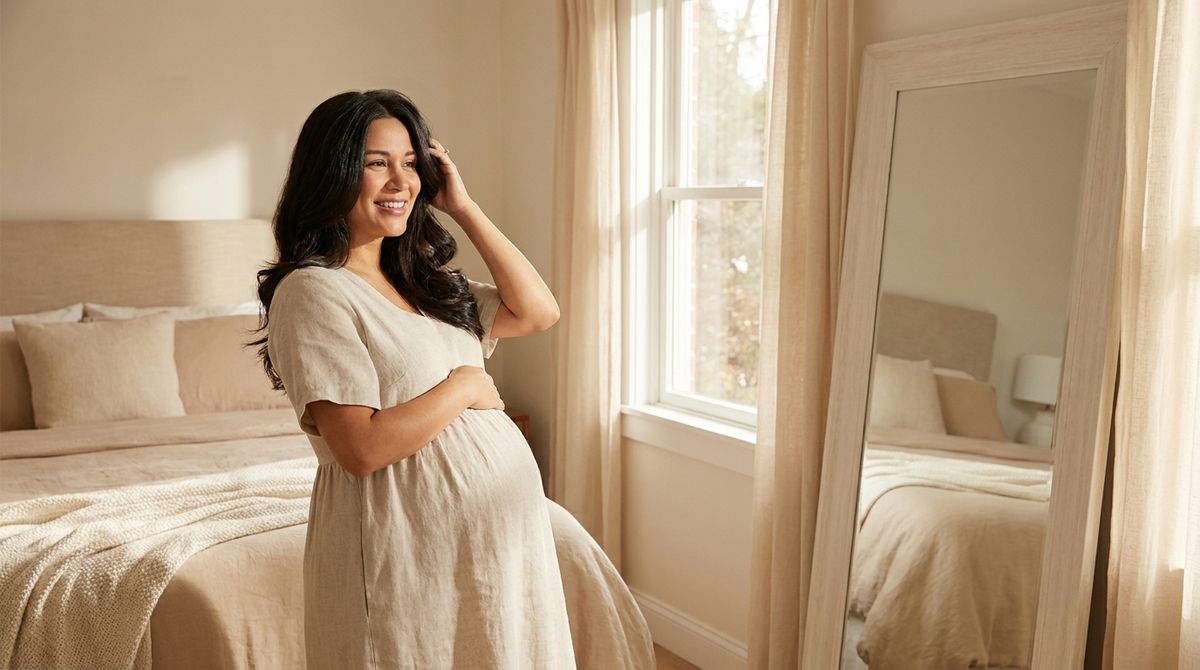
Pregnancy has a way of turning everyday routines into questions. One of the most common: can you dye your hair while pregnant? You want to look like yourself and feel confident that you're not putting your baby at risk. The reassuring news: most experts agree that coloring your hair during pregnancy is considered a low-risk procedure.
That doesn't mean the question isn't worth understanding. Below is a calm look at what's known about the chemicals in hair dye, which coloring methods are gentler, what to know about henna, and the simple steps that make the whole process even safer.
Can you dye your hair while pregnant? What the science says
The main worry is the chemistry in hair dye: ammonia, hydrogen peroxide, and para-phenylenediamine (PPD) — the ingredient that makes color long-lasting and rich. It sounds alarming, but what matters isn't the word chemicals itself; it's how much of these substances actually reaches your body.
When dye is applied to your hair, only a very small amount of these substances is absorbed through the scalp. That's why major medical sources — like the UK's NHS and the Mayo Clinic — agree that coloring your hair during pregnancy is most likely safe. For understandable ethical reasons, there aren't many high-quality studies in pregnant women, but the available evidence doesn't show that everyday hair coloring raises the risk to your baby.
In other words, dyeing your hair once or occasionally isn't something you need to give up to feel like yourself. This is about sensible caution, not a strict ban.
When is the best time to dye your hair? The first trimester question
The most common advice you'll hear is to wait, if you can, until after the first trimester (roughly week 12-13) before coloring your hair. The reasoning is simple: the first weeks are when your baby's organs are actively forming, and many expectant mothers prefer to minimize any extra exposures during this window.
It's important to understand that this is a precautionary recommendation, not a proven necessity. There's no convincing evidence that dyeing your hair in the first trimester has harmed anyone. But if you feel calmer waiting, that's a completely normal and reasonable choice.
The same principle of sensible caution applies to many other habits during pregnancy — for example, the question of whether you can drink coffee while pregnant and how much caffeine is safe. It's not about avoiding everything; it's about moderation and awareness.
Types of hair coloring: what to choose as an expectant mom
Not all coloring methods are the same. The less the dye touches your scalp, the fewer substances can potentially be absorbed — and the more relaxed you can feel about the whole process.
Permanent hair dye
This is classic single-shade coloring with ammonia and peroxide. The dye is applied to the roots too, meaning onto the scalp. It's the most full-contact option, but even this is considered acceptable — it just makes sense to be a little more careful and follow some precautions (more on those below).
Semi-permanent and demi-permanent dyes and toners
Semi-permanent and demi-permanent dyes, color-depositing conditioners, and toning shampoos usually contain fewer harsh chemicals and often skip ammonia altogether. The color doesn't last as long, but the effect is gentler. For an expectant mom, this is a good compromise between wanting to refresh your color and choosing something milder.
Highlights, balayage, ombré, and babylights
This is probably the gentlest choice when it comes to scalp contact. With highlights, balayage, ombré, and babylights, the dye is applied away from the roots — often on foil or individual strands — so it barely touches the scalp. That's why many specialists call these techniques preferable during pregnancy: the result is noticeable, while the contact between chemicals and skin is minimal.

Henna during pregnancy: natural versus 'black' henna
Henna is often seen as a safe, natural alternative, and in the case of pure (natural) henna, that's largely true. Real henna is a plant-based dye made from the leaves of the lawsonia shrub; it produces reddish-brown shades and is generally considered a gentle option.
So-called black henna (compound henna) is a completely different story. To create a darker, longer-lasting color, it's often mixed with that same PPD and other chemicals in high concentrations. Black henna is the most common cause of allergic reactions, irritation, and skin burns — and that's true for everyone, not just pregnant women. So the rule is simple: if you choose henna, make sure it's natural and additive-free, and avoid black henna and any formulas with unclear ingredients.
How to dye your hair more safely: practical tips
If you've decided to dye your hair while pregnant, a few simple steps can reduce the already small risk and make the process more comfortable:
- Ventilate the room. Good airflow reduces the amount of fumes you breathe in — open a window or turn on a fan.
- Wear gloves. They protect the skin on your hands from direct contact with the dye.
- Don't leave the dye on too long. Rinse exactly as directed, and don't leave it on longer than needed just to be safe.
- Rinse your scalp thoroughly. After coloring, wash off any leftover dye well with warm water.
- Do a test. Before coloring, do an allergy patch test (apply a little of the formula to your skin) and a strand test — especially if you're switching dye brands. Sensitivity can change during pregnancy.
- Don't dye irritated skin. If your scalp has cuts, scratches, or inflammation, it's better to postpone coloring until it heals.
At home or at the salon?
Both options are fine — the choice is more about convenience than safety. At a salon, a stylist can suggest gentler techniques (highlights, balayage), choose the right formula professionally, and apply it carefully, keeping it away from the roots. At home, you control the timing and conditions yourself — just make sure the room is ventilated, wear gloves, and read the instructions carefully. Whatever you choose, let your stylist know you're pregnant so they can factor that in when selecting products.
Why hair dye behaves differently during pregnancy
Don't be surprised if your usual color suddenly behaves unpredictably. Because of the hormonal changes during pregnancy, the structure of your hair and how it takes color can shift: the shade sometimes comes out differently than usual, and your hair may be drier or, on the contrary, thicker. That's one more reason to do a strand test ahead of time to avoid disappointment.
Taking care of yourself during this time isn't only about pregnancy nutrition and what you can and can't eat — it's also about a calm, gentle approach to your usual beauty rituals. And feeling anxious about any part of ordinary life — whether it's coloring your hair or, say, the question of whether you can have sex during pregnancy — is completely normal: there's a calm, balanced answer to almost every one of them.
When to talk to your doctor
In most cases, coloring your hair during pregnancy doesn't require special permission from your doctor. But it's worth discussing with your doctor or midwife if:
- you've had allergic reactions to hair dye before;
- you have skin conditions affecting your scalp;
- your pregnancy has complications and you'd rather err on the side of caution;
- you're simply worried and want to hear a reassuring yes from someone who knows your history.
And separately: if you develop intense itching, swelling, a rash, burning, or difficulty breathing after coloring, these are signs of an allergic reaction that need medical attention as soon as possible.
Key takeaways
- Can you dye your hair while pregnant? Usually yes — coloring is considered low-risk because only a small amount of the substances is absorbed through the skin.
- Out of caution, many people prefer to wait until after the first trimester — but that's a recommendation, not a proven ban.
- Techniques with minimal scalp contact (highlights, balayage, ombré, babylights) and semi-permanent dyes are gentle choices for expectant moms.
- Natural henna is usually safe; it's best to avoid black henna containing PPD.
- Ventilate the room, wear gloves, don't leave dye on too long, do an allergy patch test, and don't dye an irritated scalp.
- When in doubt, calmly discuss it with your doctor.
This article is for general informational purposes and is not a substitute for personalized medical advice. For questions about your specific pregnancy, please consult your doctor or midwife.
Sources
Created with AI and reviewed by the Mama Ai team. Educational information — not a substitute for professional medical advice.
We’re with you every week of the way
Download on the App Store