Foods to Avoid During Pregnancy & What to Eat
A clear guide to pregnancy nutrition: which foods to avoid and why, what to eat for your baby's health, and how to build a safe one-day meal plan.

Mama Ai Team
When you're expecting, questions about food multiply fast: is sushi okay, are soft cheeses safe, how much coffee is too much, and which foods really matter. The good news is that healthy pregnancy nutrition is simpler than it seems. Most of your usual food stays on the menu, and the list of things to skip is short and easy to follow. In this guide we'll start with the foods to avoid during pregnancy and why, then move on to what to eat during pregnancy so that both you and your baby get the key nutrients you need.
This is general information, not a personalized medical prescription. If you have a chronic condition, allergies, or any complications in your pregnancy, talk through your menu with the provider caring for you.
Foods to avoid during pregnancy: the list and why
The restrictions in a pregnancy diet aren't about foods being "unhealthy" in general — they're about specific risks: bacteria (listeria), parasites (toxoplasma), mercury, and an excess of certain substances. Here's what to pay attention to first.
Raw and undercooked fish and seafood
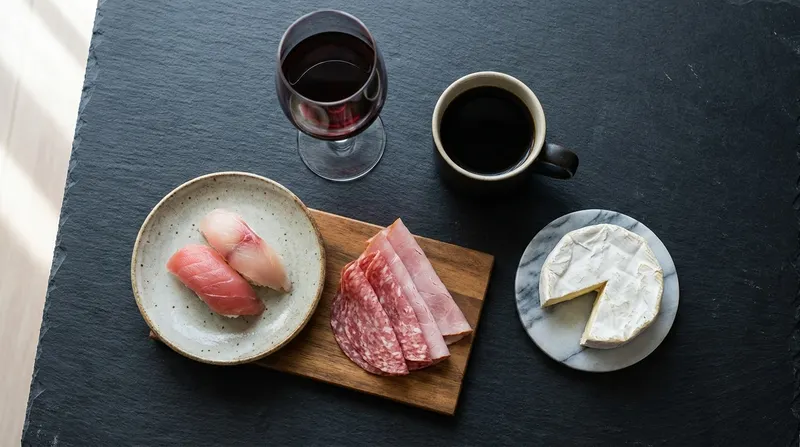
Sushi and rolls with raw fish, lightly salted fish, oysters, and other raw seafood can carry bacteria and parasites. During pregnancy your immune system works differently, and a gut infection hits harder. That doesn't mean sushi is off-limits forever: options made with cooked ingredients (such as eel, shrimp, or vegetables) are considered safer.
Fish high in mercury
Large predatory fish accumulate mercury, which can affect the development of the baby's nervous system. High-mercury fish include shark, swordfish, king mackerel, marlin, and bigeye tuna. It's best to leave these out. That said, you should still eat fish — just choose low-mercury varieties (see the omega-3 section below).
Unpasteurized milk and soft cheeses
Unpasteurized (raw) milk and cheeses made from it, along with soft blue-veined cheeses and white-rind cheeses (brie, camembert, feta, soft gorgonzola), can carry listeria — a bacterium that's dangerous in pregnancy. Listeriosis is uncommon in pregnant people, but it can lead to serious consequences for the baby. It's safer to choose hard cheeses and products labeled "pasteurized."
Deli meats, pâtés, and undercooked meat
Raw and undercooked meat, as well as cold cuts (ham, salami, jamón) and pâtés, can be a source of listeria and toxoplasma. Cook meat all the way through, with no pink areas or bloody juices. If you're craving deli meats, heating cold cuts until steaming hot lowers the risk.
Raw eggs
Raw and soft-boiled eggs, homemade mayonnaise, tiramisu, eggnog, and creams made with raw eggs can carry salmonella. Choose dishes with fully cooked eggs (firm white and yolk) or products made with pasteurized eggs.
Liver and excess vitamin A
Liver and liver pâtés contain a very high amount of vitamin A in the form of retinol. Too much of it in the first trimester can be harmful to the baby's development. Liver is fine occasionally and in small amounts, but don't overdo it — or supplements high in retinol.
Unwashed vegetables, fruits, and greens
The surface of unwashed produce can harbor toxoplasma and other microorganisms from the soil. Wash vegetables, fruits, and greens thoroughly under running water. For the same reason, be cautious with pre-made salads of unknown preparation.
Alcohol
No safe amount of alcohol has been established for pregnancy, so most guidance — from the WHO, ACOG, and the NHS — recommends avoiding it entirely throughout. Alcohol crosses the placenta freely and can affect the development of the baby's brain.
Caffeine and drinks: what to know
You don't have to give up coffee completely. Most guidance suggests limiting caffeine to about 200 mg a day — roughly one to two cups of coffee. Remember that caffeine isn't only in coffee: it's also in black and green tea, cocoa, chocolate, cola, and energy drinks. Energy drinks are best avoided altogether during pregnancy.
Be careful with herbal teas too: "natural" doesn't automatically mean "safe." Some herbs can affect uterine tone. Before drinking herbal blends regularly, ask your provider which ones are right for you. It's best to limit sugary soda and large amounts of juice — they deliver a lot of sugar with little benefit. If your provider is monitoring your blood sugar, this matters even more: read more in our article on gestational diabetes.
What to eat during pregnancy: the key nutrients
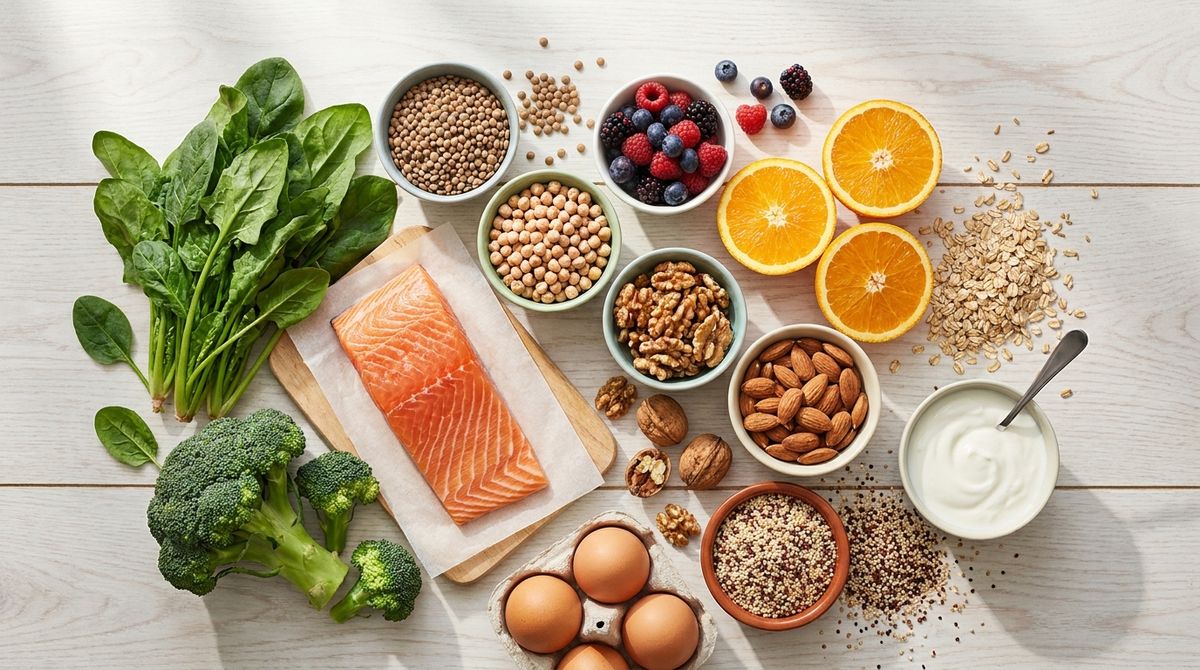
Now for the good part. A healthy pregnancy diet is balanced and varied, with enough of a few key nutrients. You don't need to "eat for two": in the first trimester, almost no extra calories are needed, and in the second and third a small increase is enough.
Folic acid (folate)
Folate is critically important early on: it lowers the risk of neural tube defects in the baby. It's plentiful in dark leafy greens, legumes, citrus, and fortified grains. Because it's hard to get enough from food alone, providers usually recommend a supplement — read more in our article on folic acid for pregnancy.
Iron
During pregnancy your blood volume grows and your need for iron increases. A deficiency leads to anemia and extra fatigue. Sources include red meat, poultry, legumes, tofu, spinach, and fortified cereals. Plant iron is absorbed better alongside vitamin C (for example, lentils with bell pepper, or greens with lemon juice).
Calcium and vitamin D
Calcium is needed to build your baby's bones and teeth, and vitamin D helps it be absorbed. Sources of calcium include pasteurized dairy, hard cheeses, yogurt, fortified plant milks, tofu, and small fish with bones. Vitamin D is partly made in the skin from sunlight, but many people don't get enough — ask your provider whether you need a supplement.
Protein
Protein is the building material for your baby's tissues. It comes from meat and poultry (well cooked), low-mercury fish, eggs (fully cooked), legumes, nuts, and dairy. Try to include a source of protein at every meal.
Omega-3 (DHA)
Omega-3 fatty acids, especially DHA, are important for the development of the baby's brain and vision. The source is oily, low-mercury fish: salmon, sardines, (Atlantic) mackerel, and herring. It's usually safe to eat 2–3 servings of such fish a week. Plant sources include flaxseed and walnuts.
Fiber and fluids
Constipation is a common companion of pregnancy. Fiber from vegetables, fruits, whole grains, and legumes, together with enough water, supports your gut and helps keep blood sugar steady.
A sample healthy plate for the day
There's no single "correct" menu, but here's what a balanced day might look like — aim for the principle of "half your plate vegetables, a quarter protein, a quarter whole grains":
- Breakfast: oatmeal made with pasteurized milk, with berries and a handful of nuts; a glass of water.
- Snack: yogurt and fruit, or whole-grain bread with hard cheese.
- Lunch: well-cooked chicken or lentils, brown rice or buckwheat, and a big portion of cooked and fresh (washed) vegetables.
- Snack: washed vegetables with hummus, or a handful of nuts and dried fruit.
- Dinner: baked salmon, vegetables, and quinoa; fruit for dessert.
If nausea makes eating a full meal hard, don't be hard on yourself. In the first trimester it's normal to eat small portions of whatever "goes down." We've gathered practical ideas in our article on morning sickness.
Common questions about food safety
Can I have sushi? With cooked ingredients — yes. Raw fish is best saved for after pregnancy.
Can I have cheese? Hard and pasteurized cheeses — yes. Soft blue-veined and white-rind cheeses, and cheeses made from unpasteurized milk — better not.
Can I have coffee? Up to 200 mg of caffeine a day is usually considered acceptable, but account for all your caffeine sources across the day.
Can I have honey, nuts, citrus? Yes. The common myth that nuts or citrus "cause allergies in the baby" isn't supported — if you aren't allergic to them yourself, there's no need to limit them.
When should I contact a provider urgently? If after eating you develop a high fever, severe vomiting and diarrhea, dehydration, marked abdominal pain, or you notice reduced movement from your baby — don't wait, get in touch with your provider.
Key takeaways
- The off-limits list is short: raw fish and meat, unpasteurized dairy and soft cheeses, raw eggs, cold cuts and pâtés, high-mercury fish, liver in excess, alcohol, and unwashed produce.
- The reason behind the restrictions is specific risks: listeria, toxoplasma, salmonella, mercury, and excess vitamin A.
- Caffeine — up to ~200 mg a day; cut out energy drinks and alcohol; discuss herbal teas with your provider.
- Focus on the key nutrients: folate, iron, calcium and vitamin D, protein, omega-3, and fiber.
- You don't need to "eat for two" — quality and variety matter more than quantity.
- If you have chronic conditions, allergies, or complications, coordinate your menu and supplements with your provider.
This article is general information and isn't a substitute for a professional consultation. For questions about nutrition, supplements, and any worrying symptoms, reach out to the provider caring for your pregnancy.
Sources
Created with AI and reviewed by the Mama Ai team. Educational information — not a substitute for professional medical advice.
We’re with you every week of the way
Download on the App Store