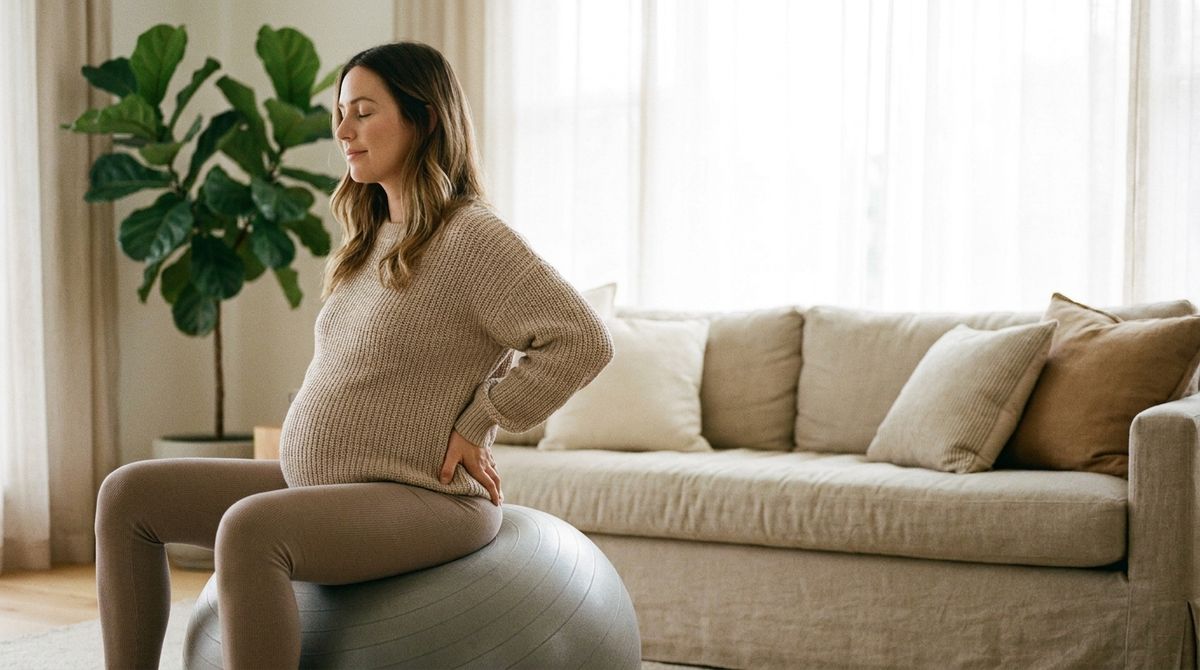
Sleeping Positions During Pregnancy: What's Safe
Which sleeping positions are safe during pregnancy? Learn why side-sleeping is best, whether your back or stomach are okay, and how to sleep better.

Mama Ai Team

In the second and third trimesters, sleep often turns into a struggle: a growing belly makes it hard to get comfortable, your back aches, and one anxious thought keeps circling — is your favorite position harming the baby? If you're searching for the best sleeping position when pregnant and which side is best to sleep on, this article breaks it all down: what evidence-based medicine recommends, which positions are genuinely safe, and how to finally get some rest.
The short, reassuring answer: toward the end of pregnancy, doctors recommend falling asleep on your side — and both the left and the right are considered safe. Sleeping on your back and on your stomach each deserve their own conversation. Below, we cover each in detail, plus practical tricks for beating insomnia.
Which Side Is Best to Sleep On During Pregnancy
Side-sleeping is the main recommendation for the second half of pregnancy. Starting around the third trimester (roughly 28 weeks), major obstetric organizations (RCOG, Tommy's, NHS) advise settling down to sleep on your side rather than on your back. Large studies show that women who fall asleep on their side in late pregnancy have a lower risk of complications.
A common question is which side is best to sleep on — the left or the right? The good news is that both sides are safe. The key rule is “on your side, not on your back” — not “only the left.”
So why is the left side so often recommended? A large vein (the inferior vena cava), which carries blood back to the heart, runs along the right side of the spine. Sleeping on your left side takes a little pressure off it and may improve blood flow to the uterus, kidneys, and baby, while also easing swelling. But if the right side is more comfortable for you, that's perfectly fine too: choose whichever side feels better, and feel free to switch sides through the night.
What matters most is the position you fall asleep in and spend most of the night in. For more on how your body changes as your due date approaches, see our article on how many weeks a pregnancy lasts by week and trimester.
Can You Sleep on Your Back During Pregnancy
This is probably the most common worry. In early pregnancy, sleeping on your back is fine. But from the third trimester on, it's best not to make long stretches of back-sleeping your main position. The reason is what's known as inferior vena cava syndrome (aortocaval compression): the heavy uterus presses on the large vessels along the spine, reducing blood flow back to the heart. This can cause dizziness, weakness, a racing heartbeat, and sometimes nausea. Usually your body signals this on its own — you feel uncomfortable and want to turn over.
The important thing here is not to panic. If you wake up on your back, nothing bad has happened: just roll back onto your side. A few minutes on your back won't “harm” the baby. The recommendation is about the position you fall asleep in. To keep from rolling onto your back, tuck a pillow or a special wedge behind you — it will gently hold you on your side. And if you're short of breath or struggling with heartburn, a semi-upright position with the head of the bed raised may be more comfortable.
Can You Sleep on Your Stomach During Pregnancy
In early pregnancy, sleeping on your stomach is safe: the baby is well protected by the walls of the uterus, the amniotic fluid, and your abdominal muscles. So in the first trimester you can sleep however you're used to.
The issue isn't danger — it's comfort. As your belly grows (usually from the second trimester), lying on your stomach becomes physically uncomfortable, and your breasts tend to be tender during this time too. Most moms-to-be naturally stop sleeping on their stomach simply because it no longer feels good. There are special mattress pillows with a cutout for the belly, but how comfortable they are varies from person to person. If your belly is still small and the position doesn't cause any discomfort, there's no need to worry.
How to Sleep Better: Pillows and Positions
Saying “sleep on your side” is easy, but actually falling asleep can be hard — and this is where pillows come to the rescue. A few simple tricks:
- A pillow between your knees — aligns your pelvis and takes pressure off your lower back and hips.
- A pillow under your belly — supports its weight and eases the pulling sensation.
- A pillow behind your back — keeps you from rolling onto your back in your sleep.
- A raised head of the bed — eases heartburn, nasal congestion, and shortness of breath.
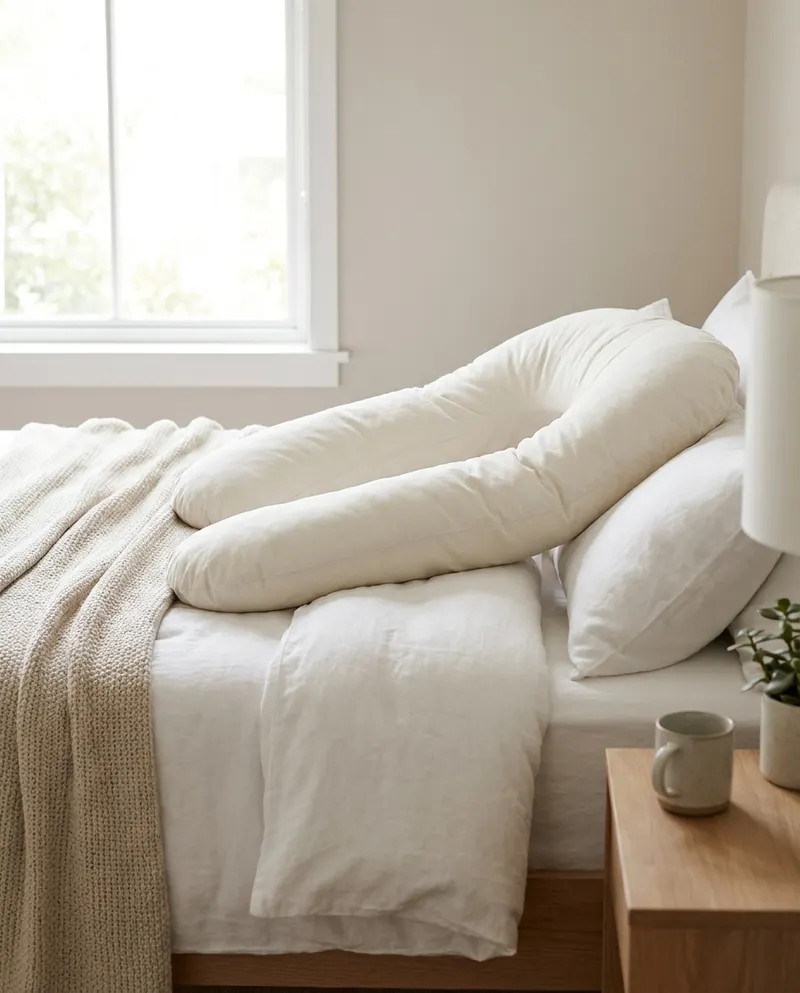
Many people find a single large pregnancy pillow — C- or U-shaped — more convenient: it supports the belly, back, and legs all at once, replacing several ordinary pillows. If burning in the chest and acid often bother you at night, pay attention to your dinner and to sleeping propped up — more on that in our article on heartburn during pregnancy and how to relieve it.
Why You Can't Sleep: Insomnia and Nighttime Disruptions
Insomnia during pregnancy is common, especially in the third trimester. The culprits include hormones, physical discomfort, anxiety before birth, and very practical disruptions:
- Frequent trips to the bathroom. The uterus presses on the bladder. Drink enough during the day, but cut back on fluids 1–2 hours before bed.
- Leg cramps and restless legs syndrome. Gentle calf stretches before bed, movement during the day, and staying hydrated all help; ask your provider about supplements (such as magnesium).
- Heartburn and shortness of breath. A raised head of the bed and a light dinner without spicy or fatty foods help.
- Vivid, anxious dreams. A frequent companion of pregnancy thanks to hormones and lighter sleep — this is normal.
- The baby's movements. In the evening and at night your little one is often more active. We cover what's considered normal in our article on fetal movement and what's normal week by week.
- Braxton Hicks contractions. Painless “practice” contractions of the uterus can wake you at night — more on Braxton Hicks contractions and how they feel.
Basic sleep hygiene works during pregnancy too: go to bed and get up at roughly the same time, air out the bedroom and keep it cool, put screens away an hour before bed, and limit caffeine in the second half of the day. A warm shower, calm reading, breathing exercises, or a short evening walk all help. Don't take sleeping pills or melatonin without a prescription — talk to your provider about what's right for you.
When to See a Doctor
Discomfort and broken sleep are a normal part of pregnancy. But some signs call for a call to your doctor rather than patience:
- Severe, exhausting insomnia that throws you off balance and drags on for a long time.
- A severe or persistent headache, or vision changes (spots, a veil over your eyes), sudden swelling of the face and hands, or pain in the upper abdomen — these can be signs of preeclampsia and a reason to seek help urgently.
- A change in or decrease in the baby's movements — don't wait until morning, contact your provider.
- Loud snoring with pauses in breathing, or choking at night — these can be signs of sleep apnea; it's worth telling your doctor, since they're linked to blood pressure.
- Regular painful contractions before your due date.
Key Takeaways
- From the third trimester (around 28 weeks), fall asleep on your side rather than your back; both the left and right sides are safe.
- The left side may slightly improve blood flow, but the main rule is “on your side, not on your back.”
- What matters is the position you fall asleep in: if you wake up on your back, calmly roll onto your side.
- Sleeping on your stomach isn't dangerous, but over time it simply becomes uncomfortable.
- A pillow between your knees, under your belly, and behind your back — or a U-shaped pregnancy pillow — makes sleep more comfortable.
- For a severe headache, vision changes, swelling, or decreased movements — see a doctor urgently.
This article is general information only and does not replace personalized advice from a professional. For questions about your sleep, your well-being, and any worrying symptoms, contact your own doctor or midwife.
Sources
Created with AI and reviewed by the Mama Ai team. Educational information — not a substitute for professional medical advice.
We’re with you every week of the way
Download on the App Store