Heartburn During Pregnancy: Causes & Safe Relief
Heartburn during pregnancy is common, especially later in pregnancy. Learn what causes it, how to ease it safely, and the warning signs to watch for.

Mama Ai Team
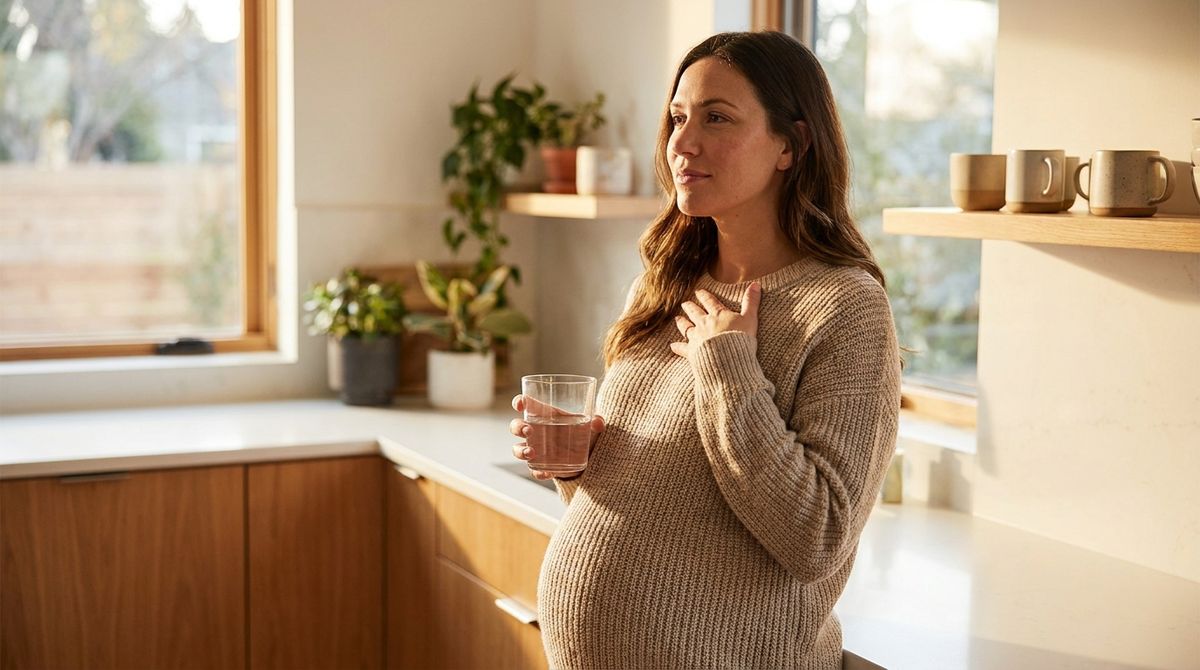
That burning feeling behind your breastbone, a sour taste in your mouth, an uncomfortable lump in your throat after eating — heartburn during pregnancy is something many expectant mothers know well. By various estimates, anywhere from a third to more than half of pregnant women experience it, especially in the second half of pregnancy. It's unpleasant, but it's almost always harmless to you and your baby. Below we'll look at why heartburn happens, when it starts, how to relieve it safely — and when pain in the upper abdomen is no longer heartburn but a reason to seek medical help right away.
Why heartburn happens during pregnancy
Heartburn is the backflow of acidic stomach contents up into the esophagus. Normally a muscular valve between the esophagus and the stomach — the lower esophageal sphincter (the ring of muscle that "closes off" the entrance to the stomach) — keeps this from happening. During pregnancy, two things work against that valve at once.
- Hormones. Progesterone relaxes smooth muscle throughout the body — including that valve. It holds back acid less effectively, so acid rises into the esophagus. The same hormone slows the gut and stomach emptying, so food sits longer and presses upward.
- Pressure from the growing uterus. In the second and third trimesters the uterus rises higher and presses on the stomach from below, literally pushing its contents toward the esophagus.
That's why the usual causes of heartburn — overeating, fatty and spicy foods — hit harder during pregnancy. If you've ever wondered what causes heartburn in the first place, here the usual triggers are joined by hormonal changes and the anatomy of a growing belly. The good news: after birth the valve goes back to working as before, and heartburn usually goes away.
When heartburn starts and whether it's an early sign of pregnancy
Heartburn can show up at any stage, but for most women it gets worse toward the second half of pregnancy, when the belly grows fastest.
In early pregnancy
In the first trimester, the burning is more often linked to hormonal changes than to pressure from the uterus. Heartburn can be one of the first sensations, but on its own it is not a reliable sign of pregnancy — it's easy to confuse with ordinary indigestion or with early morning sickness. If nausea and a heavy feeling in your stomach are bothering you at the same time, take a look at our article on when morning sickness starts and how to ease it.
In the second and third trimesters
This is the "peak" of heartburn. As the uterus rises, the stomach gets more and more compressed, and the burning shows up more often — sometimes after every meal and especially at night. Toward the end of the third trimester, when the baby drops before birth, many women find it eases a little. If you'd like to get your bearings on timing, see how pregnancy is divided into weeks and trimesters.
What heartburn feels like: symptoms
The symptoms of heartburn during pregnancy are usually easy to recognize:
- a burning feeling behind the breastbone that rises from the stomach toward the throat and gets worse after eating;
- a sour or bitter taste in the mouth, and burping;
- a feeling of a lump or "stuck" food in the throat;
- discomfort that gets worse when you bend over or lie down.
Heartburn on its own doesn't harm your baby and doesn't signal a problem with the pregnancy. But if the burning is keeping you from eating and sleeping, you can almost always ease it noticeably — and the place to start is with your diet and habits.
Foods and habits that trigger heartburn
Every woman has her own "triggers," but the most common things that make the burning worse are:
- fatty, fried and very spicy food;
- acidic foods — citrus, tomatoes and tomato-based sauces;
- chocolate, mint, onion and garlic;
- carbonated drinks and strong coffee;
- large portions and eating right before bed.
Keep an eye on yourself for a couple of days and jot down what exactly brings the heartburn on — the list of triggers is different for everyone. To balance your diet overall, our guide on what you can and can't eat during pregnancy can help. One especially common trigger is caffeine: for safe limits, read our piece on whether coffee is okay during pregnancy and how much caffeine is allowed.
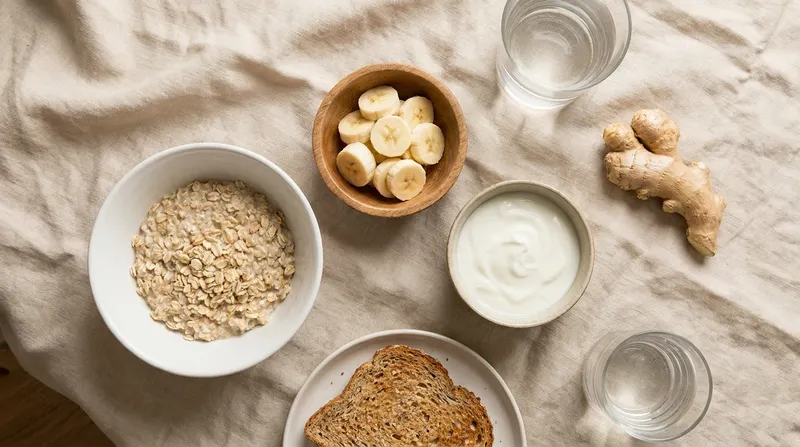
How to get rid of heartburn during pregnancy without baking soda or extra pills
In most cases heartburn can be tamed with simple changes. These steps are safe and work both as prevention and as a way to get quick relief from the burning:
- Eat little and often. 5–6 small meals instead of 3 big ones put less load on the stomach and reduce pressure on the valve.
- Don't rush. Eat slowly, chew thoroughly, and sip drinks between meals rather than gulping them down with food.
- Don't lie down right after eating. Wait 2–3 hours before lying down or bending over. Plan your last meal a couple of hours before bed.
- Stay upright. After a meal it's better to sit quietly or take a short walk than to flop straight onto the couch.
- Wear loose clothing. Tight belts and waistbands put extra pressure on the stomach.
- Don't smoke and avoid alcohol — they relax the valve and worsen acid reflux (and they also harm your baby).
Sleep position and a raised head of the bed
At night it's easier for acid to rise because you're lying flat. It helps to raise the head of the bed by 10–15 cm (put something under the legs or the mattress) or to use a wedge pillow so that your upper body sits a little higher. Many women find it more comfortable to sleep on the left side — in this position the stomach sits so that acid finds it harder to flow back into the esophagus. Simply piling up extra pillows under your head is usually less effective than raising your whole upper body.

Antacids and medications: what's considered safe
If diet and lifestyle aren't enough, there are remedies that are used fairly often during pregnancy. But any medication is worth discussing with your doctor or pharmacist — here we give only general guidance, not a prescription or doses.
- Calcium- or magnesium-based antacids neutralize acid and are usually considered an acceptable first-line choice during pregnancy. One important detail: antacids can interfere with iron absorption, so they and iron supplements are spaced apart in time — ask your doctor about this.
- Alginates form a "protective raft" on top of the stomach contents and are also often recommended in pregnancy.
- Be careful with baking soda (sodium bicarbonate). The folk remedy of "putting out" heartburn with baking soda is not recommended during pregnancy: it's high in sodium, which can worsen fluid retention and swelling and upset the body's acid–base balance.
- Acid-reducing medications (so-called blockers) are sometimes prescribed for stubborn heartburn — but strictly on a doctor's decision, not on your own.
Don't pick medications "to taste" or go by advice from forums: what suits one woman isn't always safe for another. If over-the-counter remedies aren't helping or you need them almost every day, that's a reason to see your doctor.
When heartburn isn't heartburn: warning signs
Usually a burning feeling in the chest is harmless. But sometimes pain in the upper abdomen is not heartburn — it's a signal of a condition that needs urgent care. See a doctor immediately if you have:
- severe, constant pain under the ribs on the right or "in the pit of the stomach" (the epigastric area), especially in the third trimester — together with a headache, vision changes (spots, a veil, flashes), and swelling of the face and hands. This can be a sign of preeclampsia or its severe form (HELLP syndrome), not the stomach. Read more in our article on the symptoms and risks of preeclampsia;
- chest pain that spreads to the arm, jaw or back, shortness of breath, a cold sweat;
- vomiting, especially with blood or "coffee grounds," and black, tarry stools;
- trouble swallowing, a feeling that food is getting stuck, or weight loss;
- heartburn so severe that it keeps you from eating, drinking and sleeping and doesn't ease with the usual measures.
In situations like these it's better to err on the side of caution and call your doctor or emergency services than to wait. It's especially important not to write off sharp upper-abdominal pain in the third trimester as "just heartburn."
Key takeaways
- Heartburn during pregnancy happens because of progesterone, which relaxes the valve between the esophagus and the stomach, and pressure from the growing uterus.
- It most often gets worse in the second and third trimesters; on its own, heartburn doesn't harm your baby.
- Start with diet and habits: small frequent meals, don't lie down right after eating, raise the head of the bed, sleep on your left side.
- Calcium/magnesium antacids and alginates are usually considered acceptable, baking soda is not; clear any medication with your doctor.
- Severe pain under the right ribs or in the epigastric area with a headache, vision changes and swelling is a reason to seek care urgently: it may be preeclampsia, not heartburn.
This article is for general information only and is not a substitute for personalized medical advice. For questions about symptoms, diet, and taking any medications during pregnancy, talk to your own doctor.
Sources
Created with AI and reviewed by the Mama Ai team. Educational information — not a substitute for professional medical advice.
We’re with you every week of the way
Download on the App Store