
Baby Teething: Symptoms, Timeline & How to Help
When do babies start teething, the order teeth come in, which symptoms are normal, why fever isn't really from teething, and safe ways to soothe your baby.

Mama Ai Team
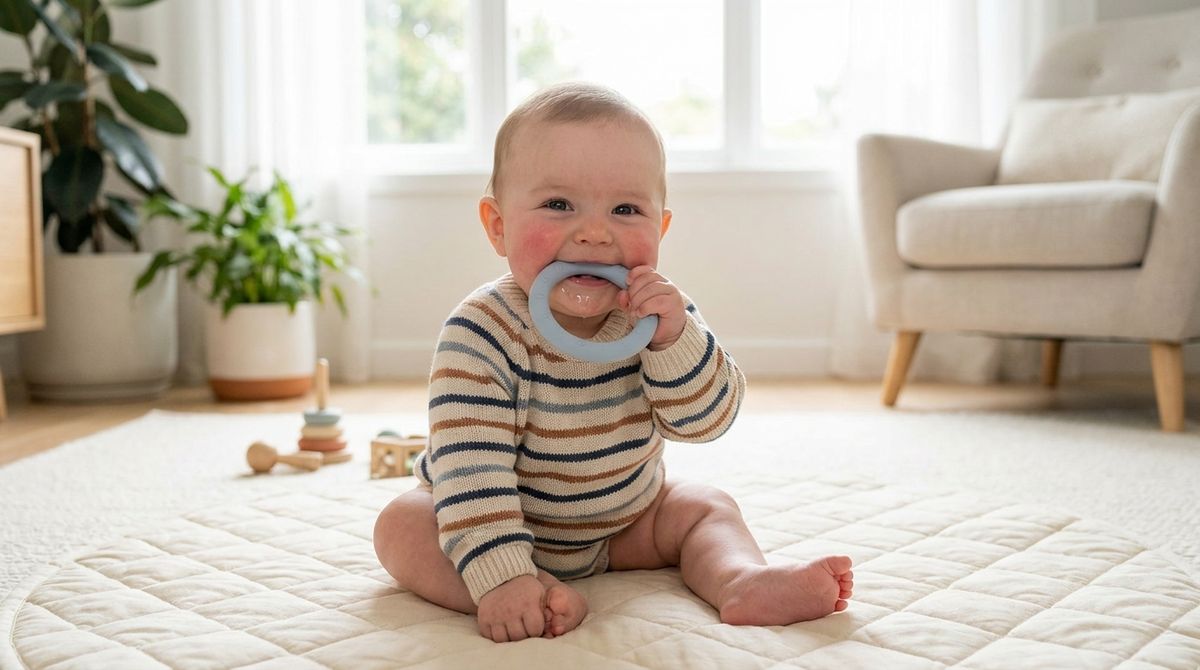
The first tooth is a small but exciting milestone. Baby teething brings up a lot of questions for parents: when to expect the first tooth, which symptoms are normal, how to ease your little one's discomfort, and when it's worth checking in with the doctor. In this in-depth guide we'll calmly walk through when teething begins, the order teeth come in, which teething signs are real and which are common myths, and how to help your baby safely.
The short version: for most babies this is a natural process that needs no treatment. Your job is to ease the discomfort, keep things safe, and notice the rare situations where something other than “teething” is actually going on.
When do babies start teething?
Most often the first tooth appears around 6 months, but a wide range is considered normal — roughly 3 to 12 months. Some babies meet their first tooth as early as 4 months, others closer to their first birthday, and both are perfectly normal.
Timing is largely influenced by heredity: if you or your partner teethed early or late, your baby often follows the same pattern. Occasionally a baby is born with a tooth (a natal tooth) or a tooth appears in the first weeks of life — this is rare and worth mentioning to your pediatrician. And if there's still no tooth by the first birthday, that's most often a normal variation too, but it's reasonable to raise the delay with your doctor at a routine visit.
Order teeth come in: which teeth appear first
Teeth usually erupt in pairs and in a fairly predictable sequence. The exact order teeth come in and the ages can vary from child to child, but the general teething timeline looks like this:
- Lower central incisors (the two front bottom teeth) — around 6–10 months;
- Upper central incisors — around 8–12 months;
- Lateral incisors (top and bottom, on either side of the front teeth) — around 9–16 months;
- First molars (the chewing teeth) — around 13–19 months;
- Canines — around 16–23 months;
- Second molars — around 23–33 months.
By about 2.5–3 years most children have all 20 baby teeth. Small deviations from these ages in either direction are ordinary and not a cause for concern on their own.
Teething symptoms: what's normal
Real teething symptoms are usually mild and last a few days around each tooth's arrival. Most often parents notice:
- heavy drooling — sometimes so much that the skin around the mouth and on the chin gets irritated;
- a strong urge to chew and put everything in the mouth — toys, little fists, the edge of a blanket;
- baby rubbing the gums, and sometimes the ear on the same side;
- slight swelling and redness of the gum where the tooth is coming through;
- more fussiness and a need to be close to you;
- restless sleep and more frequent night waking;
- a small dip in appetite — sucking or chewing can feel uncomfortable;
- a slight rise in temperature — as a rule, no higher than about 38 °C (100.4 °F).
If teething is keeping your little one up at night, you're not alone: temporary night waking during this stretch is common. For how to tell it apart from other causes and gently get sleep back on track, see our article on the 4-month sleep regression. And if your baby has suddenly started biting during nursing, that's another frequent companion of teething; our guide to getting breastfeeding off to a good start can help you calmly smooth things over.
What teething does NOT cause: important to know
This is one of the most important points for your baby's safety. Teething does not cause:
- a high fever (above about 38 °C / 100.4 °F);
- heavy diarrhea and vomiting;
- a bad cough or a runny nose with heavy discharge;
- a body-wide rash;
- marked lethargy or a complete refusal to eat or drink.
If you see these symptoms, it's almost certainly not teething, but an infection or another condition that needs attention. Blaming a high fever or diarrhea on “teething” is risky — it can mean missing an illness that needs treatment. Intense crying and distress aren't always about teeth either: if your baby cries hard in bouts, it's worth considering other causes — for example, colic in babies.
How to safely ease teething
The good news: simple, safe measures usually help most. What actually works:
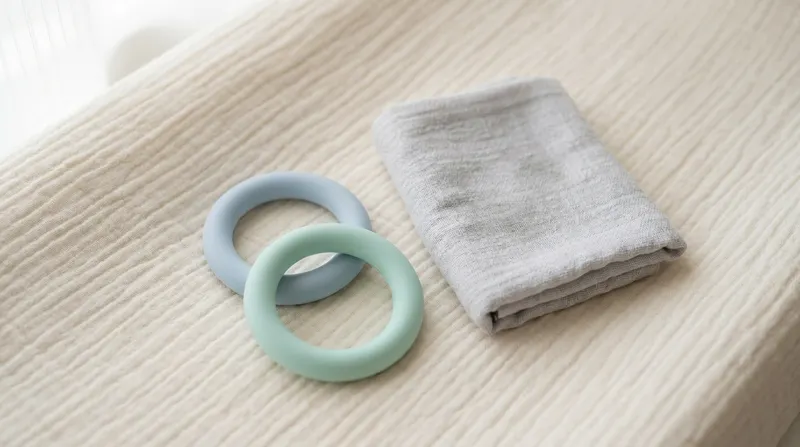
- A cool teether. Chill a teething ring in the refrigerator (not the freezer — an object that's rock-hard and icy can injure the gum). Choose solid silicone or rubber designs with no liquid inside.
- A clean, cool, damp cloth. Dampen a soft cloth, chill it slightly, and let baby chew — it also gently massages the gum.
- Gentle gum massage. With a clean finger, softly rub your baby's gum — light pressure eases the discomfort.
- More cuddles and closeness. The calm of being near you often soothes better than any remedy.
- Cool, soft food — for babies who have already started solids: chilled purée, for instance, always under supervision.
- Dry skin around the mouth. Gently pat away drool with a soft cloth to prevent irritation and “drool” rash.
What not to use
Some popular “remedies” aren't safe, and are best avoided:
- Amber teething necklaces and bracelets. Medical organizations, including the AAP and FDA, warn that they carry a risk of strangulation (if they wrap around the neck) and a risk of choking on individual beads. There's no proven benefit.
- Numbing gels with benzocaine or lidocaine. The FDA cautions against these gels in infants: benzocaine can cause a rare but dangerous condition — methemoglobinemia (which impairs how the blood carries oxygen). So the popular teething gel with these ingredients isn't right for babies — talk to your doctor about any gum products.
- Homeopathic “teething tablets.” Their contents can be unpredictable, and the benefit is unproven.
- Frozen hard objects and anything that could break or chip off, as well as any small items left unattended.
Pain relievers: only when your doctor recommends them
If the discomfort is severe and keeps your baby from eating and sleeping, your pediatrician may recommend children's acetaminophen (paracetamol) or ibuprofen (ibuprofen only from 6 months). This isn't a first choice or a “just in case” measure: the dose is always calculated by weight and age, and it's your doctor who prescribes it. Never work out the dosage on your own.
Caring for the first teeth
Teeth need care right from the very first one. As soon as a tooth appears:
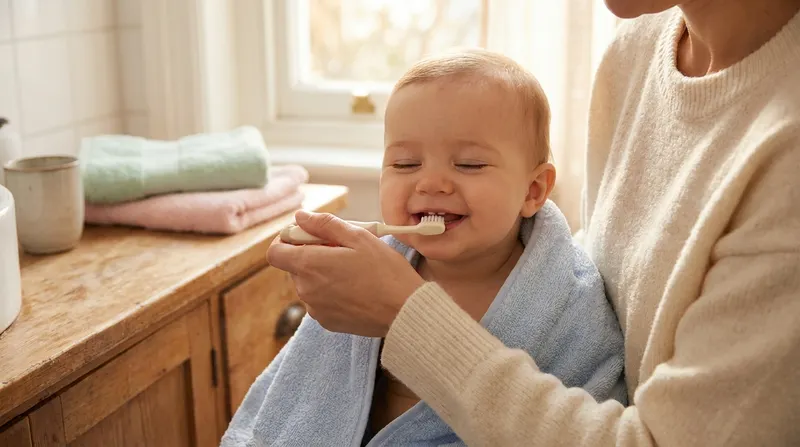
- Clean the teeth twice a day. Wipe with a soft cloth or brush with a baby toothbrush that has soft bristles.
- Use a smear of fluoride toothpaste the size of a grain of rice (after age 3 — a pea-sized amount).
- Don't give a bottle in bed and limit sugary drinks and juices: sugar that lingers on the teeth leads to early decay (“bottle rot”).
- Schedule the first dental visit — around age 1, or within 6 months of the first tooth appearing.
When to see a doctor
Teething on its own shouldn't cause severe symptoms. Contact your pediatrician if your baby has:
- a high or persistent fever (above about 38 °C / 100.4 °F, or lasting a long time);
- diarrhea, vomiting, or signs of dehydration;
- refusal to eat or drink, unusual lethargy;
- intense, ongoing distress or crying;
- any symptoms that don't fit the picture of teething.
Trust your instincts: you know your baby best. If something feels wrong, it's better to check in with your doctor one extra time.
Key takeaways
- The first tooth most often appears around 6 months, but the normal range is wide — from 3 to 12 months; timing depends largely on heredity.
- The usual order: lower central incisors first, then the upper ones, lateral incisors, first molars, canines, and second molars; all 20 baby teeth by about 2.5–3 years.
- Real symptoms are mild: drooling, the urge to chew, a swollen gum, fussiness, restless sleep, and a temperature no higher than about 38 °C (100.4 °F).
- A high fever, diarrhea, vomiting, or a rash are NOT “teething” — they're a reason to look for another cause and see a doctor.
- Safe ways to ease discomfort include a cool teether, a damp cloth, and gum massage; amber necklaces and benzocaine numbing gels are off-limits.
- Care for the teeth from day one and schedule a dental visit by around age 1.
This article is for general information only and is not a substitute for personalized medical advice. For questions about your child's health and well-being, contact your pediatrician or pediatric dentist.
Created with AI and reviewed by the Mama Ai team. Educational information — not a substitute for professional medical advice.
We’re with you every week of the way
Download on the App Store