Stretch Marks During Pregnancy: Prevention & Treatment
Stretch marks affect 50–90% of moms-to-be. Here's why they appear, what really helps prevent them, and how to fade stretch marks after pregnancy.

Mama Ai Team
Stretch marks during pregnancy show up in most moms-to-be — by various estimates, somewhere between 50 and 90%. They're narrow streaks on the skin of the belly, breasts, thighs or buttocks, and at first they can be alarming. The good news: stretch marks are safe for you and your baby, fade noticeably over time, and — most importantly — they're not a sign that you're doing anything wrong. In this article we'll calmly and practically cover where stretch marks come from, when and where to expect them, whether you can prevent them with creams and oils (honestly — what the science says), and which methods help reduce stretch marks after birth.
How to prevent stretch marks during pregnancy is a topic surrounded by a lot of marketing and very little evidence. So we lean on guidance from medical organizations and clinical research, not on the promises printed on a jar.
What stretch marks are and why they appear
Stretch marks (medically, striae gravidarum) are micro-tears in the middle layer of the skin, the dermis. That's where the collagen and elastin fibers live — the ones responsible for your skin's firmness and stretchiness. When the belly and breasts grow quickly, these fibers don't have time to reorganize and tear in places. The surface of the skin stays intact, but thin "tracks" form in the dermis — and those are what we see as streaks.
It's not just about mechanical stretching. During pregnancy your hormones shift: cortisol and sex-hormone levels rise, and that affects collagen production and skin elasticity. That's why stretch marks don't appear strictly where the skin is "stretched the most," and there's no way to predict them in advance.
Fresh stretch marks are usually reddish-pink or purple — this is the striae rubra stage (blood vessels are still visible under the skin). Over time the vessels recede and the streaks gradually fade to silvery white — this is striae alba. Mature white stretch marks are harder to treat than fresh red ones, so it makes sense to start caring for your skin early, without waiting for the streaks to turn white.
When do stretch marks appear in pregnancy, and where
Stretch marks most often appear at the end of the second and during the third trimester — roughly from week 25 to 34, when the belly grows fastest. Some women never get them at all; others get them in just a couple of weeks. Both are completely normal.
Typical spots:
- The belly — the most common stretch marks in pregnancy, especially along the sides and lower down.
- The breasts — from the growth of the mammary glands.
- Thighs, buttocks and hips — where fatty tissue is laid down fastest.
Sometimes fresh stretch marks itch a little or sit slightly raised above the skin — this is normal and usually linked to stretching and dryness. But if the itching is severe, spreads to your palms and soles, or comes with a rash, be sure to tell your provider: that's no longer about stretch marks, and it's worth ruling out other pregnancy conditions.
Who's at higher risk — an honest look at the factors
Here it's important to be direct, because there's a lot of guilt around stretch marks. In reality the decisive factor is genetics, not "not caring enough."
- Heredity. If your mother or sister had stretch marks during pregnancy, your odds are higher. This is the main and most predictable factor.
- Skin type and age. Your individual collagen and elastin make a difference.
- How fast the belly grows and your overall weight gain. The faster and more sharply the belly grows, the more the skin stretches. That's why smooth, gradual weight gain is one of the few factors you can actually influence.
- A multiple pregnancy. With twins the belly is bigger and grows faster.
- Past stretch marks — for example, ones that appeared in your teens or during a previous pregnancy.
The pace and amount of weight gain are directly linked to stretch-mark risk, so it helps to aim for the recommended range for your body mass index — we cover this in detail in our guide to how much weight gain is normal by BMI and week. This isn't about restricting your food; it's about calm, even gain without sharp spikes.
How to prevent stretch marks during pregnancy: what really works
The main thing to know: no cream or oil has been proven to reliably prevent stretch marks. Systematic reviews of the research show that popular products, on average, don't reduce the risk of stretch marks compared with plain moisturizing or no care at all. That doesn't mean caring for your skin is pointless — just keep your expectations realistic.
What does make sense:
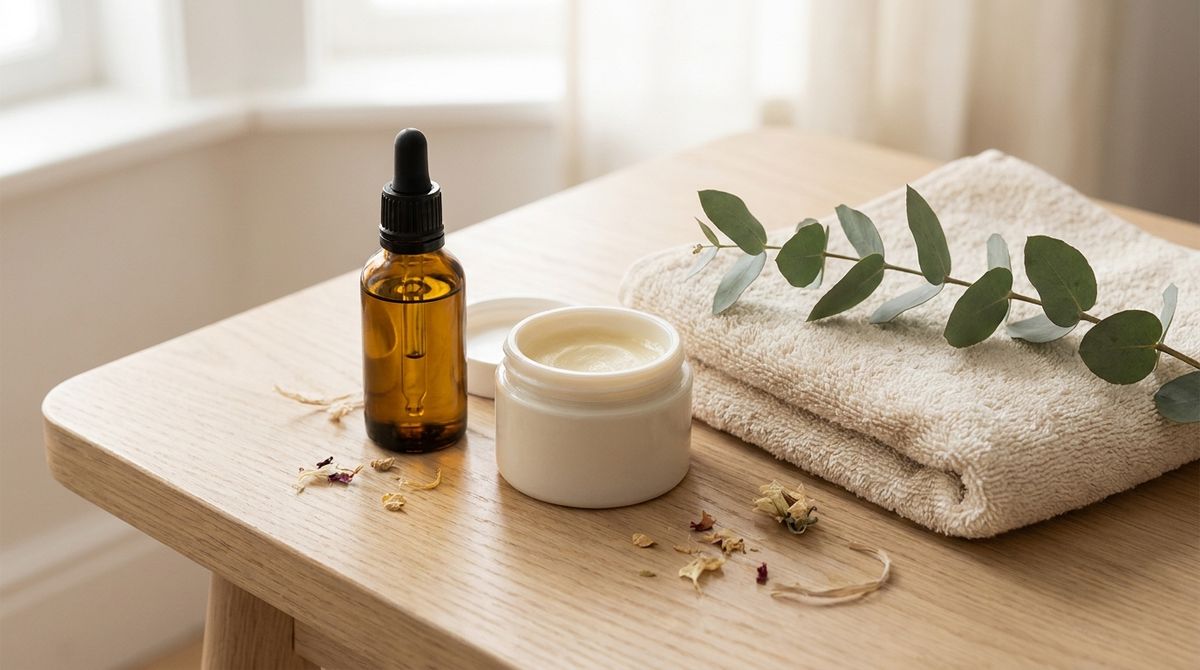
- Moisturizing your skin. Regularly apply a cream or oil to your belly, breasts and thighs. There's no proof it's guaranteed to remove stretch marks, but moisturized skin itches less, feels softer and more comfortable, and a small effect on prevention is possible. A simple, fragrance-free moisturizer for stretch marks is as good a choice as anything pricier.
- Gradual weight gain within the recommended range — so the skin stretches little by little.
- Enough fluids. Staying hydrated supports skin elasticity.
- A balanced diet. To build collagen, your skin needs protein, vitamins C and E, and zinc. We break down what helps and what to limit in our guide to what to eat and avoid during pregnancy.

The best oils and creams for stretch marks: what the research shows
If you still want to use a stretch-mark product, here's an honest picture of the ingredients people ask about most:
- Centella asiatica and hyaluronic acid — these have the most (though still limited) data supporting some reduction in stretch-mark risk. It's not a guarantee, but among what's available it's the best-supported choice.
- Bitter almond oil with massage. In some studies, women who rubbed this oil in with massaging motions had fewer stretch marks. It seems the massage itself matters as much as the oil.
- Cocoa butter and olive oil. Very popular and pleasant to use, but in clinical trials they didn't beat placebo. You can use them for moisturizing and comfort, but don't expect them to protect against stretch marks.
Notice the recurring detail: the effect is often tied to massage rather than a specific product. A few minutes of gently rubbing cream or oil into your skin each day is both moisturizing and a pleasant ritual that helps you notice changes in your body sooner.
What to avoid during pregnancy
Separately and unequivocally: retinoids — retinol, tretinoin and other vitamin A derivatives for the skin — along with high doses of vitamin A taken orally, are contraindicated during pregnancy. This also applies to many "anti-aging" stretch-mark creams that contain retinoids. Their use is postponed until after birth and after you've finished breastfeeding. If you're unsure about a product's ingredients, show it to your doctor or pharmacist.
Stretch mark treatment after birth
Here, too, let's start with something reassuring: do stretch marks go away after pregnancy? Most fade noticeably on their own within 6–12 months after birth. Bright red-purple streaks gradually turn light and less visible — and often that's enough for them to stop being bothersome.
If you do want to reduce them more actively, the ways to get rid of stretch marks after birth use methods that aren't applied during pregnancy:
- Topical tretinoin (a retinoid) — can improve the look of fresh stretch marks, but is used only after pregnancy and after you've finished breastfeeding, and on a doctor's advice.
- Laser therapy — different types of laser for stretch marks help even out skin color and texture.
- Microneedling (fractional microneedle mesotherapy) — stimulates collagen production.
- Chemical peels and radiofrequency (RF) treatments — are also used to improve the look of stretch marks.
A word about expectations: no method "erases" stretch marks completely. They all reduce how noticeable the marks are — evening out color and texture — but the scar structure in the dermis remains. Fresh red stretch marks generally respond to treatment better than old white ones. Discuss any procedure with a dermatologist, who'll assess your skin type and choose a suitable option.

Stretch marks are normal
More than half of pregnant women get stretch marks, and once you count teenage and weight-related ones, almost everyone has them somewhere on their body. They're not a flaw or the result of "wrong" care: most of the time it all comes down to genetics. Many people are helped by a simple shift in focus — seeing stretch marks as a trace of the enormous work your body has done.
There's usually no cause for worry, but it's worth showing your stretch marks to a provider if they appear very quickly and widely with no link to your growing belly, or come with severe itching, pain or other symptoms — to rule out other conditions.
Key takeaways
- Stretch marks are micro-tears in the dermis when the skin stretches quickly; 50–90% of pregnant women get them, and over time they fade from red to white.
- They most often appear at weeks 25–34 on the belly, breasts, thighs and buttocks.
- The main risk factor is heredity; what you can really influence is smooth weight gain and skin care.
- No cream has been proven to reliably prevent stretch marks; moisturizing and massage help with comfort, and Centella asiatica and hyaluronic acid are the best studied.
- Retinoids and high doses of vitamin A are contraindicated during pregnancy.
- After birth most stretch marks fade on their own; laser, microneedling, peels and tretinoin reduce them but don't remove them completely.
This article is general information and not a substitute for personalized medical advice. For questions about skin care, weight gain and any procedures during and after pregnancy, talk to your obstetrician-gynecologist or dermatologist.
Sources
Created with AI and reviewed by the Mama Ai team. Educational information — not a substitute for professional medical advice.
We’re with you every week of the way
Download on the App Store