
Foods to Avoid While Breastfeeding: Real List & Myths
What foods to avoid while breastfeeding for real—alcohol, caffeine, high-mercury fish—and why cabbage, citrus, and 'gassy' foods are just myths.

Mama Ai Team
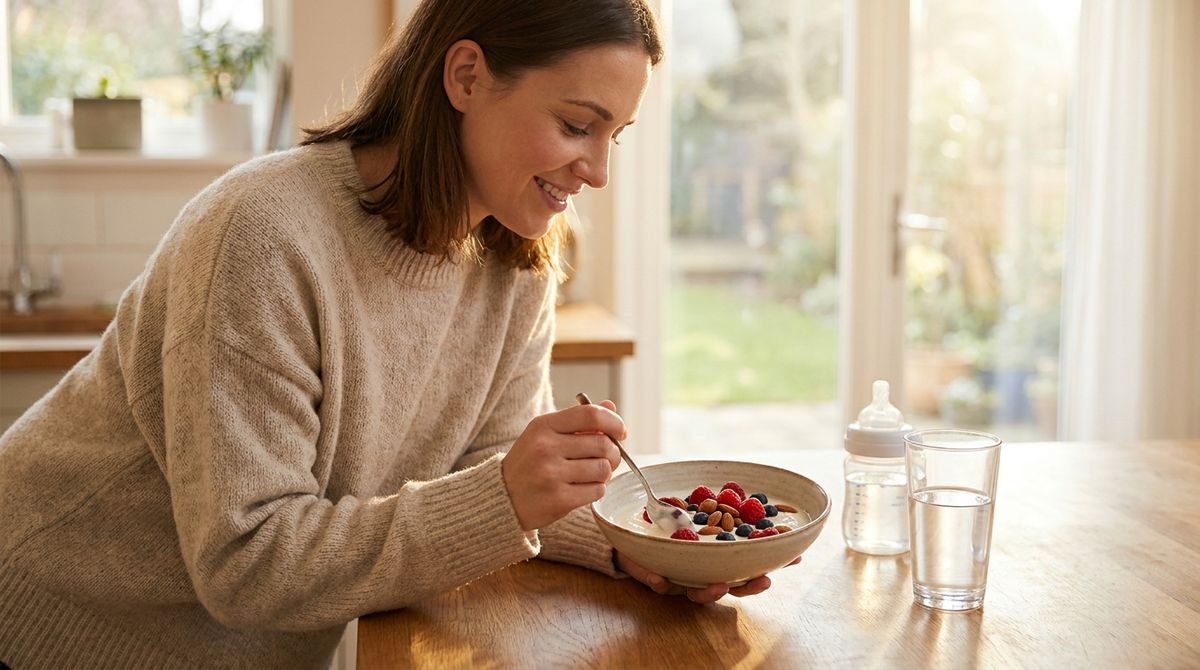
Almost every new mom leaves the hospital with a list of forbidden foods: no cabbage, no cucumbers, nothing "red," no chocolate, onions, or citrus. And often a separate line: "drink tea with milk so your milk comes in." The result? A woman who needs energy and real food more than ever spends months living on plain chicken and rice, afraid to eat an apple.
The good news: evidence-based medicine doesn't back this list up. There are very few real foods to avoid while breastfeeding—you can count them on one hand. Let's walk through it: what not to eat while breastfeeding for real, what you can eat without worry, how many extra calories and how much fluid you actually need, which supplements truly matter, and what to do if it seems like your baby has an allergy.
Do You Really Need a Strict Breastfeeding Diet?
No. There's no special "breastfeeding diet" in modern guidelines. The CDC and other organizations put it simply: a breastfeeding woman needs an ordinary, balanced diet—vegetables, fruit, grains and bread, protein (meat, fish, eggs, legumes), dairy or dairy alternatives, plant oils, and nuts.
What's more, strict "just in case" restrictions tend to do more harm than good. They strip nutrients from your diet at a time when your body is recovering from birth and working for two, they raise the risk of deficiencies, and they drain your energy and the simple pleasure of eating—all without lowering your baby's risk of allergies. The American Academy of Pediatrics states it plainly: there's no evidence that removing foods from the mother's diet during pregnancy or breastfeeding prevents allergic disease in the child.
Here's another nice part: after birth, some of the restrictions from pregnancy lift. Soft cheeses made from unpasteurized milk, lightly salted fish, a medium-rare steak, raw eggs in sauces—the things you avoided to prevent listeriosis and toxoplasmosis no longer pose a risk to your baby through breast milk (for a detailed breakdown, see our article on foods to avoid during pregnancy). Ordinary food hygiene still applies—and it matters for you.
Does What You Eat Affect Your Breast Milk?
It does, but not the way people assume. The core makeup of milk—protein, lactose, overall fat—is fairly stable and barely depends on what you ate yesterday. When needed, your body draws on its own reserves, so "bad milk from the wrong food" is a myth.
Here's what really does shift with your diet:
- The fatty-acid profile, including DHA (omega-3) levels—this depends directly on whether you eat oily fish.
- Water-soluble vitamins and iodine—B1, B2, B6, B12, vitamin D, iodine, choline. If mom is deficient, milk will be low in them too.
- The taste and smell of milk—garlic, spices, and vanilla slightly tint the flavor. That's not a problem but a plus: early exposure to different flavors helps your baby accept new foods more calmly when solids begin.
Minerals like calcium and iron in milk barely depend on your diet—but your own stores do. That's why the goal of eating well while breastfeeding is, first and foremost, your own health.
How Much to Eat and Drink While Breastfeeding
Extra Calories
Producing milk during exclusive breastfeeding costs your body roughly 500 calories a day. Some of that comes from the fat stores built up in pregnancy, so guidelines usually suggest an extra 330–400 calories a day for the first six months. This isn't "eating for two": it's about one solid snack—a cheese-and-egg sandwich, a bowl of cottage cheese with nuts and fruit, or oatmeal with a banana.
You don't have to count calories. It's far more practical to keep food you can eat with one hand within reach: boiled eggs, cheese, nuts, yogurt, fruit, hummus with crackers, ready-cooked grains. Hunger while breastfeeding is often intense and sudden—and that's normal. If feeding isn't going smoothly yet and you're exhausted, see the practical steps in our article on how to start breastfeeding in the first days.
How Much to Drink: By Thirst, Not "Three Liters"
The rule "drink 3 liters or your milk will dry up" doesn't hold. Drinking beyond thirst doesn't boost milk supply—supply depends on frequent, effective emptying of the breast, not on how much water you drink. That said, lactation really does make you thirstier: nursing mothers need more fluid than usual (roughly 3 liters a day in total—counting water, soups, tea, fruit, and vegetables).
The workable approach is simple: keep a glass of water by your feeding spot and drink when you want to. Dark, concentrated urine and a constantly dry mouth are signs you're low on fluids. There's no need to force yourself to drink.
Losing Weight After Birth
Gradual weight loss (up to about 0.5–0.8 kg a week) usually doesn't affect milk supply. Crash diets, prolonged fasting, and very low-carb plans, on the other hand, are best not started while breastfeeding without a doctor's guidance: they hit your energy, your mood, and in some cases milk production. Give yourself at least a few months—your body is already burning through its reserves bit by bit.
Foods to Avoid While Breastfeeding: The Short, Real List
If you want a "chart" of what not to eat while breastfeeding, the honest version fits into four points.
1. Alcohol
The safest choice is not to drink. Alcohol passes freely into breast milk, and its concentration there mirrors the level in your blood. If you do drink, two things matter:
- Amount: an occasional single standard drink (about 350 ml of 5% beer, 150 ml of 12% wine, or 45 ml of spirits) is considered not linked to harm for the baby, as long as you wait.
- Timing: wait at least 2 hours per drink before nursing. It's convenient to feed your baby right before you have a glass.
"Pump and dump" does not clear alcohol: the level in milk drops only with time, as the level in your blood falls. Pumping during this window only makes sense for breast comfort or to keep your supply up. And one more thing: beer doesn't "bring in more milk"—alcohol actually dampens the oxytocin reflex and can reduce how much your baby takes at a feed. Regular or heavy drinking while breastfeeding isn't safe; we covered alcohol's effects even before birth in our piece on alcohol during pregnancy.
2. Caffeine—Fine, With a Limit
Coffee isn't off-limits while breastfeeding. The guide is up to 300 mg of caffeine a day, roughly 2–3 cups of coffee. Only a small fraction of what you drink reaches your milk. Keep in mind caffeine isn't only in coffee: black tea has about 30–50 mg per cup, green tea less, cola and energy drinks 30 to 80 mg per can, and dark chocolate around 20 mg per 30 g.
One nuance: newborns—and premature babies especially—clear caffeine far more slowly than adults. If your baby has become fussy, struggles to fall asleep, and seems jittery while you're drinking a lot of coffee, it's worth cutting back for a week and seeing what changes. We covered the limit you got used to in pregnancy in our article on how much caffeine is safe; while breastfeeding the threshold is more relaxed.
3. Large Predatory Fish High in Mercury
Mercury passes into breast milk and can affect your baby's developing nervous system. That's why nursing mothers are advised not to eat swordfish, shark, king mackerel, marlin, bigeye tuna, orange roughy, and tilefish. Limit albacore ("white") tuna to no more than one serving a week.
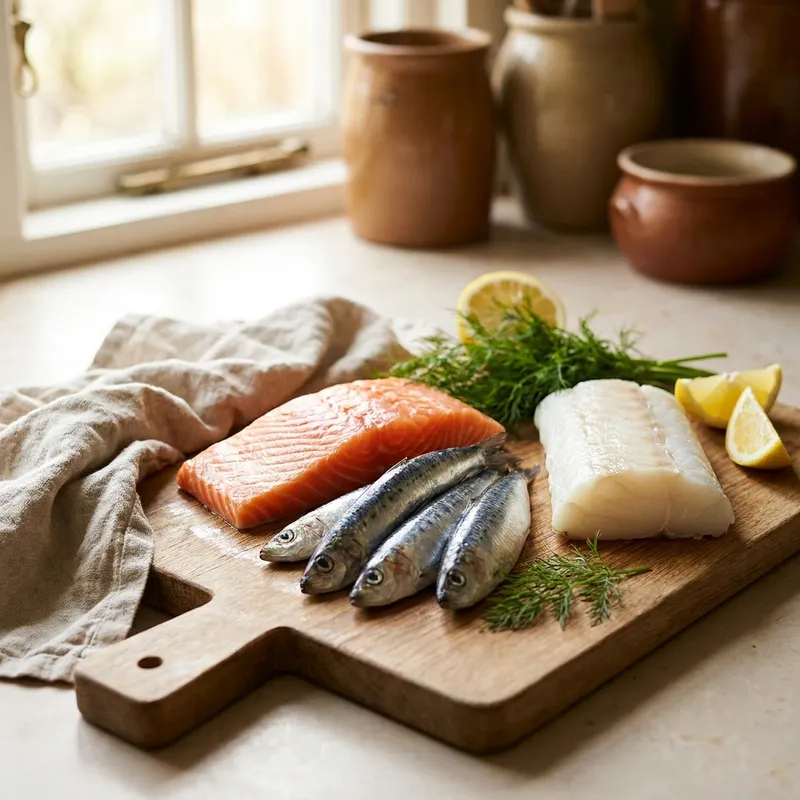
But that's no reason to give up fish altogether—quite the opposite. The recommendation is 2–3 servings a week (about 225–340 g) of low-mercury fish, the best source of DHA for your baby's brain and vision. Good options:
- salmon, trout, herring, Atlantic mackerel, sardines;
- cod, pollock, hake, tilapia, catfish;
- shrimp, squid, scallops;
- canned light tuna (not bigeye).
4. Herbal Teas and "Milk-Boosting" Blends
Paradoxically, this is the most underrated risk zone. Herbal supplements don't go through the same quality control as medicines, and their safety while breastfeeding most often simply hasn't been studied.
- Fenugreek is the most popular "galactagogue," but there's little solid evidence it works. It can cause stomach upset in mom and baby, a distinctive "maple syrup" smell to sweat and urine, and lower blood sugar; for people allergic to legumes (peanuts, chickpeas) it may be off-limits.
- Star anise—there have been cases where the blend was contaminated with Japanese star anise, which is neurotoxic to infants.
- Sage, peppermint, and parsley in large amounts have, by observation, been linked to reducing milk supply instead.
The only reliably working "galactagogue" is frequent, effective emptying of the breast: feeding on demand, a good latch, and pumping if needed. Any lactation supplement is worth discussing with your doctor or a lactation consultant—not buying on a tip from a group chat.
Separately: smoking and vaping while breastfeeding aren't recommended, and any medications or supplements are worth checking with your doctor—most drugs' compatibility with nursing is known, and you usually don't need to stop breastfeeding.
What You Can Eat While Breastfeeding: Myths to Let Go Of
And now the list of what you don't need to cut out "just in case."
Vegetables, Fruit, and Berries
The question "which fruit can I eat while breastfeeding" actually has a short answer: any that you tolerate well yourself. Can you have apples, grapes, tomatoes, and cucumbers while breastfeeding? Yes. The idea that grapes make your baby gassy or cucumbers cause colic rests on the folk logic that "whatever is in mom's belly ends up in baby's." It doesn't work that way: gas forms in mom's gut from fiber, and fiber doesn't pass into milk. The same goes for cabbage, beans, onions, and garlic.
There's no need to cut out "red" foods either: strawberries, cherries, beets, and tomatoes don't give your baby a rash through their color. Citrus, spicy food, chocolate, and coffee aren't on the must-avoid list either.

"Foods That Cause Colic"
Colic isn't about mom's food. It affects roughly one in five babies regardless of how they're fed, peaks at 6–8 weeks, and fades by 3–4 months. So does what you eat cause your baby's gas and colic? There's no convincing evidence that cutting cabbage or dairy from mom's diet helps with ordinary colic; in select cases a doctor may suggest a trial elimination, but that's not the first step. For what actually helps, see our article on colic in newborns.
Allergens in Mom's Diet
There's no need to cut out nuts, eggs, dairy, fish, or wheat "so your baby won't develop allergies"—it doesn't lower the risk. Allergy prevention today looks the opposite way: introducing allergenic foods to the baby on time, around 4–6 months alongside the start of solids and without long delays (age-by-age guidance is in our starting-solids chart by month). Discuss the plan with your pediatrician, especially if there's severe allergy in the family or your baby has marked eczema.
Vitamins and Supplements While Breastfeeding
This list is shorter than you'd expect, but the items matter. Specific products and doses are chosen by your doctor—below are general pointers from the guidelines.
- Vitamin D—for the baby, not just mom. Breast milk is low in vitamin D, so the American Academy of Pediatrics recommends 400 IU of vitamin D a day for breastfed and mixed-fed babies, starting in the first days of life. This is the most important supplement while breastfeeding—and it's the baby who needs it.
- Vitamin B12—if mom eats a vegan or vegetarian diet. B12 is found only in animal products. If you don't eat them, a supplement is essential: B12 deficiency in a breastfed baby leads to serious neurological damage that can go unnoticed on the outside for a long time. The recommendation for nursing mothers is 2.8 mcg a day.
- Iodine. The need while breastfeeding is high (around 290 mcg a day)—higher than in pregnancy. Iodized salt, dairy, and fish help; many guidelines advise nursing mothers to take a supplement with 150 mcg of iodine. Some areas are naturally low in iodine, so this isn't an unnecessary precaution.
- Omega-3 (DHA). The easiest way to cover it is 2–3 servings of fish a week. If you don't eat fish, talk to your doctor about a supplement—including algae-based ones for a plant-based diet.
- Iron and calcium. Your calcium need while breastfeeding isn't higher than usual, but meeting it matters, especially if you've cut out dairy. Iron is worth checking with a blood test: after blood loss in delivery, anemia is common and really drags down how you feel.
- Prenatal multivitamins. Many keep taking them after birth—a convenient way to cover the basics, but they're no substitute for lab tests.
If You Suspect Your Baby Has an Allergy
Genuine cow's-milk-protein allergy does occur in breastfed babies—in roughly 0.5–3% of exclusively breastfed infants—but it doesn't look like "red cheeks after mom ate a tangerine."
What actually deserves attention:
- streaks of blood or a lot of mucus in the stool of an otherwise happy, well-growing baby—the most typical picture (allergic proctocolitis);
- persistent vomiting, profuse loose stools, poor weight gain;
- marked eczema that doesn't respond to usual care;
- hives, facial swelling, difficulty breathing—this is an emergency.
What matters: an elimination diet is a diagnostic procedure, not a lifestyle. It's prescribed by a doctor, usually lasts 2–4 weeks, requires removing all sources of milk protein (including hidden ones), and must end with reintroducing the food. If symptoms don't return after reintroduction, milk wasn't the cause and the food goes back into your diet. Without this check, mothers spend years on an empty diet for no reason. While cutting out dairy, it's worth discussing calcium and vitamin D sources with your doctor.
And separately: lactose intolerance in breastfed babies is extremely rare, and it has nothing to do with whether mom drinks milk.
When to See a Doctor
Reasons to contact your pediatrician or your own doctor:
- blood or heavy mucus in your baby's stool, persistent vomiting, refusing the breast;
- poor weight gain, few wet diapers, lethargy;
- a hives-type rash, swelling of the lips and eyelids, difficulty breathing after a feed—seek emergency care immediately;
- for mom—fever, chills, a red painful patch on the breast: this may be a blocked duct or mastitis, which is treated, not endured;
- severe weakness, dizziness, hair loss, and sudden weight loss—worth checking your iron and thyroid;
- feeling low, anxious, drained of energy and joy for more than two weeks—this isn't "just your character" but a reason to discuss postpartum depression with a professional.
Key Takeaways
- There's no special breastfeeding diet. Strict restrictions impoverish your own diet and don't protect your baby from allergies.
- Very little actually needs limiting: alcohol (wait at least 2 hours per drink; pumping doesn't clear it), caffeine up to ~300 mg a day, large predatory fish high in mercury, and unproven herbal blends.
- Fish, on the contrary, you should eat—2–3 servings a week from the low-mercury list, for the omega-3s.
- Plus 330–400 calories a day and water by thirst. Drinking beyond thirst is pointless—it won't bring in more milk.
- Supplements: vitamin D—for the baby from day one; B12—for mom on a plant-based diet; iodine and omega-3—as needed; iron—based on lab tests.
- Cabbage, cucumbers, grapes, tomatoes, citrus, and "red" foods aren't forbidden and don't cause colic.
- An elimination diet is prescribed by a doctor and always ends with a trial reintroduction of the food.
This article is general information and does not replace personalized medical advice. If something about your health—or your baby's—concerns you, discuss it with your doctor or pediatrician.
Sources
Created with AI and reviewed by the Mama Ai team. Educational information — not a substitute for professional medical advice.
We’re with you every week of the way
Download on the App Store