Prenatal Vitamins: What You Need and How Much
A clear guide to the prenatal vitamins that really matter: folic acid, iron, iodine, vitamin D, omega-3 and choline — doses, timing and what to skip.

Mama Ai Team

The prenatal vitamin aisle can feel overwhelming: dozens of boxes, different formulas, "premium" and "budget," gummy bears and capsules the size of a bean. And almost every one claims to be the one you really need. Figuring out what actually works and what's just marketing isn't easy.
The good news: the list of nutrients with proven benefits in pregnancy is fairly short. Below we break down whether you even need a prenatal vitamin, the doses named by international guidelines (ACOG, WHO, CDC, NASEM/IOM), what changes by trimester, and what's best to avoid in a formula. This is general information, not a prescription: your provider chooses the specific plan based on your labs and your situation.
Do you need a prenatal vitamin if you eat well?
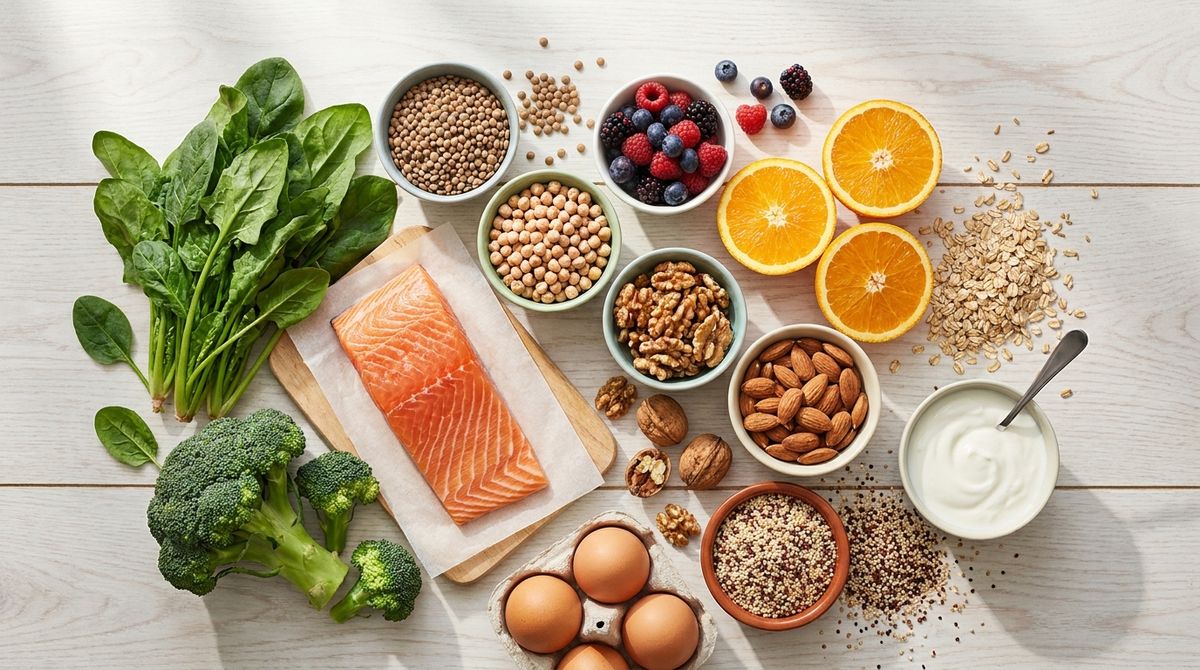
Food is the foundation, and no bottle replaces it. But there are nutrients that are hard to get from an everyday diet at exactly the moment they matter most.
Folic acid is the prime example: the baby's neural tube closes around day 28 of pregnancy, often before a missed period, and you can't "catch up" later with food. Iron needs nearly double by the third trimester compared with before pregnancy. In many regions, diets are simply low in iodine. That's why WHO's antenatal-care guidance recommends daily iron and folic acid for all pregnant women, and ACOG treats prenatal vitamins as a supplement to a balanced diet, not a replacement for it.
Put simply: a prenatal is insurance for when food falls short. Especially since with nausea, double shifts and an aversion to half the foods you used to like, the "perfect diet" is rare. We covered how to build your eating in this period in detail in our article on what to eat and avoid during pregnancy.
Who especially needs a prenatal vitamin
- vegetarians and vegans (B12, iron, iodine, DHA, choline);
- a multiple pregnancy (twins or more);
- less than a year between pregnancies;
- after bariatric surgery or with conditions that impair absorption;
- severe nausea and vomiting that sharply limits eating;
- confirmed anemia or low ferritin;
- pregnancy in the teenage years;
- strict diets, dairy intolerance, or cutting out whole food groups;
- taking certain medications (for example, anti-seizure drugs) — here the plan is always set by your provider.
Folic acid: where it all begins
This is the one nutrient you start taking before pregnancy. CDC and ACOG recommend that everyone who could become pregnant take 400 mcg of folic acid a day — at least a month (ideally 1–3 months) before conception — to lower the risk of neural tube defects. During pregnancy, the total need for folate is about 600 mcg a day, and standard prenatal vitamins with folic acid usually cover it.
A separate matter is the 4 mg (4,000 mcg) dose. It comes up if you've had a previous pregnancy affected by a neural tube defect or have other indications. Only a provider prescribes that dose, and you must not build it up by taking several prenatals at once: along with the folic acid you'd get an excess of everything else, including vitamin A.
On forms: the evidence base for preventing neural tube defects is built specifically on synthetic folic acid. Methylfolate is an acceptable alternative, but there's no point paying more for it "just in case," and ACOG does not recommend routine MTHFR testing for healthy women. When to start, how much to take and for how long — in detail in our article on taking a folic acid supplement in pregnancy.
Iron: not "just in case" for everyone, but for many
The recommended daily allowance of iron in pregnancy is 27 mg (NASEM/IOM), and that's roughly what prenatal vitamins with iron contain. To prevent anemia, WHO suggests 30–60 mg of elemental iron a day; in regions where anemia is common, the dose is chosen closer to the upper end.
Therapeutic doses, though, are no longer about prevention. They're prescribed when iron deficiency or anemia is confirmed by labs: a complete blood count (hemoglobin) and ferritin. ACOG recommends screening for anemia at the first prenatal visit and again at 24–28 weeks. The point is that "more iron for everyone" isn't safer: excess tends to cause more side effects and is tolerated less well. What the numbers on your labs mean and what a normal hemoglobin is in pregnancy — we explain in our piece on anemia in pregnancy.
How to take iron supplements so they're absorbed
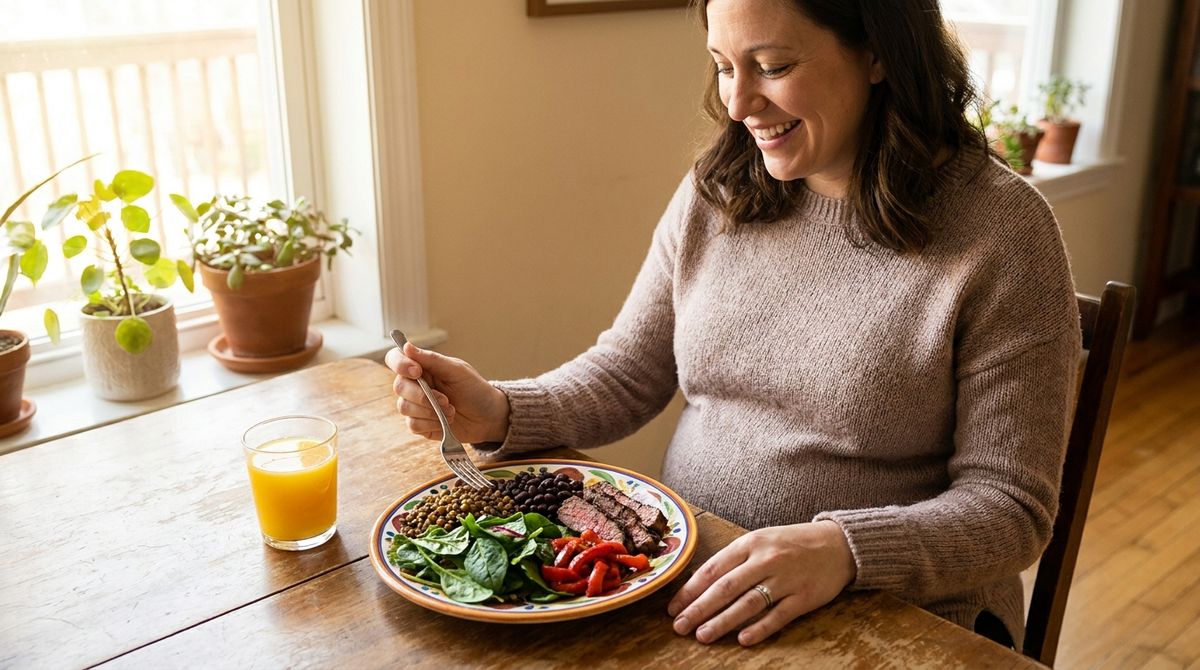
- With vitamin C — a glass of orange juice, a slice of lemon in water, or a piece of bell pepper alongside boosts absorption.
- Don't wash it down with tea, coffee, cocoa or milk: tannins and calcium hinder absorption. Space these drinks and your iron at least 1–2 hours apart.
- Apart from calcium — if your provider prescribed both, take them at different times of day.
- Side effects: constipation, dark stool (this is normal and not dangerous), nausea, a heavy feeling in the stomach. Water, fiber and movement help; if they don't, discuss a different form or schedule with your provider rather than quietly quitting.
- With strong nausea, many find it easier to take the prenatal in the evening or after a meal.
Iodine: a small dose that matters a lot
Iodine is needed for thyroid hormones, and those directly affect the baby's brain development. The recommendation in pregnancy is 220 mcg a day, and 290 mcg while breastfeeding (NASEM/IOM); WHO aims for 250 mcg. ACOG and the American Thyroid Association recommend that a prenatal contain 150 mcg of iodine (as potassium iodide) — the rest usually comes from food and iodized salt.
The problem is that iodine isn't in every prenatal — check the label. For iodine-deficient regions, which include much of the post-Soviet space, this matters especially. At the same time, more isn't better: the tolerable upper limit for adults is 1,100 mcg a day, and excess iodine also disrupts thyroid function. For the same reason, avoid supplements with kelp and seaweed: the iodine dose in them is unpredictable. If you have thyroid problems, the plan is discussed separately — see our article on the thyroid and TSH by trimester.
Vitamin D and calcium
The recommended amount of vitamin D in pregnancy is 600 IU (15 mcg) a day; most prenatals have 400 IU, with the rest from food and sun. ACOG does not recommend routinely testing 25(OH)D in all pregnant women, but with a confirmed deficiency a provider may prescribe more: doses of around 1,000–2,000 IU a day are considered safe. The tolerable upper limit is 4,000 IU, and "loading" regimens without labs or a prescription are a bad idea. Deficiency is more likely if you get little sun, cover your skin, live at northern latitudes or have darker skin.
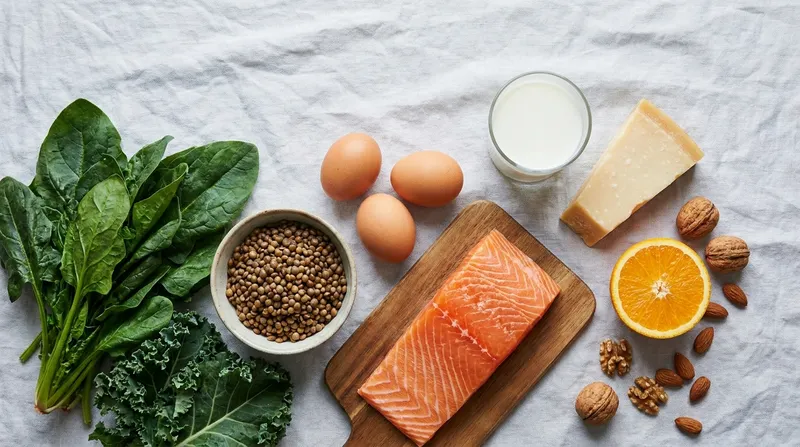
You need about 1,000 mg of calcium a day in pregnancy (1,300 mg for expectant mothers aged 14–18). It's genuinely better to get it from food: dairy, fortified plant drinks, tofu, sesame, canned fish with bones, and greens. A full daily dose simply doesn't fit into a single tablet, so a prenatal usually has 100–300 mg — and that's fine. WHO recommends separate calcium supplements where calcium intake is low, to lower the risk of preeclampsia, and a provider prescribes them.
Omega-3 and DHA: what's proven and what isn't
DHA (docosahexaenoic acid) is a fatty acid that builds the baby's brain and retina, most actively in the third trimester. What research shows: taking omega-3 in pregnancy lowers the risk of preterm birth. What research does not confirm is that the supplement on its own will make a baby smarter; the lovely promises on packaging run ahead of the data here.
ACOG recommends 2–3 servings (about 230–340 g a week) of low-mercury fish: salmon, sardines, Atlantic mackerel, herring, cod. If you don't eat fish, discuss a DHA supplement with your provider — a typical dose in prenatal vitamins is 200–300 mg; for vegans there are algae-based options. Important: don't replace this with cod-liver oil — it's high in retinol (vitamin A).
Choline, B12 and B6 — the ones people forget
Choline is the most underrated nutrient of pregnancy. The recommendation is 450 mg a day (550 mg while breastfeeding), and most prenatals have little or none. The best source is food: one large egg provides about 147 mg, and there's plenty of choline in meat, fish, soy products and legumes.
Vitamin B12 — 2.6 mcg a day. It's found only in animal products, so vegans and strict vegetarians definitely need a supplement: a deficiency in mom means a deficiency in the baby. Check that B12 is in your prenatal.
Vitamin B6 (pyridoxine) is a case where a vitamin works like a medicine: ACOG recommends it as a first-line option for nausea and vomiting in pregnancy, alone or together with doxylamine. Your provider sets the dose and schedule. What else helps you get through this period — in our article on morning sickness in pregnancy. As for the popular magnesium-with-B6 prescriptions: the evidence is weaker than commonly assumed, so make that decision with your provider rather than on a tip from a group chat.
What's best to avoid
- High doses of vitamin A as retinol. The tolerable upper limit is 3,000 mcg RAE (10,000 IU) a day; above that it can be dangerous for the baby's development. In a prenatal, vitamin A should be around the daily requirement and mostly as beta-carotene, which is safe. Standalone retinol supplements, cod-liver oil and large portions of liver are out.
- Megadoses of "500% of the daily value." More isn't better; for fat-soluble vitamins (A, D, E, K) it also carries a cumulative risk.
- Two products at once. A prenatal + a "women's multivitamin" + a separate "hair vitamin" is the most common way to quietly exceed the upper limits.
- Herbal supplements and "pregnancy teas." Their composition and dosing are regulated more loosely than medications, and most herbs haven't been studied for safety in pregnancy.
- "Just in case" supplements — for immunity, energy, beauty. Show your provider everything you take, including what seems harmless.
How to read the label and not overpay
Pick up the box and run through a short checklist:
- folic acid — 400–800 mcg;
- iodine — about 150 mcg (a frequent no-show on labels);
- iron — roughly 27 mg, unless your provider directed otherwise;
- vitamin D — 400–600 IU (more only by prescription);
- vitamin B12 — especially important on a plant-based diet;
- vitamin A — mostly beta-carotene, without "loading" amounts of retinol;
- calcium — a small dose, and that's normal; get the rest from food;
- DHA — not in every prenatal, sometimes a separate capsule.
A couple of practical details. Gummy forms almost never contain iron — because of the taste — and often lack iodine too; they're a convenient option with strong nausea, but double-check the composition. Price doesn't equal quality: words like "organic," "natural" and "premium" say nothing about doses, and a simple, inexpensive prenatal with the right composition works just as well as a pricey one. And if the smell or capsule size makes you nauseous, that's not fussiness: it's worth looking for another form, because the best prenatal is the one you actually take.
Prenatal vitamins by trimester: what matters and when
Before conception and the first trimester
The priorities are folic acid (start 1–3 months before conception) and iodine. Iron needs haven't risen yet, but nausea can get in the way of taking pills: try the prenatal in the evening, after a meal, or split the dose. If vomiting won't let you keep down even water, that's a reason to see your provider, not to tough it out.
Second trimester
Nausea usually eases and appetite returns — the right time to sort out your eating. Blood volume grows, and with it the need for iron; a repeat blood test for anemia is usually done at 24–28 weeks. Vitamin D and calcium support the baby's skeleton, which is actively mineralizing.
Third trimester
The peak need for iron and the period of fastest brain growth — which means DHA and choline matter. Keep up calcium and vitamin D. Many people run into constipation now: fiber, water and movement help more than stopping iron.
After birth and while breastfeeding
You usually keep taking a prenatal: the need for iodine is even higher (290 mcg), and B12, vitamin D and iron matter if there was blood loss or anemia. If you're breastfeeding and eating a plant-based diet, B12 is a must.
When to see your provider and what to discuss
Talk to your provider if:
- you're planning a pregnancy — to start folic acid in time;
- you've had a previous pregnancy affected by a neural tube defect, or have epilepsy, diabetes, obesity, GI conditions or stomach surgery;
- you're vegetarian or vegan;
- your labs show low hemoglobin or ferritin, or you're troubled by severe fatigue, shortness of breath or dizziness;
- an iron product gives you severe constipation or abdominal pain, or you can't take it;
- nausea gets in the way of taking your prenatal;
- you're already taking several supplements and aren't sure whether they overlap.
A visit usually includes a complete blood count and, if needed, ferritin, TSH, vitamin D and B12 (when indicated, not for everyone). One more helpful habit: bring a photo of the labels of all your bottles to the appointment — that makes it easier for your provider to spot duplicates and extras.
Key takeaways
- A prenatal vitamin is a supplement to your diet, not a replacement for it.
- Folic acid 400 mcg a day — start 1–3 months before conception; the 4 mg dose is by prescription only.
- Iron: 27 mg a day as the norm, therapeutic doses based on labs; take it with vitamin C, not with tea, coffee or calcium.
- Iodine 220 mcg (290 mcg while breastfeeding) — check whether it's in your prenatal.
- Vitamin D 600 IU, calcium 1,000 mg — calcium is best from food.
- Omega-3 lowers the risk of preterm birth; "smarter baby" promises are marketing.
- Choline and B12 are often forgotten, especially on a plant-based diet.
- Avoid high doses of retinol, megadoses, herbal supplements and two products at once.
This article is general information and does not replace a consultation with your provider. The doses and the need for any supplements in pregnancy are determined by your provider based on your labs and health.
Sources
Created with AI and reviewed by the Mama Ai team. Educational information — not a substitute for professional medical advice.
We’re with you every week of the way
Download on the App Store