Anemia in Pregnancy: Low Hemoglobin — What to Do
Anemia in pregnancy is common. Learn the normal hemoglobin and ferritin levels, the symptoms to watch for, iron-rich foods, and safe ways to raise your hemoglobin.

Mama Ai Team
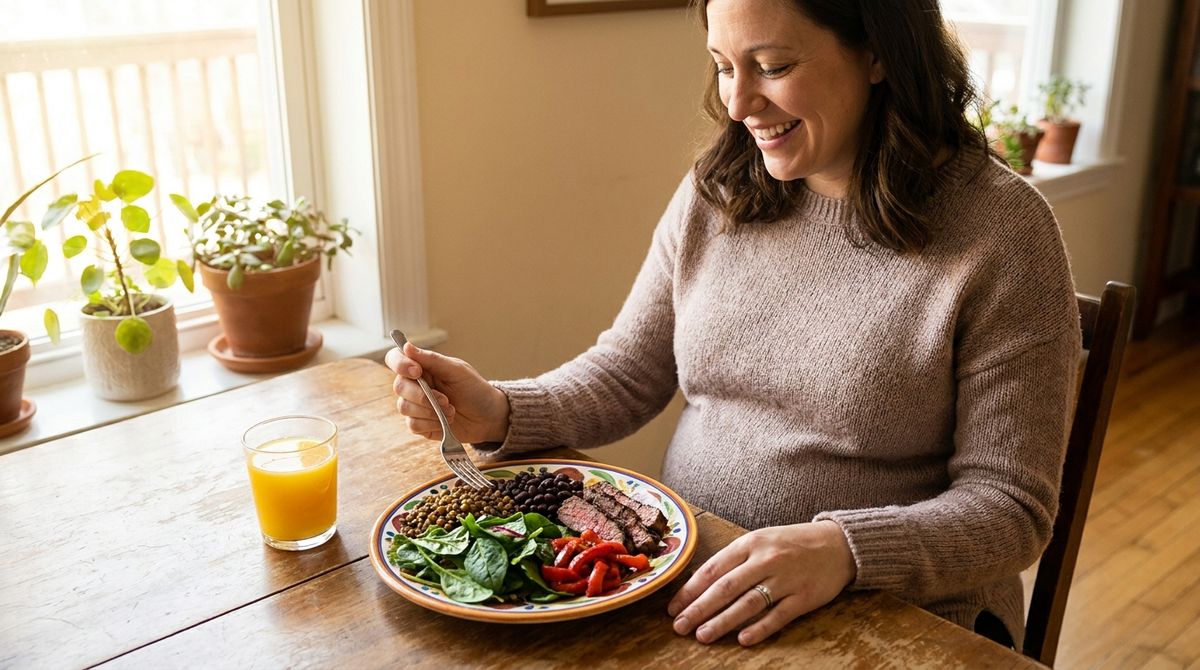
If a recent blood test showed low hemoglobin or low ferritin — or you simply feel constantly tired, dizzy and short of breath, and look pale — you are not alone. Anemia in pregnancy is very common: the WHO estimates that it affects about 40% of expectant mothers worldwide. In most cases it's iron-deficiency anemia, which responds well to dietary changes and iron supplements.
In this article we'll go through it calmly and clearly: which hemoglobin and ferritin levels count as normal by trimester, why low hemoglobin in pregnancy is so common, which symptoms should make you suspect it, why it matters, how it's diagnosed and, most importantly, how to raise hemoglobin safely.
What anemia is and why it's so common in pregnancy
Hemoglobin is a protein in your red blood cells that carries oxygen from the lungs to every tissue, including the placenta and your baby. Anemia is a condition in which there's too little hemoglobin or too few red blood cells, so tissues receive less oxygen. The most common cause in pregnancy is a shortage of iron — the building block your body uses to make hemoglobin.
Why pregnancy in particular sets the stage for anemia:
- Your blood volume rises by roughly 40–50%. The liquid part of blood (plasma) increases faster than the number of red blood cells, so hemoglobin is naturally diluted a little — this is known as a physiological drop.
- Your baby needs iron. The growing baby and placenta actively draw iron from your stores, especially in the second and third trimesters.
- Stores are often depleted before pregnancy even begins — because of heavy periods, closely spaced pregnancies, or an iron-poor diet.
That's why your iron needs nearly double during pregnancy, and diet alone is sometimes not enough.
Normal hemoglobin and ferritin levels in pregnancy
A blood test is what helps you understand what counts as "low." Here are the benchmarks doctors rely on (exact reference values depend on the lab).
Normal hemoglobin levels by trimester
Under WHO and CDC criteria, anemia in pregnancy is diagnosed when hemoglobin drops below:
- First trimester: below 110 g/L (11 g/dL);
- Second trimester: below 105 g/L (10.5 g/dL);
- Third trimester: below 110 g/L (11 g/dL).
Outside pregnancy, the lower limit of normal hemoglobin for women is usually around 120 g/L (12 g/dL), so the "pregnancy" cutoffs are slightly lower — which is expected given the increase in blood volume.
Ferritin — your body's iron stores
Hemoglobin shows the "here and now" picture, while ferritin reflects your iron stores. Ferritin can fall before hemoglobin does, so it helps catch a deficiency at an early stage. A ferritin level below 30 µg/L (30 ng/mL) usually points to a shortage of iron, even if hemoglobin is still normal. That's why many doctors check a woman's ferritin together with a complete blood count.
Symptoms of anemia in pregnancy
Mild anemia often has no obvious symptoms and is found only through testing. When hemoglobin drops noticeably, you may notice:
- constant tiredness and weakness, a lack of energy even after resting;
- dizziness, ringing in the ears, spots before your eyes;
- shortness of breath and a fast heartbeat during ordinary activity;
- pale skin, lips, and the inner surface of the eyelids;
- headaches and trouble concentrating;
- feeling cold, with cold hands and feet;
- sometimes — an unusual urge to eat ice, chalk or dirt (this is called pica).
Many of these sensations are easy to mistake for the usual companions of pregnancy, so you shouldn't rely on how you feel alone — a blood test gives the final answer.
Why anemia matters for mom and baby
Mild anemia is usually easy to correct, and there's no need to worry. But marked or untreated anemia is important not to ignore, because it's linked to a higher risk of:
- severe fatigue that makes it harder to recover after birth;
- preterm birth and low birth weight;
- greater blood loss during delivery and a longer recovery;
- low iron stores in the baby during the first months of life;
- postpartum depression (according to some research).
The good news: timely treatment noticeably lowers these risks. So anemia isn't something to "just put up with" — it's corrected together with your doctor, the same way other pregnancy conditions are monitored, such as gestational diabetes or preeclampsia.
How anemia is diagnosed: which tests
Anemia is detected with a routine blood test that every pregnant woman has several times during pregnancy — often at the same visit where blood sugar and blood pressure are checked.
- Complete blood count (CBC): shows hemoglobin, hematocrit, and the number and size of red blood cells. Small, pale red blood cells are typical of iron deficiency.
- Ferritin: measures your iron stores; it's the earliest and most sensitive marker of iron deficiency.
- Additionally, your doctor may order serum iron, transferrin, vitamin B12 and folate to pinpoint the cause of the anemia.
From these results your doctor will determine whether you have anemia, how marked it is and what's causing it — and that guides treatment.
How to raise hemoglobin: diet and iron-rich foods
Diet is the foundation of preventing and treating mild forms of anemia. Iron in food comes in two types, and they're absorbed differently.
Heme and non-heme iron
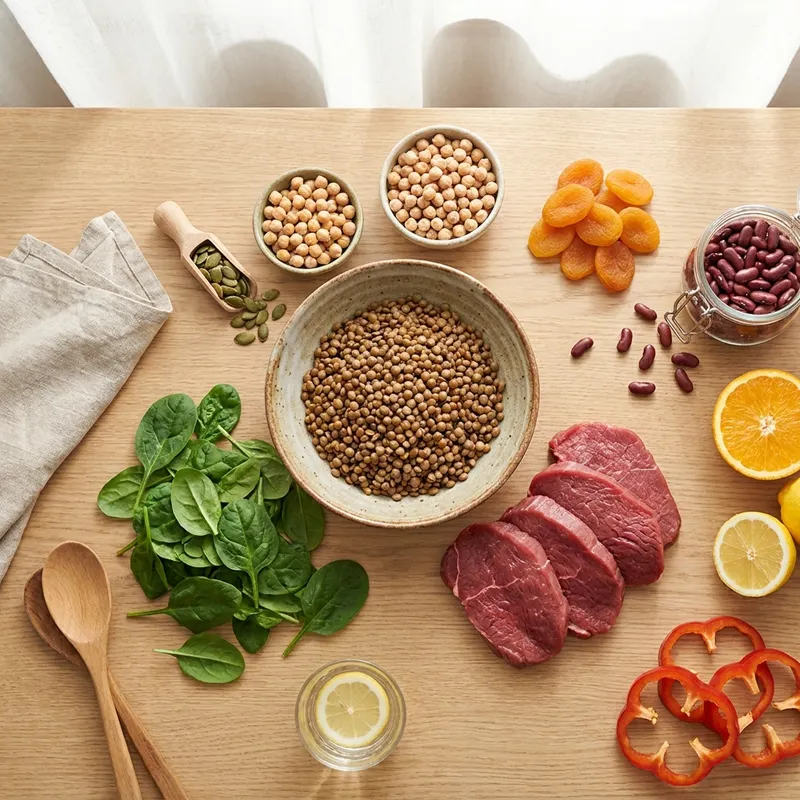
Heme iron is absorbed best and is found in animal-based foods: red meat, liver, poultry, fish. Non-heme iron comes from plant foods: lentils, beans, chickpeas, tofu, spinach, pumpkin seeds, dried apricots, as well as iron-fortified cereals. It's absorbed less efficiently, but its role is important, especially on a plant-based diet.
Liver is very rich in iron, but it's also high in vitamin A, so pregnant women are advised to limit it. We've written more about what you can and can't eat in a separate article on pregnancy nutrition.
What helps and what hinders iron absorption
To help iron from food absorb better:
- Add vitamin C. Bell peppers, citrus, kiwi, berries and tomatoes alongside a source of iron noticeably boost the absorption of non-heme iron.
- Combine plant iron with a little meat or fish — this also improves absorption.
And here's what hinders iron absorption, so it's best to space these apart from iron-rich food and supplements:
- tea and coffee (tannins) — don't drink them right after an iron-rich meal;
- calcium and dairy products, as well as calcium supplements — take them separately from iron;
- large amounts of bran- and phytate-rich foods in a single meal.
Iron supplements: how to take them and when IV iron is needed
If diet alone isn't enough, your doctor may prescribe iron supplements. A few practical points (only your doctor chooses the specific dose and product):
- Iron tablets are better absorbed on an empty stomach or with a source of vitamin C, but if they strongly irritate your stomach you can take them with food.
- Don't wash iron down with tea, coffee or milk, and don't take it at the same time as calcium.
- Common side effects are constipation, nausea and dark stools. Dark stool while taking iron is normal and not dangerous.
- There's evidence that taking it every other day is sometimes tolerated better and absorbed just as well — discuss this schedule with your doctor.
Intravenous iron (IV drips) is used when tablets don't help, are poorly tolerated, in marked anemia, or when there's little time left before birth. In severe cases, closer to delivery, a blood transfusion may be considered — but that's rare.
Anemia from folate and B12 deficiency
Iron isn't the only cause of anemia. Making healthy red blood cells also requires folic acid (vitamin B9) and vitamin B12. A shortage of these causes a different type of anemia, in which red blood cells become enlarged.
Folic acid is especially important early on — it lowers the risk of neural tube defects in your baby, which is why it's recommended even before conception and in the first trimester. We covered this in detail in our article on folic acid for pregnancy. Vitamin B12 is found mainly in animal foods, so on a vegetarian or vegan diet its level is worth monitoring and supplementing if needed.
When to see a doctor right away
Tell your doctor about any test results showing low hemoglobin or ferritin — they'll suggest a plan. Seek help sooner, or urgently, if you have:
- marked shortness of breath at rest or chest pain;
- a fast or irregular heartbeat;
- fainting or severe dizziness;
- very pale skin combined with sudden weakness;
- any bleeding during pregnancy.
Key takeaways
- Anemia in pregnancy is one of the most common conditions; most often it's iron deficiency, and it corrects well.
- Anemia is diagnosed at hemoglobin below ~110 g/L in the first and third trimesters and below ~105 g/L in the second; ferritin below 30 µg/L points to an iron shortage before hemoglobin falls.
- Typical symptoms are fatigue, dizziness, shortness of breath and pallor — but mild anemia is often visible only through testing.
- Iron-rich foods plus vitamin C help raise hemoglobin; tea, coffee and calcium hinder absorption.
- Your doctor decides on the iron dose, the need for IV iron, and whether to check B12 and folate.
This article is for general information only and is not a substitute for personalized medical advice. For your own test results, symptoms and anemia treatment, talk to your OB-GYN or primary care doctor.
Sources
Created with AI and reviewed by the Mama Ai team. Educational information — not a substitute for professional medical advice.
We’re with you every week of the way
Download on the App Store