Itching During Pregnancy: Normal or Cholestasis?
Itchy skin in pregnancy is usually harmless. Learn when itching is normal and when it points to cholestasis of pregnancy (ICP) — and when to call your doctor.

Mama Ai Team
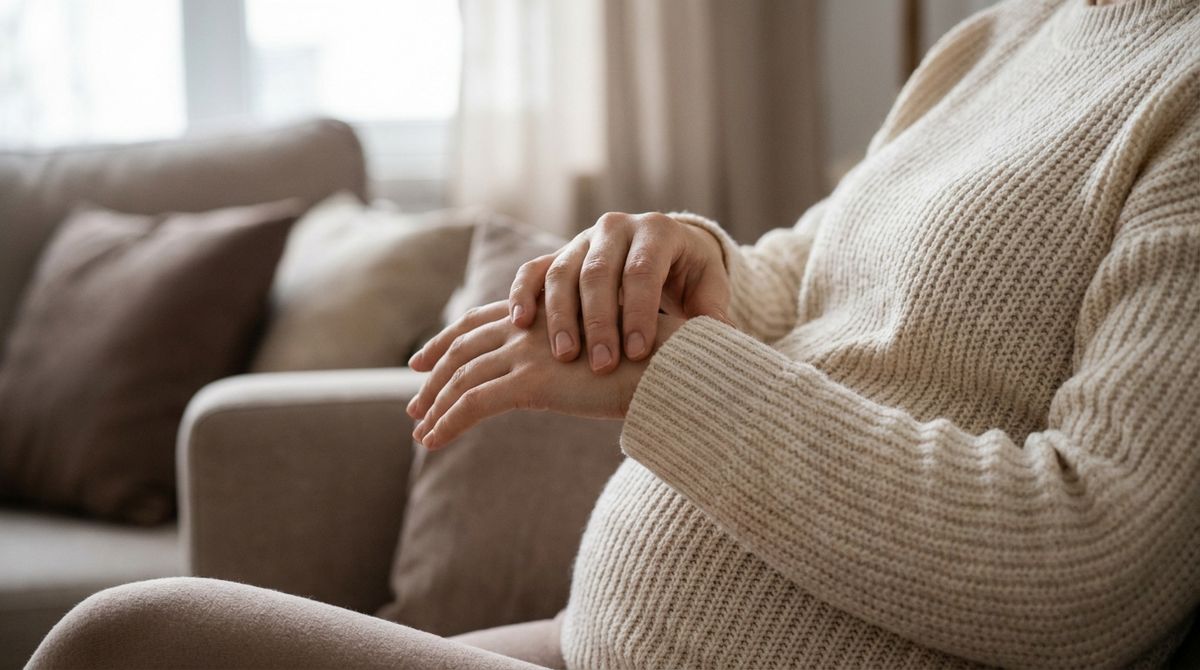
In the second and third trimesters, many expecting mothers notice their skin starting to itch — on the belly, breasts, and sometimes all over. In most cases, itching during pregnancy is harmless and tied to skin stretching and dryness. But sometimes itching — especially intense itching on the palms and soles that gets worse at night — can be the only sign of cholestasis of pregnancy (intrahepatic cholestasis of pregnancy, or ICP). This condition needs monitoring, because it affects not only how you feel but also your baby.
Let's look at why skin itches during pregnancy, how to tell ordinary itching from the worrying kind, and which symptoms mean you should contact your provider right away.
Why your skin itches during pregnancy
Most often, itchy skin during pregnancy is a normal response to the changes your body is going through. The main causes:
- Stretching skin. Your belly, breasts, and thighs grow quickly, the skin pulls tight and becomes more sensitive. Itching often shows up in the same places where stretch marks form.
- Dry skin. Hormonal changes and a higher need for fluids leave skin drier, and dry skin itches more.
- Hormones and increased blood flow. Rising estrogen levels and more blood flowing to the skin can cause mild tingling and itching.
- Heightened sensitivity. During pregnancy your skin reacts more strongly to heat, sweat, synthetic fabrics, and fragrances in cosmetics and laundry detergent.
PUPPP rash and other pregnancy dermatoses
Sometimes itching comes with a rash. The most common is the PUPPP rash (polymorphic eruption of pregnancy): itchy red bumps and patches that usually start on the belly, often around stretch marks, and appear in the third trimester. Despite the strong discomfort, it's harmless for your baby. Atopic eruption of pregnancy is another possibility. Itching around the genitals with discharge is a separate issue — it's usually linked not to the skin but to an infection, such as a yeast infection, and is treated differently.
What is cholestasis of pregnancy and why it matters
Intrahepatic cholestasis of pregnancy (ICP) is a disruption in how the liver works, in which the flow of bile slows down and bile acids build up in the blood. The exact cause is unknown; pregnancy hormones, genetics, and an individual liver sensitivity all play a role. Cholestasis usually develops in the third trimester and almost always clears up soon after birth.
Its main sign is itching without a rash. It's the bile acids reaching the skin that trigger the maddening urge to scratch, while the skin itself looks normal.
Why this matters for your baby: higher bile acid levels in the mother are linked to a greater risk of preterm birth, fetal distress, and meconium in the amniotic fluid, and in severe cases to a rare but serious risk of stillbirth. That's why cholestasis shouldn't be ignored: it needs to be confirmed with a blood test, monitored, and, if needed, delivery may be planned earlier. With timely monitoring, the outcome is good in most cases.
How to tell ordinary itching from cholestasis
Ordinary itching from stretching and dryness is usually mild, localized (belly, breasts), and bearable. It's worth suspecting cholestasis if the itching has a particular "pattern":
- Itchy palms and feet. Itchy palms and soles are a very telling sign of cholestasis, though the whole body can itch too.
- Worse at night. Itching at night during pregnancy with cholestasis often becomes unbearable in the evening and overnight, making it hard to sleep.
- No rash. The skin looks normal (apart from scratches and scratch marks) — no blisters, patches, or bumps.
- Intense and persistent. The itching doesn't ease with moisturizer and builds day by day.
- Later in pregnancy. It more often appears after 28 weeks, but can come earlier.
Sometimes signs of liver trouble are added: dark urine, pale stools, yellowing of the skin or the whites of the eyes (jaundice). If your itching sounds like what's described here — don't wait for your scheduled appointment, contact your provider: the only way to tell cholestasis apart from ordinary itching for sure is a blood test.
Diagnosis: bile acid test and liver function tests
The diagnosis is made with a blood test. Your provider will usually order:
- A bile acid test in the blood — the key marker. Its level helps not only confirm cholestasis but also gauge how severe it is.
- Liver function tests (blood chemistry, primarily the enzymes ALT and AST) — they show how the liver is working.
Sometimes the tests are repeated, because the numbers may not rise right away. The higher the bile acid level, the closer the monitoring. Your provider may also order an ultrasound and checks on your baby's wellbeing (non-stress test, ultrasound with Doppler).
Treatment and monitoring for cholestasis of pregnancy
Treatment is always chosen by your provider. It usually involves several parts:
- Ursodeoxycholic acid medication. Your provider may prescribe it to ease the itching and improve liver numbers. Only your doctor decides the dose and schedule.
- Symptom relief. Cool baths, moisturizers (emollients), and, if needed, antihistamines that are considered safe in pregnancy, which help make the itching easier to bear and let you sleep.
- Monitoring. Regular checks of bile acids, liver function tests, and your baby's wellbeing.
- Planning the birth. With cholestasis, delivery is often recommended slightly early — frequently around 37–38 weeks, and with a severe course (very high bile acids) — earlier. Your provider chooses the timing, weighing the risks.
Sometimes your provider also keeps an eye on blood clotting and may prescribe vitamin K, since cholestasis makes fat-soluble vitamins harder to absorb. After birth, the itching usually clears within a few days, and liver numbers return to normal. Good to know: cholestasis can recur in future pregnancies and sometimes with hormonal contraceptives, so be sure to mention it to your provider down the line.
How to ease ordinary itching at home
If your provider has ruled out cholestasis and the itching is tied to dry, stretching skin, simple steps can help:

- Apply a fragrance-free moisturizer or emollient several times a day, especially after showering.
- Take a warm, not hot, shower; hot water makes dryness and itching worse.
- Try cool compresses or a colloidal oatmeal bath.
- Wear loose cotton clothing and don't overheat — heat and sweat make itching worse.
- Use gentle, fragrance-free body washes without harsh surfactants, and a hypoallergenic laundry detergent.
- Drink enough water and try not to scratch — scratching only makes the irritation worse.
Use any medications or creams during pregnancy only after talking with your provider.
When to seek care urgently
Most cases of itching are harmless, but some symptoms shouldn't be ignored. Contact your provider if you have:
- itchy palms and feet, or intense itching all over without a rash;
- itching that gets worse at night and keeps you from sleeping;
- dark urine, pale (clay-colored) stools;
- yellowing of the skin or the whites of the eyes (jaundice);
- pain or heaviness in the upper right belly, nausea, loss of appetite, or marked fatigue.
It's also worth being on guard if itching or other late-pregnancy symptoms come together with warning signs of other complications — for example, a severe headache, vision changes, and sudden swelling, which can point to preeclampsia. In cases like these, it's better to be safe and get help without delay.
Key takeaways
- In most cases, itching during pregnancy is harmless and tied to skin stretching and dryness.
- Cholestasis of pregnancy (ICP) shows up as intense itching without a rash, often on the palms and feet and worse at night.
- Raised bile acids increase the risks for your baby, so cholestasis needs monitoring and sometimes an earlier birth.
- The diagnosis is made with a blood test — bile acids and liver function tests.
- Ordinary itching eases with emollients, cool temperatures, and loose clothing; medications only as prescribed by your provider.
- Call your provider urgently for: itchy palms and feet, itching at night, dark urine, pale stools, jaundice, or pain in the upper right belly.
This article is for general information only and is not a substitute for personalized medical advice. If worrying symptoms appear, contact your obstetrician-gynecologist.
Sources
Created with AI and reviewed by the Mama Ai team. Educational information — not a substitute for professional medical advice.
We’re with you every week of the way
Download on the App Store