Swelling During Pregnancy: Normal or a Red Flag?
Swollen feet, ankles and hands in pregnancy are usually normal. Here's why your legs swell, how to reduce swelling at home, and when it needs urgent care.

Mama Ai Team
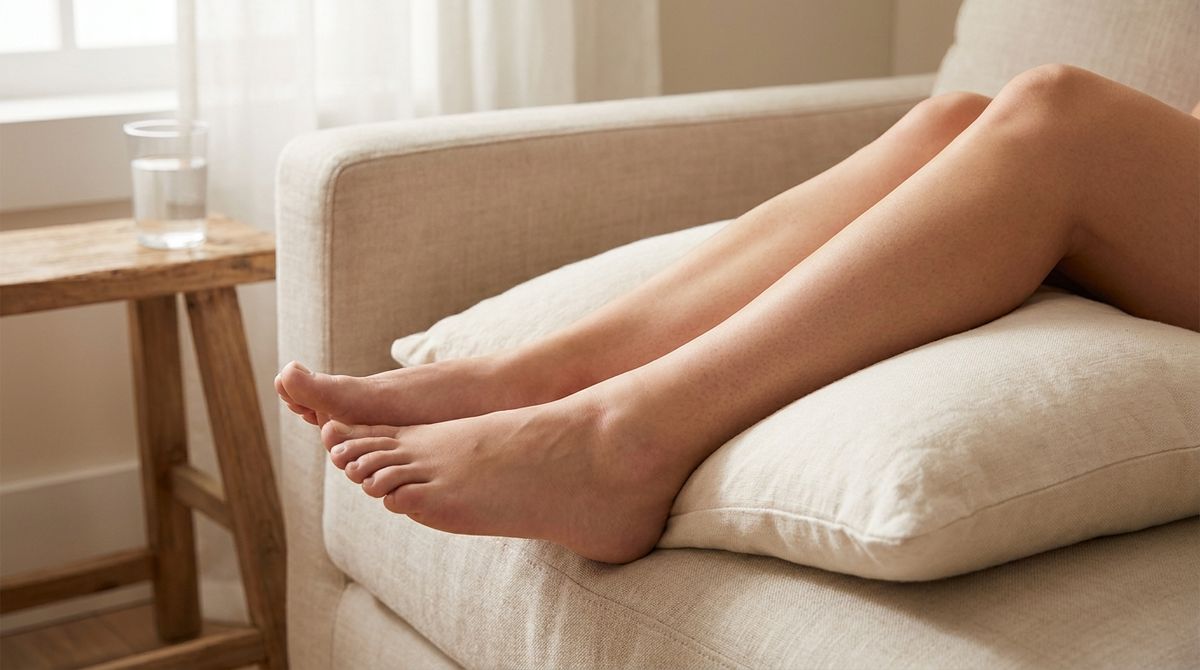
By the end of the day your shoes feel tight, your socks leave marks on your ankles, and your ring won't slide off your finger — sound familiar? Swelling during pregnancy affects most moms-to-be, especially in the second and third trimesters. Most of the time it's a normal response to the extra fluid your body is carrying, not a reason to panic.
In this article we'll look at why your feet and ankles swell in pregnancy, how to reduce swelling at home and — most importantly — which signs mean you should call your doctor right away.
Why swelling happens during pregnancy
Swelling (also called edema) is a buildup of extra fluid in your tissues. During pregnancy, several natural changes work together to cause it:
- More blood and fluid. By late pregnancy your blood volume rises by roughly 40–50%. Your body deliberately holds on to water and sodium to keep your baby and the placenta well supplied with blood and nutrients.
- The growing uterus presses on your veins. Your enlarging uterus pushes on the large pelvic veins and the inferior vena cava, which carry blood from your legs back to your heart. The return flow slows down and fluid pools in your feet and lower legs.
- Hormones. Progesterone relaxes the walls of your blood vessels, so they let fluid pass into the surrounding tissues more easily.
- Gravity. Water travels downward, so the lowest points — your feet and ankles — take the biggest hit.
All of this together is why your legs feel heavy and "full" by evening. This is physiological swelling — meaning it comes from your body working normally, not from an illness.
When swelling is normal — and when it shows up
Most often, swollen feet and ankles in pregnancy appear in the second half of the term — after 28 weeks, in the third trimester. Some women notice mild puffiness earlier. Normal, "safe" swelling usually:
- shows up in the feet, ankles and lower legs, and sometimes the fingers (rings get tight);
- appears or gets worse toward the end of the day, after long periods of standing or sitting;
- is worse in hot weather;
- is symmetrical — both legs swell about the same;
- eases overnight or after you rest with your legs propped up.
Mild swelling in the legs during the second half of pregnancy is expected. After delivery the extra fluid clears within a few days to a few weeks — often through more frequent urination and sweating.
How to reduce swelling during pregnancy
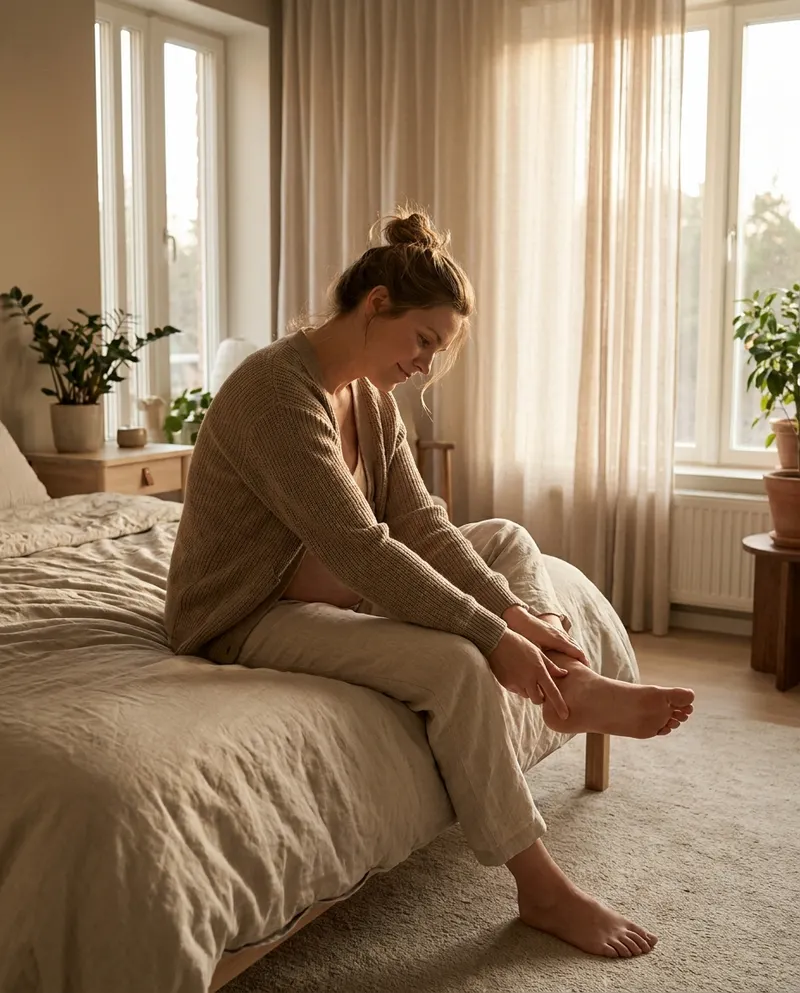
You won't get rid of swelling completely — it's part of being pregnant. But you can absolutely feel more comfortable. Here's what actually helps:
- Put your feet up. A few times a day, rest your legs on a pillow or cushion so your feet sit above heart level. Even 15–20 minutes helps the fluid drain.
- Rest on your left side. In this position the uterus presses less on the large vein on your right, so blood flows out of your legs more freely. For more, see our guide on the best sleeping positions during pregnancy.
- Keep moving. Gentle walking, swimming and water aerobics get your circulation going. Your calf muscles act like a pump and help your veins push fluid back up.
- Don't stand or sit for too long. If you have a desk job, get up every hour, flex your feet, circle your ankles and avoid crossing your legs.
- Wear comfortable shoes. Swap heels and tight shoes for soft, low, supportive footwear. It's also best to skip socks with tight elastic.
- Try compression stockings. Compression stockings or knee-highs made for pregnancy gently support your veins. Put them on in the morning, before your legs swell; ask your doctor which compression level is right for you.
- Drink enough water. It sounds backwards, but you shouldn't restrict fluids. When you're low on water, your body holds on to it even more. Drinking enough actually helps flush out excess sodium.
- Go easy on the salt. Too much salt makes you retain water. You don't need a salt-free diet, but it's worth cutting back on very salty foods — chips, deli meats, pickled and marinated foods, and fast food. For a balanced approach, see our article on what to eat and what to avoid during pregnancy.
- Stay cool. Swelling is worse in the heat, so a cool foot rinse and light, breathable clothing can make a noticeable difference.
When swelling is dangerous: warning signs
Most swelling is harmless. But sometimes it's a sign of a condition that needs urgent care. It's important to know these signs and not write everything off as fatigue.
Sudden swelling of the face and hands — possible preeclampsia
Preeclampsia is a serious pregnancy complication linked to high blood pressure. One of its signs is sudden, pronounced swelling. Contact your doctor or call emergency services right away if the swelling:
- comes on suddenly and gets worse quickly;
- affects your face, the area around your eyes and your hands;
- comes with rapid weight gain (several pounds in a week);
- goes along with a severe headache, vision changes (spots, blurriness or a film over your eyes), pain in the upper right side of your abdomen, or nausea.
For more on the symptoms and risks, read our separate article on preeclampsia symptoms during pregnancy. This condition usually develops after 20 weeks and needs to be monitored by a doctor.
Swelling in one leg — possible blood clot
If only one leg is swollen, and it's also:
- painful, especially in the calf;
- warm to the touch and red;
- swollen unevenly — noticeably different from your other leg.
This could be deep vein thrombosis (DVT — a blood clot forming in a vein). Pregnancy raises the risk of blood clots. This is an emergency — don't wait, get medical help immediately.
Also contact your doctor right away if the swelling comes with shortness of breath, chest pain or sudden lower abdominal pain — we covered other warning-sign pains in our article on abdominal pain during pregnancy.
When to mention swelling at your appointment
Mild leg swelling is worth simply mentioning at a routine visit. Your doctor will check your blood pressure and test your urine for protein to rule out preeclampsia — this is a standard part of prenatal care. You don't need a special reason: if something is bothering you, ask. It's better to ask one "extra" question than to miss an important signal.
Frequently asked questions about swelling during pregnancy
When does swelling start?
Most often in the second half of pregnancy — after 28 weeks, in the third trimester. Some women notice mild puffiness earlier. Pronounced early swelling is worth discussing with your doctor.
Can I drink less water to avoid swelling?
No. Limiting fluids doesn't reduce swelling and can be harmful. Drink to your thirst — usually around 1.5–2 liters a day, unless your doctor advises otherwise.
Do diuretics (water pills) help?
You shouldn't take diuretics on your own during pregnancy, including herbal blends — they can be dangerous for you and your baby. Take any medication only when your doctor prescribes it.
Will the swelling go away after birth?
Yes. Most swelling clears in the first days and weeks after your baby is born, as your body gradually sheds the fluid it stored.
Key takeaways
- Swollen feet, ankles and hands are a common and usually normal part of pregnancy, especially in the second and third trimesters.
- The causes are increased blood and fluid volume, the uterus pressing on your veins, hormones and gravity.
- What helps: elevating your legs, resting on your left side, staying active, comfortable shoes, compression stockings, drinking enough and going easy on salt.
- Don't restrict water — it doesn't reduce swelling.
- Seek urgent care for sudden swelling of the face and hands with a headache or vision changes (preeclampsia), and for swelling in one leg that is painful, warm and red (possible blood clot).
- Most swelling clears soon after birth.
This article is for general information only and is not a substitute for personalized medical advice. If you have any concerns or warning symptoms, contact your doctor.
Sources
Created with AI and reviewed by the Mama Ai team. Educational information — not a substitute for professional medical advice.
We’re with you every week of the way
Download on the App Store