
Leg Cramps During Pregnancy: Causes & What to Do
Nighttime calf cramps are a common part of pregnancy. Learn what causes leg cramps, how to stop a leg cramp immediately, and how to prevent them at night.

Mama Ai Team

A sharp pain shoots through your calf in the middle of the night, the muscle turns to stone, and you wake up with no idea what just happened. Leg cramps during pregnancy are one of the most common — and most unpleasant — experiences, especially in the second and third trimester. More often than not they strike at night and target the calf muscles.
The good news: ordinary leg cramps during pregnancy are painful but harmless. In this article we'll cover what causes leg cramps, what to do at home the moment one hits, how to prevent leg cramps at night, and the rare cases when calf pain is a reason to seek care right away.
What causes leg cramps during pregnancy
The short answer: the exact cause of leg cramps during pregnancy isn't fully understood, and it's more honest to say so than to promise one tidy explanation. Doctors point to several factors that likely work together. That's why leg cramp causes can differ from one woman to the next.
- Circulation changes and strain on your legs. Your growing uterus presses on the large blood vessels and nerves in the pelvis, slowing the return of blood from your legs. Weight gain and a shifted center of gravity add load to the calf muscles — by evening and night they're tired and cramp more easily. That's why many women notice their calves feel heavy or even ache by the end of the day.
- Mineral balance. Your muscles run on electrolytes — calcium, magnesium, potassium, and sodium. During pregnancy the need for some of them rises, and their levels in the body can shift. The link between cramps and a specific mineral deficiency isn't firmly proven, but balance plays a part.
- Not enough fluids (dehydration). When your body is short on water, muscles are more prone to spasm. In hot weather, with morning sickness, or simply when you don't drink enough, the risk of cramps goes up.
- Tired, overworked muscles. Long periods of standing, unusual activity, or — on the flip side — a very inactive day can all trigger a night-time cramp.
When leg cramps are most common
Leg cramps usually pick up in the second and third trimester and tend to show up at night or toward early morning. It's a common complaint — a large share of expectant mothers deal with it, and on their own these spasms don't mean anything is wrong with your pregnancy.
How to stop a leg cramp immediately
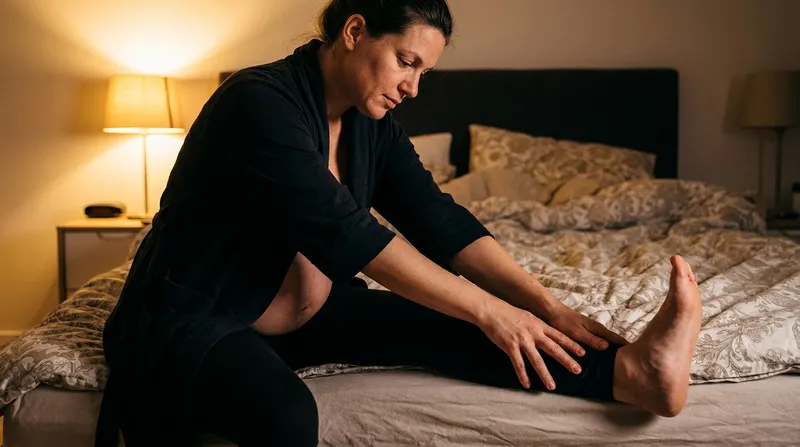
When a cramp strikes, your main job is to gently stretch the tight muscle. Here's how to stop a leg cramp immediately, right at home, when one catches you off guard:
- Flex your foot toward you. Straighten your knee and pull your toes and the top of your foot up toward your shin. This stretches the calf muscle and usually releases the spasm fastest. Don't point your toes away from you — that can easily make the cramp worse.
- Put weight on the leg. If you can, carefully stand up and shift your weight onto the cramping leg, pressing the heel gently into the floor.
- Massage and warm the calf. Knead the muscle with your hands, apply a warm heating pad, or step into a warm shower — heat helps the muscle relax.
- Walk it off. Once the sharp pain eases, walk slowly around the room to get the blood flowing again.
After a strong cramp, your calf may ache for a few more hours — that's normal. But if the pain doesn't ease and the muscle stays tender, pay attention to the warning signs below.
How to prevent leg cramps at night
You can't fully guarantee against cramps, but everyday habits noticeably cut down how often they happen. Here's what helps prevent leg cramps at night during pregnancy:
- Drink enough water. Sipping fluids steadily through the day keeps you hydrated and makes muscles less prone to spasm.
- Stretch your calves before bed. A few minutes of gentle evening stretching noticeably reduces night-time cramps. One easy move: face a wall, place your hands on it, step one straight leg back, and — keeping your heel on the floor — lean forward until you feel a light pull in your calf.
- Stay moderately active. A daily unhurried walk and light activity keep the blood circulating in your legs.
- Don't point your toes. Try not to point your foot away from you — not in bed and not while sitting. It's a frequent trigger for cramps.
- Wear comfortable shoes. Stable, supportive shoes without a high heel ease leg fatigue.
- Find a comfortable sleeping position. Sleeping on your side with a pillow between your knees takes pressure off your pelvis and improves blood flow out of your legs; for more, see our guide to sleeping positions during pregnancy.
Diet matters too: your body needs enough calcium and magnesium. The simplest way to get them is from everyday food — dairy, leafy greens, nuts, legumes, and whole grains. For how to build a balanced plate, see our guide to what to eat and avoid during pregnancy.
Magnesium and calcium for cramps: do you need supplements?
Honesty matters here: the research on whether magnesium or calcium supplements ease leg cramps in pregnancy is mixed. Systematic reviews (including Cochrane) haven't found convincing evidence that any single supplement reliably solves the problem. So don't start magnesium, calcium, or any other supplement on your own. If cramps bother you often, talk to your provider — they can review your diet and lab work and decide whether supplements are right for you and at what dose.
When a leg cramp is more than a cramp: red flags
This is the most important section. An ordinary cramp comes on suddenly and lets go just as fast once you stretch. But sometimes leg pain signals something more serious. Pregnancy raises the risk of blood clots, so take note if calf pain:
- doesn't ease after stretching and lingers for a long time instead of releasing within minutes;
- shows up in only one leg;
- comes with swelling, redness, warmth of the skin, or tenderness when you touch the area.
This combination can point to deep vein thrombosis (DVT) — a blood clot forming in a leg vein. It's a medical emergency: don't wait and don't massage the leg, but seek medical help right away. To tell ordinary heaviness from the worrying kind, it helps to know what swelling during pregnancy looks like and when it becomes a reason to see your provider.
Separately: sudden, severe swelling of the face and hands — especially together with a headache, vision changes, and pain below the ribs — can be a sign of preeclampsia, which also needs urgent medical evaluation. A night-time calf cramp on its own has nothing to do with preeclampsia, but it's worth keeping an eye on overall swelling and how you feel.
When to tell your provider about leg cramps
If you're not dealing with the emergency signs above, there's no reason to panic — but it's worth mentioning leg cramps at a routine visit when they:
- happen almost every night and keep you from getting enough sleep;
- become very intense or start showing up during the day too;
- come with noticeable weakness, numbness, or a change in sensation in the leg.
Your provider can help pinpoint what's causing your leg cramps in your particular case, check whether your diet covers everything, and advise what to do next.
Key takeaways on leg cramps during pregnancy
- Night-time calf cramps are very common in the second and third trimester and are usually harmless.
- The exact cause isn't established; leg strain, circulation, mineral balance, and low fluids likely all play a part.
- To stop a cramp, flex your foot toward you, straighten the leg, massage and warm the calf, then walk it off.
- For prevention, focus on fluids, evening calf stretches, movement, comfortable shoes, and a balanced diet; take supplements only on your provider's advice.
- Seek urgent care if pain in one calf won't go away and comes with swelling, redness, warmth, or tenderness (risk of a blood clot).
This article is general information and not a substitute for personalized medical advice. If your symptoms are severe, frequent, or unusual, contact your OB-GYN or the provider who is caring for your pregnancy.
Sources
Created with AI and reviewed by the Mama Ai team. Educational information — not a substitute for professional medical advice.
We’re with you every week of the way
Download on the App Store