Constipation During Pregnancy: Causes & Relief
Constipation during pregnancy is a common complaint. Here's why it happens, safe ways to find relief, helpful foods, and the warning signs that need a doctor.

Mama Ai Team
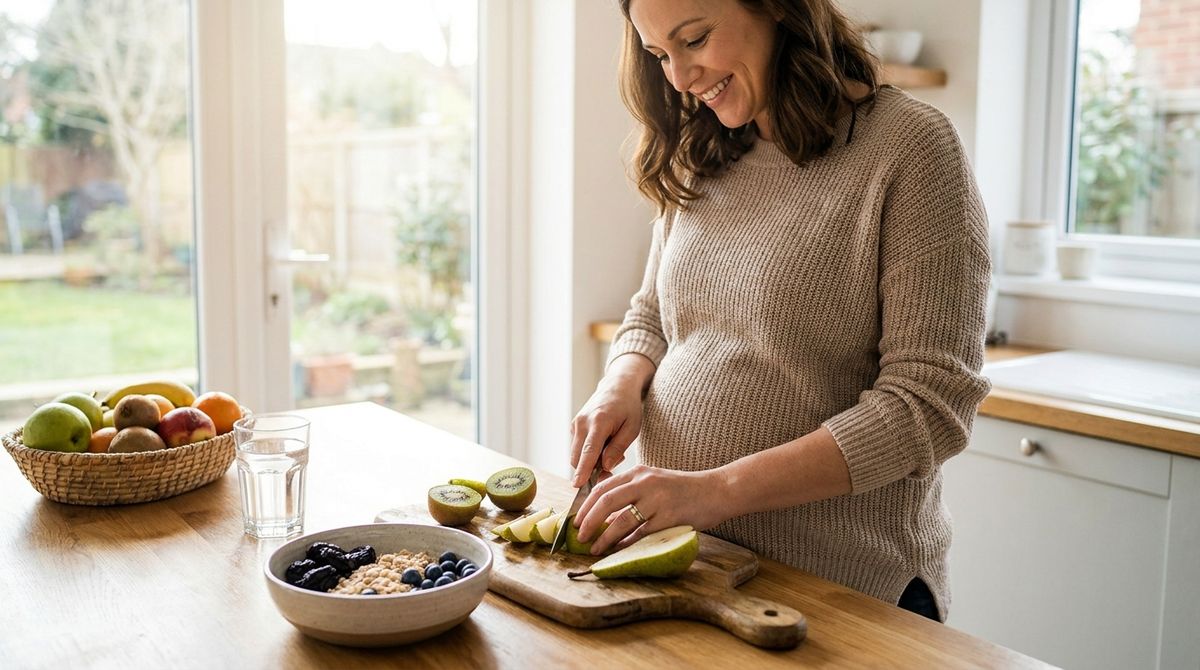
If a trip to the bathroom has turned into a struggle over the past few weeks, you are far from alone. Constipation during pregnancy is one of the most common complaints among expecting moms — nearly one in two women deals with it. It is uncomfortable, sometimes even painful, but it is almost always manageable with gentle, safe steps.
Below we look at why constipation happens during pregnancy, what to do first for relief, which foods and habits help, which laxatives and home remedies are best avoided without a doctor, and which symptoms mean it's time to get checked.
Why constipation happens during pregnancy: the causes
Constipation means infrequent bowel movements (fewer than three a week) and hard or pellet-like stools that are difficult to pass, often with a feeling of incomplete emptying. During pregnancy, several natural factors push you toward it at once.
- Progesterone. The main pregnancy hormone relaxes smooth muscle, including the walls of the gut. Peristalsis (the wave-like contractions that move food along) slows down, so the contents stay in the intestine longer and lose moisture — and the stool becomes harder.
- A growing uterus. In the second and third trimesters, the uterus presses harder on the intestine, narrowing it and making it harder for stool to move through.
- Iron in prenatal vitamins. Iron supplements and many prenatal complexes are often binding. If constipation appeared soon after you started taking them, tell your provider — sometimes switching the form or dose helps.
- Less movement. Fatigue, heaviness, and morning sickness in early pregnancy cut down on physical activity — and movement is exactly what keeps the bowel working.
- Not enough fluids and fiber. When you're dehydrated, your body pulls water out of the intestinal contents, and stool becomes even firmer.
When it starts and how common it is
Constipation can show up as early as the first trimester, as progesterone levels rise, and often gets worse toward the third as the uterus grows. By various estimates, constipation affects roughly 11 to 38% of pregnant women — so it is very common and, as a rule, not dangerous.
The good news: bowel function responds a lot to lifestyle. Like heartburn, constipation is one of those "digestive" companions of pregnancy that usually eases after birth.
What to do: safe ways to relieve constipation
In most cases, it's best to start not with medication but with simple, proven steps. Often they're enough to get things moving again.
More fiber in your diet
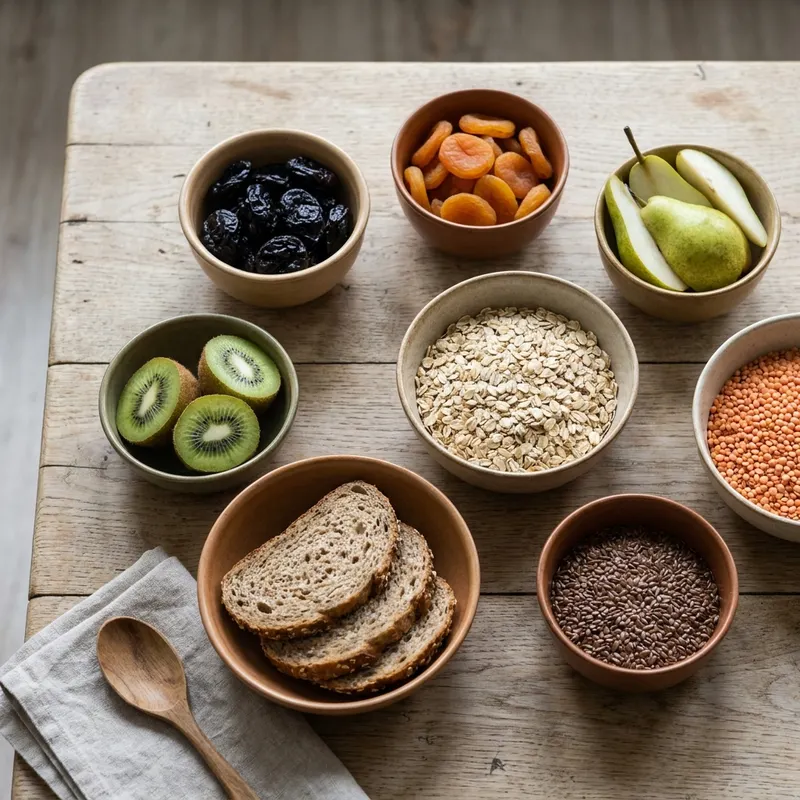
Fiber holds water and adds bulk to stool, helping it move along. Aim for about 25–30 g of fiber a day from a variety of high-fiber foods:
- vegetables and fruit, ideally with the skin on — pears, apples, kiwi, plums;
- prunes and dried apricots — a gentle natural laxative;
- whole grains — oats, buckwheat, whole-grain bread, brown rice;
- legumes — lentils, beans, chickpeas;
- nuts and seeds, such as flax or chia.
Add fiber gradually and always with water: a sudden "dry" increase can make bloating worse. For more on a balanced diet, see our guide to pregnancy nutrition.
Enough fluids
Water helps fiber do its job. Aim for about 8–10 glasses of fluid a day — water, light fruit compotes, soups. Many people find that a glass of warm water or prune juice on an empty stomach in the morning helps: a warm drink gently "wakes up" the bowel. In fact, prune juice for constipation is a long-standing, pregnancy-safe favorite. Go easy on coffee and strong tea, though — caffeine can worsen dehydration.
Daily movement
Even a short 20–30 minute walk, a swim, or gentle prenatal exercise stimulates peristalsis. Regular activity is one of the simplest and safest ways to get your bowels back on track. If you feel up to it, move a little every day.
A toilet routine and good habits
The bowel loves rhythm. Try to go at about the same time each day, ideally 20–30 minutes after a meal, when the natural reflex is strongest. Don't hold back the urge, and don't rush. Rest your feet on a low stool so your knees sit higher than your hips: this squat-like position relaxes the muscles and makes emptying easier without straining.
Massage and relaxation
A gentle abdominal massage — light, clockwise strokes over the belly — can help move stool along. Keep it pressure-free and don't push on the uterus. General relaxation helps too: rushing and stress "clench" the gut, while staying calm supports regularity.
Home remedies and laxatives: what's safe and what isn't
Many people look for home remedies for constipation, and some are genuinely safe in pregnancy: prunes and prune juice, dried apricots, warm water on an empty stomach, kefir, and plenty of fiber and water. But treat folk "cures" with a questionable reputation more cautiously.
Without your provider's okay, it's best not to use:
- stimulant laxatives (for example, senna-based ones) and castor oil — they can trigger cramps and, in large doses, even uterine contractions;
- saline and osmotic "cleansing" products, enemas, and "detox" teas without a prescription;
- any constipation medication "because a friend recommended it" — what's fine outside pregnancy isn't always safe now.
If lifestyle changes aren't enough, your provider can suggest a gentle option that's allowed in pregnancy — for example, a bulk-forming or osmotic product, or a stool softener. The key is that a professional makes the choice, not an ad or a forum.
Constipation and hemorrhoids: the connection
Hard stools and heavy straining raise pressure on the veins around the rectum — that's how hemorrhoids (swollen veins around the anus) appear or flare up. They make themselves known with itching, discomfort, and sometimes bright red blood on the paper. So managing constipation is also hemorrhoid prevention: the softer the stool, the less you have to strain.
If you notice blood, try not to panic — but don't ignore it either: even if it looks like a few drops of blood from hemorrhoids during straining, mention it to your provider so other causes can be ruled out.
When to see your provider
Most of the time, constipation during pregnancy is harmless. But some symptoms shouldn't wait — contact your provider if you have:
- severe or cramping abdominal pain that won't go away;
- blood in your stool or heavy bleeding from the rectum;
- constipation alternating with diarrhea;
- no bowel movement for several days despite your efforts, or troubling nausea and vomiting;
- constipation that started after a new iron supplement — ask about a possible switch.
Key takeaways
- Constipation during pregnancy is very common: progesterone, a growing uterus, iron in prenatal vitamins, and less activity are all to blame.
- What to do first: more fiber, water, and movement, plus an unhurried toilet routine.
- Prunes, dried apricots, and warm water on an empty stomach are safe home remedies; avoid stimulant laxatives and enemas without a doctor.
- Preventing constipation also protects against hemorrhoids.
- Blood, severe pain, alternating constipation and diarrhea, or no relief at all are reasons to call your provider.
This article is for general information only and is not a substitute for personalized medical advice. For your specific situation, your iron-containing prenatal vitamins, and any constipation remedies, talk to your OB-GYN or primary care provider.
Created with AI and reviewed by the Mama Ai team. Educational information — not a substitute for professional medical advice.
We’re with you every week of the way
Download on the App Store