Hemorrhoids During Pregnancy: Causes & Relief
Why hemorrhoids during pregnancy are so common, which symptoms to watch for, and how to safely ease the discomfort at home — plus when to call your doctor.

Mama Ai Team
If you've noticed discomfort, itching, swelling, or a little blood around your anus — try not to panic. Hemorrhoids during pregnancy are very common: by various estimates, a significant share of expecting moms deal with them, especially in the third trimester and the first weeks after birth. They're unpleasant, but in the vast majority of cases they're not dangerous — and they respond well to gentle home measures.
In this article, we'll calmly walk through why hemorrhoids show up during pregnancy, how to tell external from internal hemorrhoids, whether they're dangerous for your baby, how to safely ease symptoms at home, what's usually said about suppositories and creams, and — most importantly — when you should see a doctor.
What hemorrhoids are and why they're so common in pregnancy
Hemorrhoids are enlarged, swollen veins in the area of the rectum and anus (essentially varicose veins in this region). Everyone has them, and normally they go unnoticed, but under increased pressure and pooling blood they can swell, become inflamed, and bleed. Pregnancy creates several of these conditions at once, which is why the problem is so widespread.
Why pregnancy raises the risk
- Hormones. Progesterone relaxes the walls of your blood vessels (so they stretch more easily) while also slowing down your bowels, which makes constipation more likely.
- The growing uterus. As it grows, it presses on the veins of your pelvis and lower body, making it harder for blood to flow back up.
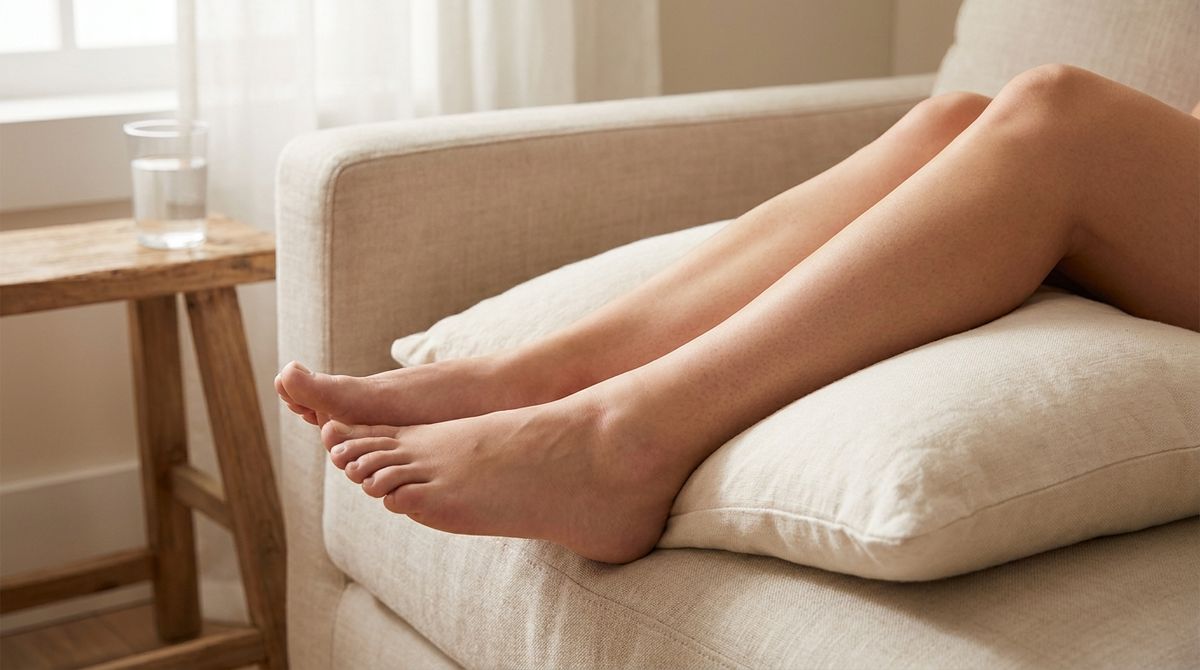
- More blood in your body. Your circulating blood volume rises noticeably during pregnancy, and your veins work under a heavier load — by a similar mechanism, many women also develop swelling in the legs.
- Constipation and straining. Hard stool and pushing to "go" sharply raise the pressure in the rectal veins. This is probably the main factor you can actually influence — we covered it in detail in our article on constipation during pregnancy.
- Less movement. Sitting or lying down for long stretches, especially closer to your due date, worsens circulation in the pelvis.
Symptoms: external and internal hemorrhoids
There are two types of hemorrhoids, and they show up a little differently.
- External hemorrhoids form on the outside, around the anus. They're most often felt as a soft lump or swelling that itches and can ache, especially when you sit and during a bowel movement.
- Internal hemorrhoids sit inside the rectum. They hurt less often but bleed a little more often: you may notice bright red blood on the toilet paper or in your stool.
The typical symptoms expecting moms report are itching around the anus, a feeling of discomfort or pressure, soreness when sitting and passing stool, the sensation of a "lump," and sometimes a little mucus and a few drops of blood. With hemorrhoids the blood is usually bright red and appears during or right after a bowel movement. Any bleeding is worth calmly discussing with your doctor — the cause is usually harmless, but it's important to make sure it really is hemorrhoids and not something else.
Are hemorrhoids dangerous for your baby?
This is the first question almost everyone worries about, so let's answer it directly: hemorrhoids during pregnancy are not dangerous for your baby and don't affect their development. They cause discomfort for you, but they don't threaten the pregnancy. In fact, for many women the symptoms ease noticeably or go away completely in the first weeks after birth, once the pressure of the uterus is gone and the bowels settle back into their normal rhythm.
The one caveat is about blood: there's no need to be frightened by it, but don't ignore it either. If the bleeding is heavy, keeps coming back, the blood is dark, or your stool is black — be sure to tell your doctor so other causes can be ruled out.

How to safely relieve hemorrhoids during pregnancy at home
The good news is that treating hemorrhoids during pregnancy usually starts with simple, safe home measures. They ease the symptoms and tackle the main cause — constipation and straining — at the same time.
More fiber and water
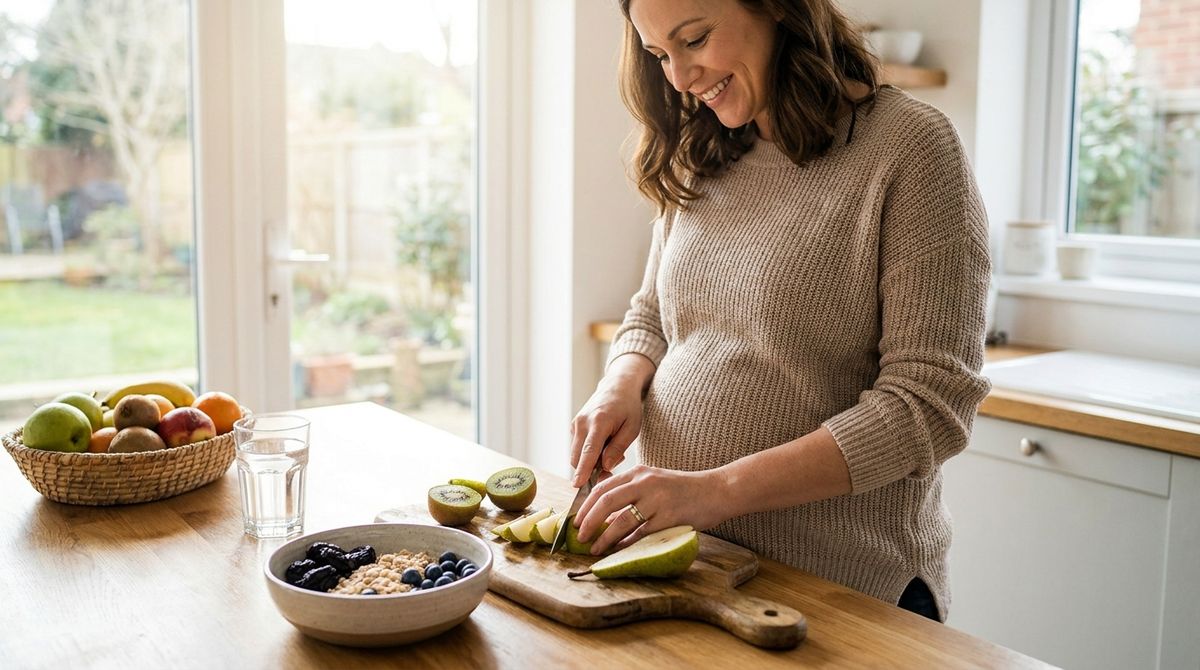
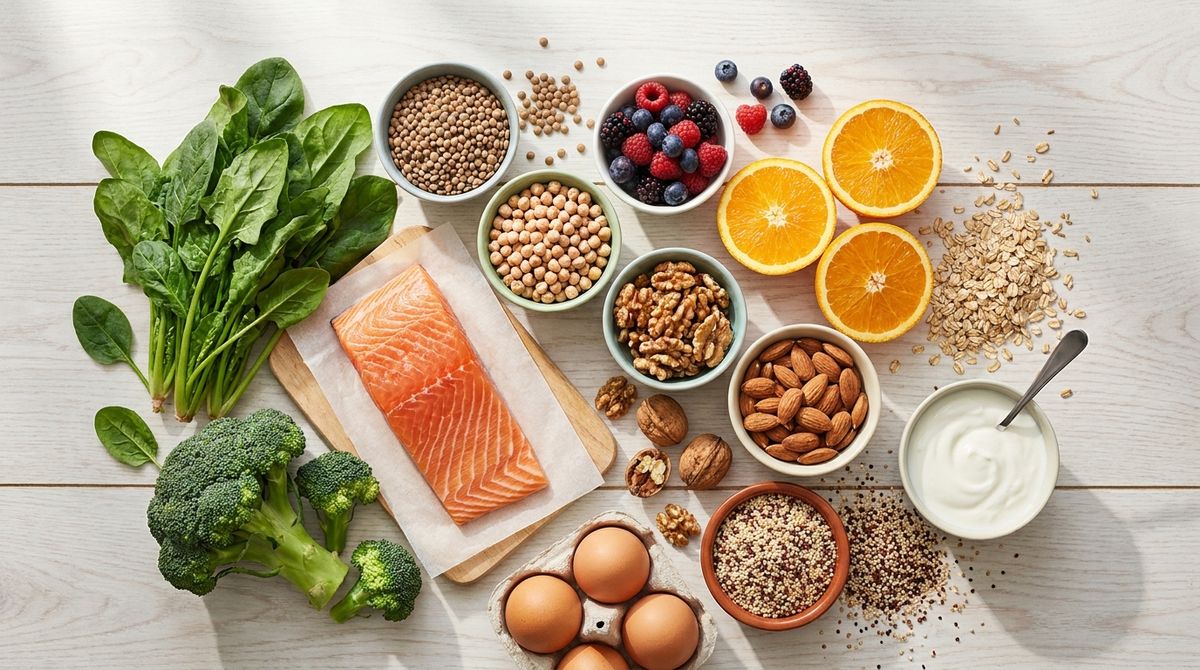
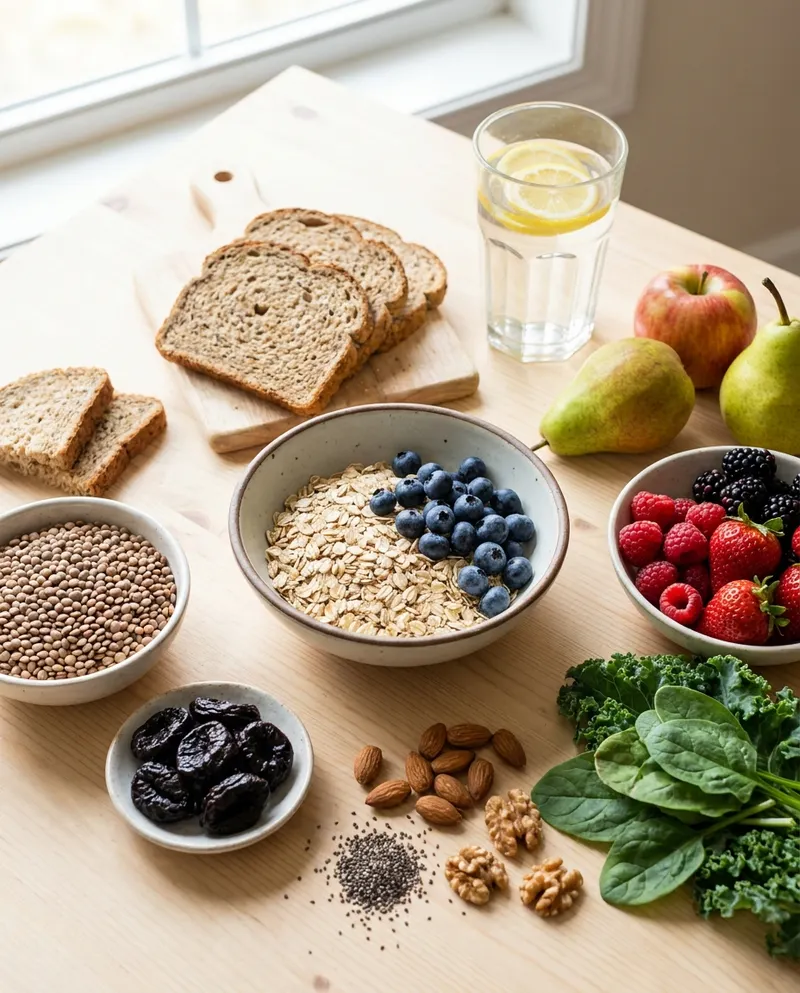
Soft, regular stools are the best protection against flare-ups. Gradually add sources of fiber to your meals: vegetables, fruit (especially prunes, pears, and apples), berries, whole grains, oatmeal, legumes, and nuts. Increase fiber slowly and drink more water alongside it — otherwise the effect can backfire. We go into a balanced diet in more detail in our piece on pregnancy nutrition.
Cool sitz baths and gentle hygiene
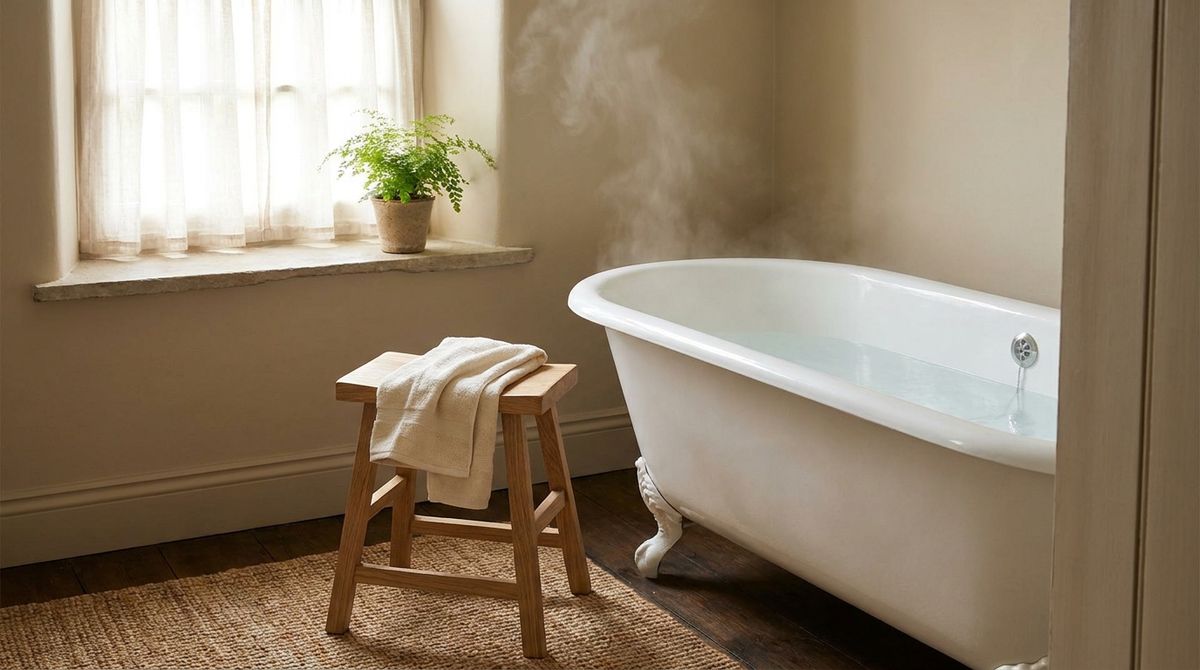
- Cool sitz baths. Sitting in warm or slightly cool water a few times a day for 10–15 minutes soothes itching and swelling.
- Cold compresses. A clean, cool cloth or a special ice pack wrapped in fabric, held in place for a few minutes, helps reduce swelling.
- Gentle hygiene. After using the toilet, gently pat the skin with soft, damp paper or rinse with cool water — don't rub. Avoid scented paper and harsh soap in this area.
Habits that genuinely help
- Don't strain, and don't sit on the toilet for long stretches — it adds pressure on the veins.
- Go to the bathroom as soon as you feel the urge; don't put it off, or the stool has time to get harder.
- Move more: gentle walks improve both your digestion and your circulation.
- Try not to sit or stand without a break for too long; change position from time to time and rest lying on your side.
- A footstool during a bowel movement (knees slightly above your hips) helps you go without straining.
Hemorrhoid suppositories and creams: what's safe in pregnancy
There are topical products — suppositories, ointments, creams — that can ease itching, pain, and swelling. But here's the key principle: during pregnancy, use any medication only after checking with your doctor or pharmacist, letting them know you're expecting. Some products are considered acceptable during this time, others aren't, and many ingredients simply haven't been studied enough — so the decision is made individually and usually for a short course.
We deliberately don't list product names or doses here: self-prescribing treatment during pregnancy isn't a good idea. Tell your doctor about your symptoms — they'll choose what's safe for your specific situation and, if needed, refer you to a proctologist.
Prevention: start by tackling constipation
Preventing hemorrhoids during pregnancy lines up almost entirely with preventing constipation — they're two sides of the same coin. To lower the risk of flare-ups:
- keep your diet rich in fiber and drink enough water every day;
- stay active at a pace that feels comfortable for you;
- don't ignore the urge to go, and don't strain;
- if you tend toward constipation, talk to your doctor about gentle, pregnancy-safe ways to keep things moving — we covered this too in our article on constipation during pregnancy.
Postpartum hemorrhoids: what to expect
Hemorrhoids often appear for the first time — or get worse — right after birth, since pushing puts strong pressure on the pelvic veins. This, too, is common and usually temporary. In most cases the swelling gradually shrinks over a few weeks, especially if you keep up the same measures: fiber, water, movement, gentle hygiene, and cool sitz baths. If hemorrhoids don't go away after birth, or they hurt or bleed — mention it to your doctor at a routine check-up.
When you definitely need to see a doctor
Hemorrhoids are almost always harmless, but there are signs that mean you should see a specialist without delay:
- heavy or recurring bleeding from the anus;
- dark blood, black stool, or blood that isn't linked to a bowel movement;
- severe, increasing pain;
- a firm, very painful, bluish lump — this can be a thrombosed (clotted) hemorrhoid;
- a hemorrhoid that has prolapsed and won't go back in;
- signs of inflammation: fever, swelling, discharge;
- symptoms that don't improve despite home measures.
And one more important rule: don't assume that any rectal bleeding is "just hemorrhoids." Most of the time it is, but a doctor should be the one to confirm the cause for certain.
Key takeaways
- Hemorrhoids during pregnancy are very common and, as a rule, not dangerous for your baby.
- The main causes are hormones, pressure from the growing uterus, increased blood volume, and above all constipation with straining.
- They can be external or internal; typical symptoms are itching, discomfort, soreness, and a little bright red bleeding.
- Safe relief starts at home: fiber, water, movement, gentle hygiene, cool sitz baths, and the habit of not straining.
- Suppositories and creams only with your doctor's approval — don't prescribe them to yourself.
- After birth, symptoms usually ease off gradually.
- Heavy bleeding, severe pain, or a thrombosed or non-reducible hemorrhoid are reasons to see a doctor.
This article is general information and isn't a substitute for personalized advice from a professional. Always talk to your own doctor about your symptoms, choice of remedies, and treatment.
Sources
Created with AI and reviewed by the Mama Ai team. Educational information — not a substitute for professional medical advice.
We’re with you every week of the way
Download on the App Store