Varicose Veins in Pregnancy: Causes & Relief
Varicose veins in pregnancy are common and usually harmless. Here's why veins bulge, what eases the aching, and when to call your provider.

Mama Ai Team
Around the middle of pregnancy, many moms-to-be notice bulging, bluish veins on their legs, a heavy, aching feeling by the end of the day, and sometimes itching or a light tingling. This is varicose veins in pregnancy (varicose veins, or varicosities) — one of the most common and, thankfully, usually harmless changes of this time. Let's walk through it calmly: why veins widen right now, where besides your legs they can show up, what really helps ease the symptoms, what's better to put off, and — most important — which signs mean you should see a doctor right away.
Why varicose veins appear during pregnancy
Varicose veins are enlarged surface veins in which the tiny valves inside them do a poorer job of returning blood to the heart, so some blood pools. Pregnancy sets up several conditions for this at once:
- More blood. By the end of pregnancy, your circulating blood volume rises by roughly 40–50%. Your veins have to hold and return a larger volume.
- Hormones. Progesterone relaxes smooth muscle — not only in the uterus but also in the vein walls. Stretchier veins widen more easily.
- The growing uterus presses on your veins. It compresses the large inferior vena cava and the pelvic veins, especially on the right, making it harder for blood to drain from the legs and pelvic area.
- Heredity. This is the strongest factor: if your mother or grandmother had varicose veins, your odds are higher. You can't change your genes, but you can ease the load on your veins.
Extra weight, a multiple pregnancy, long stretches of standing or sitting, and repeat pregnancies also play a part — with each one, your veins come under more strain.
What varicose veins look like and where they show up
Most often, varicose veins in the legs during pregnancy look like raised, twisting veins in a bluish or purplish colour on the shins and behind the knees — and sometimes like a fine web of tiny widened vessels (spider veins). Your legs may swell, feel heavy and itchy, and by evening there's a full, bursting sensation. But varicose veins aren't limited to the legs.
Varicose veins in the groin and vulva (vulvar varicosities)
Sometimes widened veins appear around the labia and the perineum — these are vulvar varicosities (varicose veins in the groin during pregnancy). They can look and feel alarming, but they're essentially the same vein widening caused by the uterus pressing on the pelvic veins. They usually don't get in the way of a vaginal birth, and in most cases they shrink noticeably or disappear after delivery. If these veins are uncomfortable, it's worth mentioning it calmly to your provider — there is special supportive underwear made for this.
Hemorrhoids are varicose veins too
Hemorrhoids are, in essence, varicose (swollen) veins of the rectum and anus. The mechanism is the same: pressure from the uterus, slowed venous drainage, and a tendency toward constipation. We cover how to ease this in a separate article on hemorrhoids during pregnancy.
Are varicose veins in pregnancy dangerous?
The good news: on their own, varicose veins in pregnancy are usually a cosmetic and "uncomfortable" issue rather than a threat to your health. They can cause unpleasant sensations — heaviness, swelling, itching — but they're usually not dangerous. Leg swelling often goes hand in hand with varicose veins; for when puffiness is within the normal range and when it's a reason to see your provider, read our piece on swelling during pregnancy. By evening or at night, calf cramps often join in — a separate issue, but one that shares triggers with varicose veins: tired legs and pooled blood.
It's important to tell varicose veins apart from a far more serious condition — deep vein thrombosis (DVT, a blood clot forming in a deep vein of the leg). Pregnancy does raise the risk of clots, but this is a different condition, not "advanced varicose veins." Its warning signs are below, in the red-flags section.
What actually helps ease varicose veins
You can't fully "cure" varicose veins during pregnancy, and if heredity is strong, no measure can guarantee the veins won't appear. But easing the symptoms and slowing their progression is very doable. Here's what genuinely works.
Compression stockings — the foundation
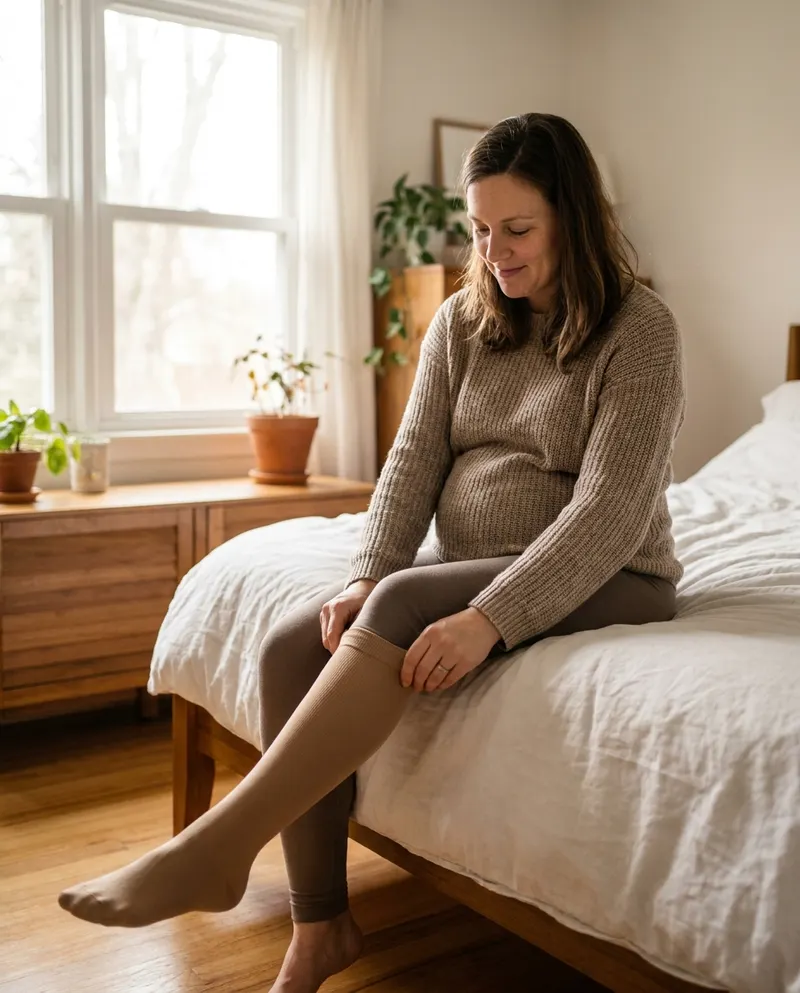
Medical graduated compression stockings (or knee-highs) are the most reliable and recommended option. They squeeze your leg gently — firmer at the bottom and lighter toward the top — helping the veins send blood back up and reducing swelling and heaviness. It's best to put them on in the morning while still lying down, before your legs swell. Your provider can help you choose the right compression level and size — the stockings come in different strengths.
Movement, body position, and rest
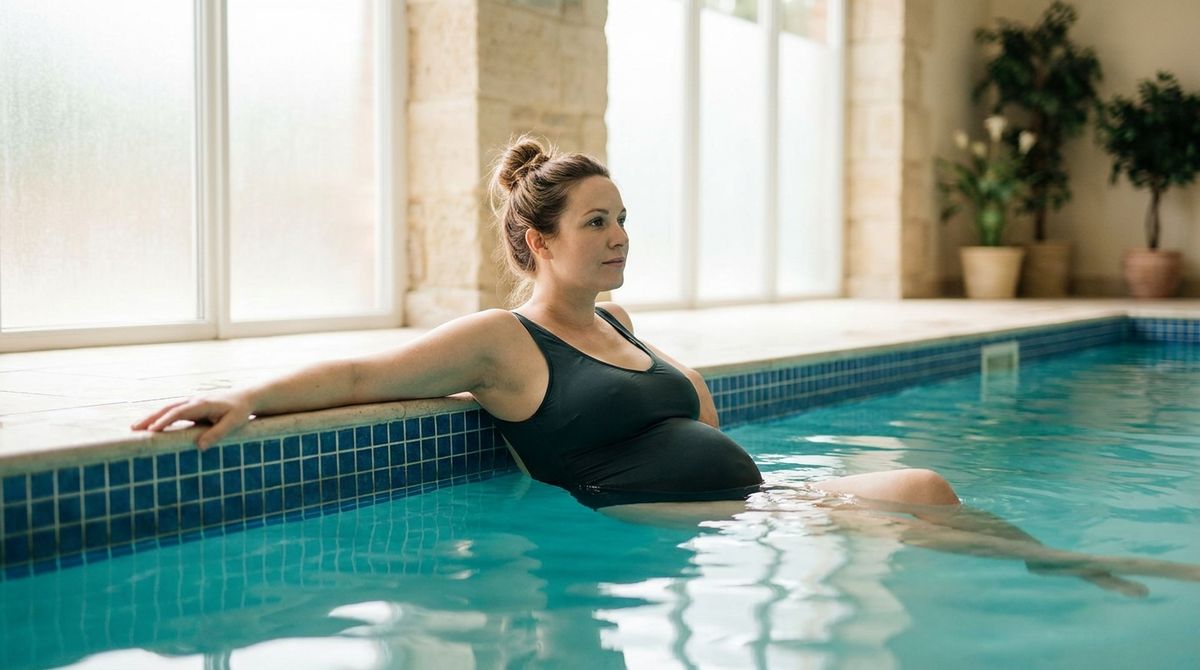
- Move more. Walking, swimming, and gentle exercises for your feet and calves act like a "pump" for your veins. For which types of activity are safe during this time, see our article on exercise during pregnancy.
- Don't stand or sit still for long stretches. If your job keeps you seated or on your feet, get up every 30–60 minutes, flex your feet, and rock from heel to toe.
- Elevate your legs. A few times a day, rest with your legs on a pillow above the level of your heart — it helps the blood drain more easily.
- Sleep on your left side. In this position the uterus presses less on the inferior vena cava on the right, and blood drains from the legs more easily. You can tuck a pillow behind your back or between your knees.
- Keep weight gain within the recommended range. Gaining weight within the normal range reduces the load on your veins.
- Don't cross your legs for long periods, and choose comfortable shoes without tight elastic or high heels.

What to avoid and what to put off
Definitive varicose-vein treatments — sclerotherapy (injecting a special solution into the vein), laser treatment, and surgery — are usually put off until after pregnancy. After birth the veins often improve on their own, and your provider can then judge whether any procedure is needed at all. Don't start any "vein" creams, gels, or tablets on your own without advice — during pregnancy not every product has been studied and approved, and your provider should be the one to choose. No dosages or specific medications "off the internet" — only a face-to-face conversation with a specialist.
Red flags: when to seek care right away
Varicose veins themselves rarely call for urgency, but some symptoms mean you should contact your provider or seek emergency care:
- Pain, redness, warmth, and tenderness in one leg, especially one-sided firmness or swelling of the calf — this can be a sign of deep vein thrombosis and needs prompt evaluation.
- Sudden shortness of breath, chest pain, a racing heartbeat, or coughing up blood — possible signs of a pulmonary embolism (a clot in the lungs). This is an emergency — call for emergency help right away.
- Bleeding from a varicose vein — press on the spot, raise the leg, and get medical help.
- An ulcer, darkening, hardening, or inflammation of the skin over a vein, or a wound that won't heal.
- Pain and swelling that suddenly get worse, or a fever.
These signs don't necessarily mean something serious is going on, but they do need to be checked without delay — better safe than sorry.
Will varicose veins go away after birth?
In most cases things ease up considerably after birth: the pressure from the uterus is gone, blood volume drops, and hormones settle back to normal. Varicose veins usually shrink noticeably within about 3–12 months after delivery, and vulvar varicosities and hemorrhoids often clear up entirely. That said, the veins may not return completely to how they looked before pregnancy — especially after several pregnancies or with a family tendency toward them. If a few months after birth the raised veins are still there and bothering you, it's worth seeing a phlebologist (a doctor who specializes in veins): outside of pregnancy, the range of treatment options is much wider.
Key takeaways
- Varicose veins in pregnancy are common — driven by rising blood volume, progesterone, pressure from the uterus on the veins, and heredity.
- They're not limited to the legs: they also appear in the groin and vulva (vulvar varicosities) and as hemorrhoids — the mechanism is the same.
- On their own, varicose veins are usually harmless — discomfort and cosmetics, not a threat; deep vein thrombosis is a different, serious condition.
- What helps most: compression stockings, movement, resting with your legs elevated, sleeping on your left side, and keeping weight gain in the normal range; there's no reliable way to prevent them when heredity is strong.
- Sclerotherapy, laser, and surgery are usually deferred until after pregnancy; "vein" creams and tablets only on your provider's advice.
- Seek care right away for pain and one-sided swelling in one leg, sudden shortness of breath or chest pain, bleeding from a vein, or a skin ulcer.
- After birth, varicose veins usually shrink noticeably within 3–12 months, though they may not disappear entirely.
This article is for general information and is not a substitute for personalized medical advice. If you have any doubts, worrying symptoms, or before choosing a treatment, discuss your situation with your provider.
Sources
Created with AI and reviewed by the Mama Ai team. Educational information — not a substitute for professional medical advice.
We’re with you every week of the way
Download on the App Store